8 AI In-Store Tactics Every Liquor Retailer Should Deploy Before Mother's Day Weekend to Drive Upsells and Repeat Visits
Discover 8 proven AI in-store tactics for liquor retail to boost Mother's Day sales, personalize customer experiences, and drive repeat visits.
- TL;DR
- 1. Deploy AI-Powered Recommendation Kiosks at Your Store Entrance
- 2. Use AI Recommendation Engines to Personalize Every Email and SMS Blast
- 3. Implement AI Inventory Prediction to Stock What Moms Actually Want
- 4. Set Up AI-Powered Self-Service Ordering for Time-Pressed Shoppers
Running a liquor store is busy work. Between managing staff, restocking shelves, and helping customers find the perfect bottle, there's little time left to think strategically about technology. This guide gives you eight practical AI tactics you can deploy before Mother's Day weekend to increase sales, improve customer experience, and build loyalty, all without hiring additional staff.
TL;DR
- Deploy AI-powered kiosks to suggest upsells in real time, mimicking the intuition of your best salesperson
- Use AI recommendation engines to replace generic marketing blasts with personalized offers based on purchase history
- Set up AI inventory prediction to stock what customers actually want before Mother's Day weekend
- Leverage AI agents to auto-flag blue-law closures and protect your pre-holiday sales windows
- Implement AI chatbots for 24/7 pre-holiday customer service without hiring extra staff
1. Deploy AI-Powered Recommendation Kiosks at Your Store Entrance
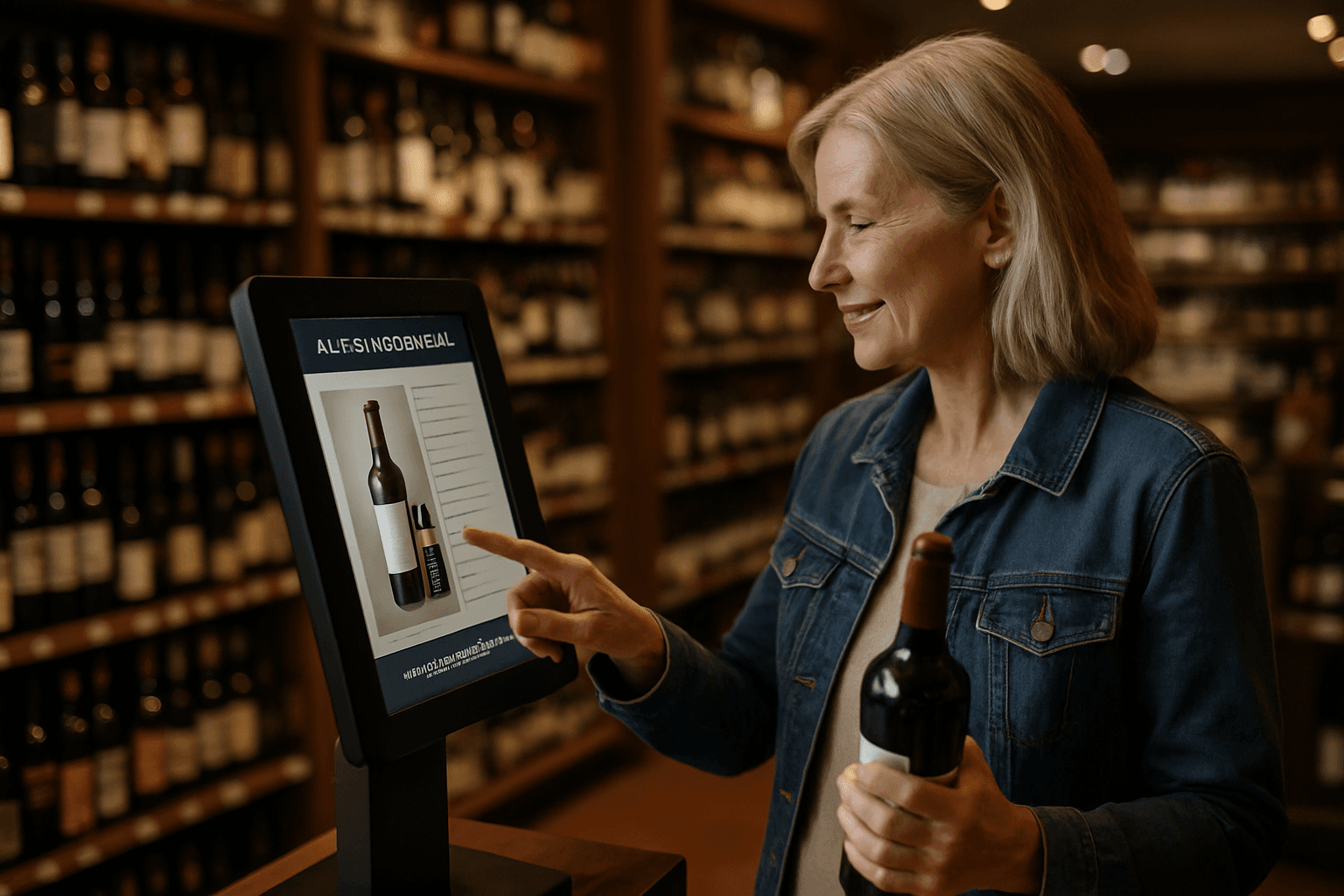
Place an AI-powered kiosk at your entrance to greet Mother's Day shoppers and instantly suggest personalized recommendations, think gift bundles, brunch-friendly wines, or celebration champagne, based on the occasion. These kiosks suggest additional purchase options, just like an intuitive human would, helping shoppers navigate your aisles without overwhelming them. The technology works like having a knowledgeable staff member at every entrance during peak weekend hours, without overtime costs. As consumer comfort with interactive displays grows, AI recommendation engines transform generic marketing into personalized customer engagement that drives basket size and repeat visits.
2. Use AI Recommendation Engines to Personalize Every Email and SMS Blast
Before Mother's Day weekend, swap your generic email blast for AI-powered personalized recommendations. AI recommendation engines can transform liquor store marketing from generic blasts to personalized experiences by analyzing each customer's purchase history. Segment your list by taste profile, wine lovers, craft beer enthusiasts, whiskey collectors, and send targeted offers that reference their past buys. A whiskey collector's mother gets bourbon suggestions; a wine enthusiast gets a curated pinot selection. This kind of AI-powered customer engagement, through recommendation engines and personalized marketing, drives repeat visits and bigger baskets because customers feel understood.
3. Implement AI Inventory Prediction to Stock What Moms Actually Want
Stock your shelves with confidence by letting AI predict what moms and gift-givers want before Mother's Day weekend arrives. AI can track inventory, predict what customers may want to buy next, and suggest personalized product recommendations based on data, so you reorder top sellers before shelves go empty, not after. Rather than guessing which wines, spirits, or gift sets will fly off racks, you get forward-looking demand forecasts tied to your own sales history. This proactive approach prevents overordering on slow-moving items that tie up capital and shelf space while ensuring popular selections stay in stock when it matters most. The result: fewer stockouts on high-demand products, tighter inventory management, and customers finding exactly what they came for, driving both immediate sales and repeat visits.
4. Set Up AI-Powered Self-Service Ordering for Time-Pressed Shoppers
Deploy AI-powered self-service ordering to give customers a hyper-personalized experience without waiting for staff assistance. Shoppers input their preferences, budget, recipient's taste, meal pairing, and the recommendation engine instantly curates tailored options. This works especially well for time-pressed customers who know what they like but want guidance discovering something new for Mother's Day. AI-powered customer engagement through self-service ordering reduces perceived complexity by guiding choices logically, and the system suggests thoughtful add-ons that increase basket size.
Discover 7 AI-powered customer engagement strategies to boost Mother's Day sales at your liquor store. Personalizatio...
5. Leverage AI Agents to Auto-Flag Blue-Law Closures in Your POS
Deploy AI agents to automatically flag blue-law and holiday closure dates directly in your POS system, so staff never accidentally lock out last-minute shoppers before a mandatory shutdown. This protects your pre-holiday sales windows by ensuring your team stays informed and your doors stay open to customers who need to buy early. AI can also trigger automated reminders to your customer list, building urgency with messages like "Open today only before Sunday closure!" By weaving AI-powered customer engagement into your closure management, you turn compliance into opportunity, capturing sales that would otherwise walk out the door.
6. Deploy AI Upsell Suggestions at the Point of Sale
When a customer picks up a bottle at checkout, your POS should automatically suggest a premium upgrade or complementary pairing. AI-powered customer engagement at the point of sale works like an intuitive employee who knows your inventory inside-out, spotting high-margin items, local favorites, and proven pairings without awkward pressure. AI-powered kiosks are ready to suggest additional purchase options just like an intuitive human would, helping customers discover products they'll actually appreciate. This approach feels like helpful service, not a sales pitch, driving higher basket sizes and repeat visits.
7. Install AI Chatbots for 24/7 Pre-Holiday Customer Service
Deploy AI-powered chatbots on your website and social channels before Mother's Day weekend so customers get instant answers to common questions, gift guidance, sulfite-free options, pairing advice, at any hour. This kind of AI-powered customer engagement handles the questions that would otherwise tie up your phone lines, freeing your staff to deliver attentive service to shoppers who are physically in the store during peak hours. Beyond convenience, the chatbot collects data on what customers are asking, revealing gaps in your inventory and opportunities for future personalized marketing. It's a quiet, always-on sales tool working for you before, during, and after the holiday rush.
8. Use AI Analytics to Identify and Re-engage Lapsed Customers Before Mother's Day
Recommendation engines, driven by AI-powered customer engagement systems, can shift your liquor store marketing from generic blasts to personalized experiences. Instead of guessing who might want to return, your AI analyzes purchase history to flag customers who haven't visited recently. Trigger personalized win-back campaigns with Mother's Day offers to bring them back. Use lookalike audiences to reach similar customers who might respond to your brand. Building repeat visits means rewarding loyalty at strategic moments like holidays, turning occasional shoppers into consistent ones.
AI-powered customer engagement drives sales and loyalty for liquor stores. Here are 8 tactics to personalize marketin...
These eight AI tactics work best when layered together, a kiosk at the entrance feeds recommendations to the POS at checkout, while your chatbot handles questions and your analytics engine re-engages lapsed customers between visits. Start with one or two tools that fit your current operations, measure what moves the needle, and expand from there. The goal isn't to replace the human touch that makes your store special, it's to give your team more time and data to deliver exactly what each customer needs.
Ready to see how AI can transform your liquor store operations? Explore LiquorChat's AI solutions ↗ to find the right fit for your business.
Frequently Asked Questions
How much does it cost to implement AI tactics for a small liquor store?
Costs vary widely depending on scope, from subscription-based SaaS tools with tiered pricing to fully integrated POS systems. Many AI solutions offer pricing suitable for single-location stores. Start with one tactic, like AI-powered email marketing, and expand as you see ROI.
Do customers actually trust AI product recommendations for wine and spirits?
Many customers appreciate AI recommendations, especially when the technology references their purchase history. Personalized suggestions often feel more helpful than generic upsells because customers feel understood rather than sold to. Transparency matters, letting customers know why an item was suggested builds trust.
Discover 7 AI-powered customer engagement strategies for liquor retailers. Learn how AI recommendation engines and re...
What's the fastest AI tactic to deploy before Mother's Day weekend?
AI-powered email and SMS marketing is often the quickest win. If you have a customer database and POS system, you can implement personalized targeting within days. Kiosks and self-service displays typically take longer (weeks to months) due to hardware requirements.
How do blue-law closure alerts actually work with AI?
AI agents integrate with your POS calendar to automatically flag restricted trading days. They trigger customer notifications, adjust marketing send times, and ensure your team doesn't accidentally keep doors open when prohibited, protecting both sales and legal compliance.
Can AI help with compliance in states with complex alcohol regulations?
Absolutely. AI can flag age-restricted promotions, auto-calculate county-specific blue laws, and ensure marketing messages don't violate liquor authority guidelines. This reduces manual compliance work and minimizes risk of regulatory violations.
What's the expected ROI of AI recommendation engines for liquor retail?
Results vary significantly by implementation and store characteristics, but many retailers find that relevant upsells driven by AI recommendations can increase average order value. Combined with repeat visit improvements from personalized engagement, stores may see positive ROI, though timing depends on factors like existing data infrastructure, chosen technology, and store volume.
Do I need technical expertise to run AI-powered marketing?
No. Modern AI marketing platforms are designed for non-technical users with intuitive interfaces and pre-built templates. Your biggest requirements are clean customer data and willingness to test and optimize based on results. Most platform vendors also offer onboarding support.