Brand Ambassador AI: How Producers Use LiquorChat to Control Their Story at Every Retail Touchpoint
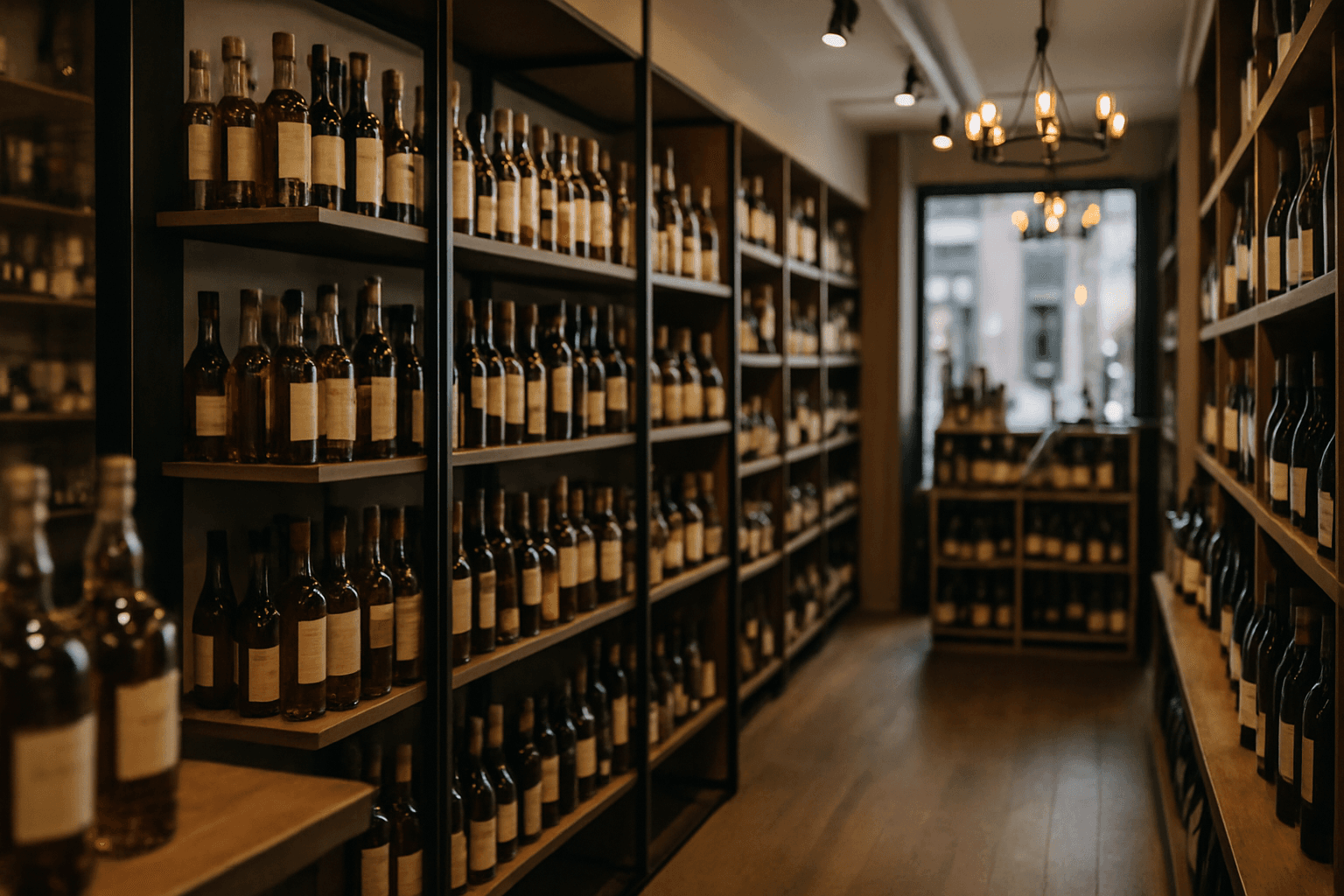
Discover how brand ambassador AI for liquor retail helps producers control messaging, boost sales & tell their story at every shelf and screen in-store.
- The Brand Ambassador Problem: Your Story Gets Lost Between the Distillery and the Shelf
- What Is Brand Ambassador AI (and Why Is Liquor Retail Adopting It Now)?
- How LiquorChat Works as Your Always-On Brand Ambassador
- Why Producers Are Investing in Retail Touchpoint AI Now
- What This Means for Liquor Store Owners (You Win Too)
You poured years into your spirit, the recipe, the aging, the story behind it. But right now, somewhere in a liquor store across the country, a customer is picking up your bottle, squinting at the back label, and putting it back down. Not because your product isn't great. Because nobody was there to tell them why it's great. The floor associate was busy, your brand rep was three states away, and that carefully crafted origin story never made it past the distributor's sell sheet.
This is the gap that brand ambassador AI for liquor retail was built to close. It's the idea that your brand voice, your tasting notes, your pairings, your distillery's origin story, should follow your bottle everywhere it goes, from a flagship store in Manhattan to a neighborhood shop in Tucson. Not a diluted version. Not someone else's interpretation. Yours.
In this post, we'll break down why the traditional brand ambassador model is cracking under its own weight, what's driving the rapid adoption of AI-powered storytelling in spirits retail, and how LiquorChat gives producers and retailers a purpose-built tool to make sure the right story reaches the right customer at the right moment. Whether you're a craft distiller trying to stand out on a crowded shelf or a retailer looking to convert more browsers into buyers, the playbook is changing, and it's changing fast.
The Brand Ambassador Problem: Your Story Gets Lost Between the Distillery and the Shelf
You spent two years perfecting that single barrel expression. You hired a copywriter to nail the tasting notes. Your origin story is genuinely compelling. But here's the uncomfortable truth: by the time your bottle sits on a retail shelf between 200 other whiskeys, that story has been diluted more than a well drink at last call.
What Happens to Your Messaging After It Leaves HQ
The journey from distillery to shelf is basically a game of telephone. Your carefully crafted brand narrative passes through distributors, sales reps, store buyers, and finally lands with a floor associate who's responsible for knowing thousands of products. Something's going to get lost, and it's usually the details that actually drive purchase decisions.
Consider this: travel retail liquor saw increased passenger traffic in 2025 but decreased per-capita spending. More eyeballs, fewer conversions. That's what happens when browsers encounter your bottle without encountering your story.
Why Human Brand Ambassadors Can't Be Everywhere at Once
The industry already knows this model is strained. With at least 10 dedicated brand ambassador software tools on the market in 2026, and platforms like PINATA partnering with major distributors like Allied Beverage Group, producers are clearly searching for scalable solutions. Traditional ambassador programs are shifting toward breadth over depth, because one charismatic rep covering three states was never going to cut it.
The core tension is simple: your brand needs consistent storytelling at every retail touchpoint, but the current model is fragmented and fundamentally unscalable.
What Is Brand Ambassador AI (and Why Is Liquor Retail Adopting It Now)?
Brand Ambassador AI, Defined in Plain English
Think of your best brand rep, the one who nails the tasting notes, knows every pairing, and tells the distillery's story like they were there when the mash bill was written. Now imagine that person could be in every store, on every screen, and in every customer chat, 24/7, without ever calling in sick.
That's brand ambassador AI for liquor retail: software that delivers a producer's exact brand voice, tasting notes, food pairings, and key messaging to customers at the point of sale, digitally, consistently, and at scale. Whether a customer is browsing a shelf in Dallas or chatting online in Miami, they get the same crafted narrative the producer intended.
The concept is expanding fast across form factors. AI-generated brand avatars now support 150+ languages. Solutions like AICap by onki.ai offer shelf-mounted AI devices that engage shoppers in the aisle. From chat widgets to kiosks to hardware, AI-powered brand storytelling is showing up everywhere in spirits retail.
The 2026 Tipping Point
So why now? A few converging forces:
Discover how California's AB 1585 wine labeling bill sparks three-tier system modernization with AI talks. Key insigh...
- The tools exist. The brand ambassador software category has matured rapidly, with dedicated platforms multiplying across the market, yet none are purpose-built for the liquor and spirits vertical. That's a gap begging to be filled.
- The conversion problem is real. That travel retail data, more foot traffic, less spending, isn't unique to airports. It's playing out in liquor stores everywhere customers browse without guidance.
- Major players are already moving. PINATA's partnership with Allied Beverage Group, one of the largest U.S. distributors, launched roughly a year ago to create a National Accounts Command Center. That wasn't a press release about "exploring possibilities." That was real money behind controlling how brands show up at retail.
AI-powered customer engagement in liquor retail isn't a future trend. It's the 2026 reality that stores and producers need to adapt to, or risk letting someone else tell their story.
How LiquorChat Works as Your Always-On Brand Ambassador
LiquorChat takes the concept of brand ambassador AI and makes it concrete, purpose-built for the way spirits are actually sold.
Your Tasting Notes, Your Pairings, Your Voice, Every Time
Here's how it works from the producer side. You upload your brand assets, tasting notes, suggested food pairings, origin stories, storytelling priorities, even the specific language you want used to describe that hint of caramel on the finish. LiquorChat takes all of it and delivers it directly to customers through AI-powered product recommendations right in the liquor store environment.
This is what separates LiquorChat from generic AI chatbots that scrape random databases and spit out whatever Wikipedia or a crowdsourced review site says about your product. Those tools don't know that you want customers to pair your rye whiskey with dark chocolate, not cheese. They don't know your distiller's story matters more than your mash bill to your target buyer.
With LiquorChat, you control the narrative. The brand ambassador software category is maturing fast, but LiquorChat is purpose-built for liquor retail, not retrofitted from generic tech.
From Chat Widget to In-Store Kiosk: Every Touchpoint Covered
Today's customers discover products everywhere, browsing a retailer's website at home, scrolling on mobile in the parking lot, or standing in the aisle staring at 47 tequilas. LiquorChat meets them at each moment: web chat widgets on retailer sites, mobile-optimized conversations, and potential in-store kiosk integration.
This matters because the conversion gap in spirits retail isn't a demand problem, it's an information problem. When customers can't find the right details at the right moment, they either buy less or default to what they already know.
With LiquorChat working across every touchpoint, your brand story doesn't depend on whether a store employee tried your product last Tuesday. It's consistent, accurate, and always on.
Why Producers Are Investing in Retail Touchpoint AI Now
The question isn't whether AI will reshape how producers connect with customers at retail, it's whether you're already behind.
The Tech Arms Race Among Suppliers and Distributors
When a distributor the size of Allied Beverage Group puts real infrastructure behind AI-powered brand management, it sends a signal to every supplier in their portfolio: this is the direction we're heading. Producers who aren't investing in how their brands show up digitally at retail are ceding ground to those who are.
The broader landscape confirms the trend. Brand ambassador software platforms have multiplied. AI avatar technology supports global deployment. The infrastructure is here, and early movers are using it.
Discover 8 canned spirits launches reshaping the US alcohol market this summer. Key beverage industry trends, opportu...
Closing the Conversion Gap Where It Matters Most
Every liquor store has the same fundamental challenge: customers who browse but don't buy. The reasons vary, unfamiliarity with a product, no one available to answer questions, decision fatigue from too many options, but the solution is consistent. When a customer picks up a bottle and has a question, brand ambassador AI for liquor retail delivers the producer's answer, not a generic recommendation that sends them toward a competitor.
This is exactly where LiquorChat fits. Unlike horizontal platforms requiring heavy customization, it's built for the way spirits are actually sold, no retrofitting, no workarounds.
What This Means for Liquor Store Owners (You Win Too)
Here's where it gets good for you, the retailer. When producers invest in AI-powered brand storytelling through LiquorChat, you get a free upgrade, and you didn't even have to ask for it.
Better Brand Support Without More Staff Hours
Every time a new SKU hits your shelves, there's a knowledge gap. Your staff can't memorize tasting notes, origin stories, and cocktail pairings for hundreds of products. But when producers load their expertise into LiquorChat, that knowledge lives right alongside the bottle, accessible to your customers in real time.
It's like having a brand rep on the floor 24/7 without the scheduling headaches or the sample budget. The alcohol industry is already moving this direction, and offering this kind of AI-assisted shopping experience positions your store as forward-thinking, both to customers and to the suppliers deciding where to focus their support.
Smarter Recommendations That Actually Move Inventory
Generic flavor databases are fine. But AI product recommendations built on the producer's own expertise? That's a different animal. When the AI draws from the distiller's actual knowledge, barrel selection philosophy, regional ingredient sourcing, intended food pairings, recommendations become more accurate and more persuasive.
Think of it this way: it's the distiller whispering in your customer's ear at exactly the right moment. And that whisper builds the kind of consultative shopping experience that keeps people coming back to your store instead of ordering online.
LiquorChat vs. the Alternatives: What Makes It Different
Generic Brand Ambassador Platforms vs. Spirits-Specific AI
There's no shortage of brand ambassador software on the market in 2026. Some platforms even support 150+ languages for AI avatar creation. Impressive, but here's the thing: they're built for sneakers, skincare, and snack brands. They handle influencer marketing and general consumer goods just fine.
Spirits aren't general consumer goods.
Generic platforms don't understand TTB regulations, state-by-state compliance quirks, or why a four-grain mash bill matters. They can't explain the difference between solera aging and single-barrel selection with any real depth. When a curious shopper asks why one bourbon costs three times more than another, cookie-cutter platforms serve up marketing fluff.
LiquorChat was built from the ground up for this industry. It speaks ABV, terroir, barrel char levels, and appellation rules fluently, because that's all it was designed to do.
Discover 8 powerful AI-driven omnichannel strategies for liquor retailers navigating the 2026 DTC slowdown. Boost loy...
Hardware Solutions vs. Software-First Flexibility
Hardware approaches are emerging too. Shelf-mounted AI devices, for instance, put intelligence right at the point of decision, a compelling concept. But physical installations mean logistics: shipping hardware, coordinating with store managers, maintaining devices across hundreds of locations. That's a real bottleneck when you're trying to scale across a national footprint.
Physical presence alone doesn't close the sale. Storytelling does.
LiquorChat takes a software-first approach, deploying instantly across any retailer's existing digital touchpoints, websites, apps, in-store kiosks, QR codes on shelf talkers. No installation crew. No maintenance tickets. Just brand ambassador AI for liquor retail that's live wherever your bottles sit, ready to tell your story the moment a customer is curious enough to ask.
How to Get Started: Putting Your Brand Story on Every Shelf
For Producers: Take Control of Your Retail Narrative
If your brand story is getting diluted between the distillery and the shelf, you're not alone, you're the norm. But it doesn't have to stay that way. Brand ambassador AI lets you control the narrative at every retail touchpoint, ensuring customers hear your story, not a watered-down version of it.
The infrastructure isn't theoretical, it's ready. Get started with LiquorChat and put your brand voice where it matters most: at the point of purchase.
For Retailers: Give Your Customers (and Your Suppliers) What They Want
Offering LiquorChat to your supplier partners isn't just a nice gesture, it's a competitive advantage. It makes your store smarter, your staff more informed, and gives producers a real reason to prioritize your shelves. Foot traffic without conversion is just foot traffic. The right AI tools close that gap.
The brands that own their story at retail in 2026 will be the ones customers remember. The technology is here, the only question is whether you'll use it before your competitors do.
The Bottom Line: Your Story Deserves to Be Heard
Here's what it comes down to. You didn't spend years crafting a spirit just to have its story evaporate somewhere between the warehouse and the shelf tag. The old model, hoping a distributor rep remembers your talking points, praying a floor associate tried your sample last month, was never built to scale. And in 2026, with more competition, more SKUs, and more informed customers than ever, it's not just inefficient. It's a liability.
Brand ambassador AI for liquor retail isn't about replacing the human connections that make this industry special. It's about making sure those connections happen more often, more consistently, and in more places than any single person ever could. It's your voice at every shelf, every screen, and every moment a customer is one good story away from reaching for your bottle instead of the one next to it.
LiquorChat was built for exactly this, not adapted from some generic platform, but purpose-built for the way spirits are sold, discovered, and enjoyed. Whether you're a producer ready to take control of your retail narrative or a store owner looking to turn browsers into loyal buyers, the path forward is the same.
Visit LiquorChat.ai to see how your brand story shows up at the shelf, and make sure it's the one you actually wrote.