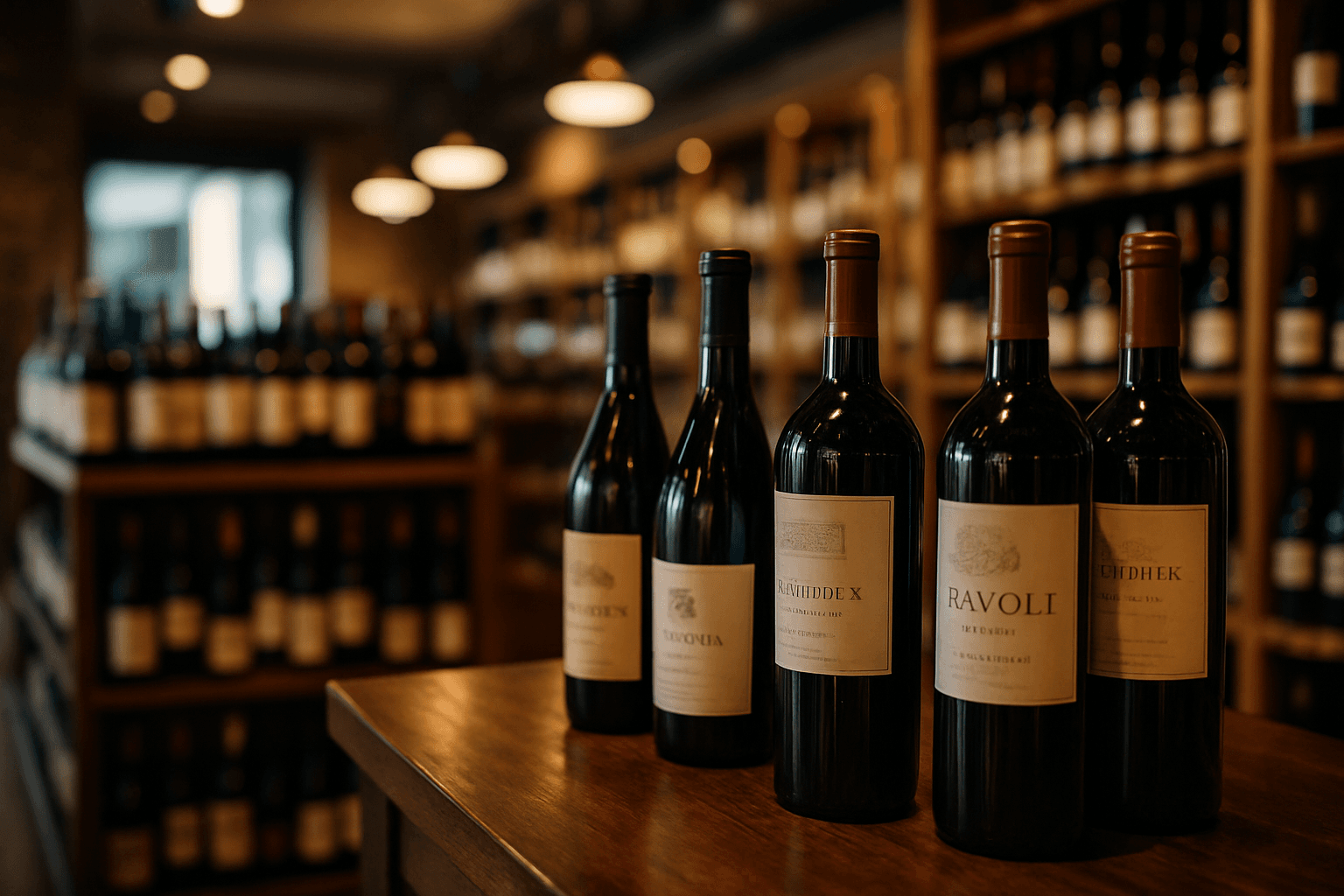
Case Study: How Seneca Wine and Liquor Transformed Customer Service With AI-Powered Recommendations
By LiquorChat11 min read
Listen to this article14:33
Schedule a free strategy call and LiquorChat will build a custom plan for you.
Schedule Your Free Strategy CallFree audit. No commitment.
Request a Demo. No commitment.
See how Seneca Wine and Liquor used AI-powered liquor store recommendations to boost sales, delight customers, and compete with big-box retailers.
Every liquor store owner knows the feeling. A customer walks in, scans the shelves for thirty seconds, picks up the same bottle of Cabernet they always buy, and leaves. No exploration. No discovery. No chance to show them the incredible Barolo you just brought in that would blow their mind. It's not that they don't want better recommendations — it's that they didn't get them at the right moment.
That's the story of modern liquor retail in a nutshell. Customers are craving guidance, staff are stretched thin, and the big-box competitors are pouring millions into technology that makes personalized shopping feel effortless. For independent retailers, the pressure is real — but so is the opportunity.
This is the story of how one independent retailer — Seneca Wine and Liquor — decided to stop playing defense and start using AI to do what they've always done best: help people find bottles they love. What happened next offers a roadmap for any store owner wondering whether this technology is worth the leap.
Seneca Wine and Liquor had built the kind of reputation most independent retailers dream about. Loyal regulars who trusted the staff. A carefully curated selection. The neighborhood-store warmth that keeps people coming back even when a Costco opens three miles away.
But warmth doesn't pay the bills when the competitive landscape shifts under your feet.
8 AI demand forecasting moves every liquor store owner should make. Cut waste, prevent stockouts, and stock smarter i...
Big-box chains were expanding their spirits selections and undercutting on price. Meanwhile, online retailers were getting smart — major players like Walmart began experimenting with generative AI to create conversational shopping experiences [VERIFY], offering personalized wine and spirits guidance that could walk customers through thousands of bottles without a single human interaction. Suddenly, "we have great staff" wasn't the differentiator it used to be.
And Seneca wasn't alone. The US wine and liquor retail industry — estimated at $250 billion — has historically run on outdated software and manual workflows: handwritten shelf talkers, gut-feel ordering, and product knowledge that lives in employees' heads rather than in systems. That's a vulnerability, especially for independents competing against companies with billion-dollar tech budgets.
Here's the thing about great staff: they can only help one customer at a time.
During peak hours — Friday evenings, holiday weekends, the Wednesday-before-Thanksgiving rush — Seneca's team was stretched thin. Customers who needed guidance wandered aisles alone, made safe-but-uninspired choices, or walked out empty-handed. Every missed interaction was a missed upsell, a missed connection, a missed chance to turn a browser into a regular.
Discover how clean label transparency is transforming US wine and spirits consumer behavior. 9 key beverage industry ...
Customers were also changing. They didn't just want to find a bottle — they wanted guidance. Personalized, context-aware suggestions. "I liked that Malbec from last month, what else would I enjoy?" That kind of intelligent recommendation was becoming table stakes online, and shoppers were starting to expect it in-store too.
The stakes were clear. Seneca needed AI-powered liquor store recommendations that could deliver expert-level guidance at scale — without sacrificing the personal feel that made them Seneca. They needed technology that worked like their best employee on their best day, available to every customer, every hour the doors were open.
The question was how to get there.
But before we get to Seneca's answer, it's worth zooming out — because what was happening at Seneca wasn't happening in a vacuum. Across the entire industry, a quiet revolution was already underway.
7 easy strategies for liquor stores to boost sales during soccer season using Abstract Ice's new ball-shaped ice. Sea...
The smart money is moving fast — and it's moving toward AI. If you're still on the fence about whether AI recommendations in this space are real or just tech hype, let's look at what's already happening.
DRINKS launched its patented PAIR AI model to analyze wine prices and consumer preferences, delivering personalized picks that drove a measurable surge in online wine sales. That's not a vague promise — it's revenue moving because an algorithm understood what a customer wanted better than a static product page could.
Then there's City Hive's "Tipsy Bot" [VERIFY], an AI assistant that recommends products and completes local alcohol purchases, funneling discovery directly to independent retailers. Meanwhile, Santé raised $7.6 million — led by Bonfire Ventures — to build what it calls the first AI operating system for wine and liquor retailers. When venture capital firms write checks that size, they're not guessing. They're seeing the data.
Here's the uncomfortable truth: consumer comfort with AI-generated product suggestions is growing steadily [VERIFY]. Your customers may be readier for this than your store is.
The question isn't whether AI will reshape liquor retail. It's whether independent retailers will shape it on their terms — or get shaped by it.
Seneca decided to shape it. Here's how.
The gap between what customers expect and what most stores deliver is widening fast. Seneca Wine and Liquor knew they needed a smarter approach — but not just any AI tool.
Seneca's team evaluated several options before landing on LiquorChat, and the decision came down to one thing: specificity. Generic retail chatbots can tell you a product is in stock. LiquorChat can tell you why you'd love it.
That's because LiquorChat is purpose-built for wine and spirits retail. It understands flavor profiles, regional varietals, spirit categories, food pairings, and — critically — customer intent. When a shopper says "something like Malbec but less heavy," a generic tool fumbles. LiquorChat knows you probably want a medium-bodied Carménère or a cool-climate Syrah. That kind of domain-specific intelligence isn't something you bolt onto a general-purpose platform. It has to be built from the ground up.
Implementation was straightforward. LiquorChat embedded its AI chatbot on Seneca's website and deployed QR codes throughout the physical store — no full tech overhaul required. The system integrated with Seneca's existing POS and inventory systems, meaning every recommendation reflects real-time stock and actual pricing.
Here's what a typical interaction looks like: A customer standing in the bourbon aisle scans a QR code with their phone. They tell LiquorChat, "I like Maker's Mark but want something smokier, under $45." Within seconds, they get three tailored recommendations — say, Larceny Barrel Proof, Woodford Reserve Double Oaked, and a staff-favorite pick from the store's own curated selection [VERIFY specific product suggestions for current availability] — each with tasting notes and food pairing suggestions.
The secret sauce? LiquorChat was trained on Seneca's actual inventory and their staff's expertise. So the recommendations don't feel like they're coming from an algorithm. They feel like talking to your favorite bartender — the one who actually remembers what you bought last time. Available 24/7, deeply knowledgeable, and genuinely useful.
Here's the thing about generic recommendation engines: they're built for retail categories where "customers who bought X also bought Y" actually makes sense. Liquor isn't one of those categories.
Someone who loves a rich, oaky Chardonnay isn't necessarily going to enjoy a crisp Albariño — even though they're both white wines. And when a bourbon drinker walks in asking for "something different," they probably mean a spicy rye or a wheated bourbon, not a bottle of vodka. These are nuances that generic AI completely misses.
That's why recommendations in this space need to be purpose-built. LiquorChat's engine doesn't just track purchase history — it maps flavor profiles, accounts for seasonal trends, weighs regional preferences, considers price sensitivity, and understands occasion-based context. Buying a gift for your boss? That's a very different recommendation than your Tuesday night sipper or a dinner party bottle.
For Seneca, the benefits extended well beyond the customer-facing side. Recommendation patterns revealed which products their specific customer base actually wanted — enabling smarter stocking decisions, reduced dead stock, and essentially personalized shelves.
This is the kind of operational intelligence that the industry has been missing. Purpose-built tools are finally giving retailers the data-driven insight that grocery and general retail have had for years.
Seneca's story is compelling — but you're probably wondering what it means for your store. Fair question.
You're running a liquor store, not a tech startup. That's fine. Seneca started with a single chatbot integration and scaled from there. No dev team, no six-figure software contract. The barrier to entry has dropped dramatically as purpose-built platforms like LiquorChat have matured. Early adopters are setting the standard — the question is whether you'll be leading or catching up.
Here's what most people get wrong about AI-powered liquor store recommendations: they aren't meant to replace your palate or your staff's knowledge. They amplify it.
Seneca's system works because it's fed with staff picks, local preferences, and real expertise — the same things that make customers choose your store over a big-box retailer. Think of it this way: AI extends your personal touch to every customer, every hour — even at 11 PM when someone's planning tomorrow's dinner party. That's not losing the human element. That's multiplying it.
The industry is evolving fast, and the trend is clear: AI-powered liquor store recommendations aren't replacing great store owners — they're amplifying them.
LiquorChat works with your inventory and your expertise to deliver personalized recommendations that feel human, not robotic. Think of it as extending your best employee's knowledge to every customer interaction, around the clock.
Request a demo or start your free trial — there's zero risk, and setup works directly with your existing catalog.
So the system was live. The technology worked. But did it actually move the needle?
When Seneca Wine and Liquor flipped the switch on LiquorChat, the team hoped for incremental improvement. What they got was a shift in how customers interacted with their store — both online and off.
Within the first few months, Seneca saw meaningful jumps in on-site engagement. Average dwell time on product pages where LiquorChat was active increased noticeably, and customers were clicking deeper into the catalog instead of bouncing after scanning the usual bestsellers.
More importantly, the qualitative feedback told a story the numbers alone couldn't. Customers described the experience as "like getting advice from a well-traveled friend who happens to know a lot about spirits" — personal, knowledgeable, and decidedly not robotic.
Here's where it gets interesting for the bottom line. AI-powered liquor store recommendations didn't just confirm what customers already wanted — they expanded what customers were willing to try. Average transaction values lifted as shoppers explored beyond their usual go-to bottles.
Categories that had historically underperformed — mezcal, amaro, natural wines — started moving. These were products the staff genuinely loved but rarely had time to hand-sell during a busy Saturday rush. When you meet customers with relevant suggestions at the right moment, they buy more — and they buy differently.
Let's address the elephant in the room: nobody lost their job.
Seneca's employees weren't replaced by AI — they were unburdened by it. LiquorChat absorbed the repetitive questions ("what pairs with salmon?" and "what's a good gift under $30?") so staff could focus on high-touch interactions, event planning, and hosting tastings. The AI handles the FAQ-level queries; the humans handle the relationships. That's the model working exactly as intended.
The results speak for themselves — but you might be wondering what's actually happening under the hood. What makes AI recommendations in liquor retail different from, say, Amazon suggesting you buy more paper towels? Quite a lot, actually.
LiquorChat specializes in digital marketing strategies that drive real results. Let us show you what's possible.
Schedule a CallYour customers already trust your taste. Now imagine giving them that guidance at 2 AM on a Saturday when they're planning Sunday brunch.
Seneca Wine and Liquor didn't become a different store — they became a better version of the store they already were. The staff still picks the wines. The regulars still get recognized when they walk in. The shelves still reflect a curated point of view that no algorithm could dream up on its own. What changed is that all of that knowledge, all of that care, now reaches every single customer who interacts with the store — whether they're standing in the bourbon aisle on a Friday night or browsing the website at midnight.
That's the real lesson here. The technology exists. The industry is moving. And the stores that pair their expertise with the right tools are the ones that will still be thriving when the next wave of competition rolls in.
Your move. Get started with LiquorChat today.