How POS-Powered Personalization Drives 27% Higher Basket Sizes in Beverage Retail
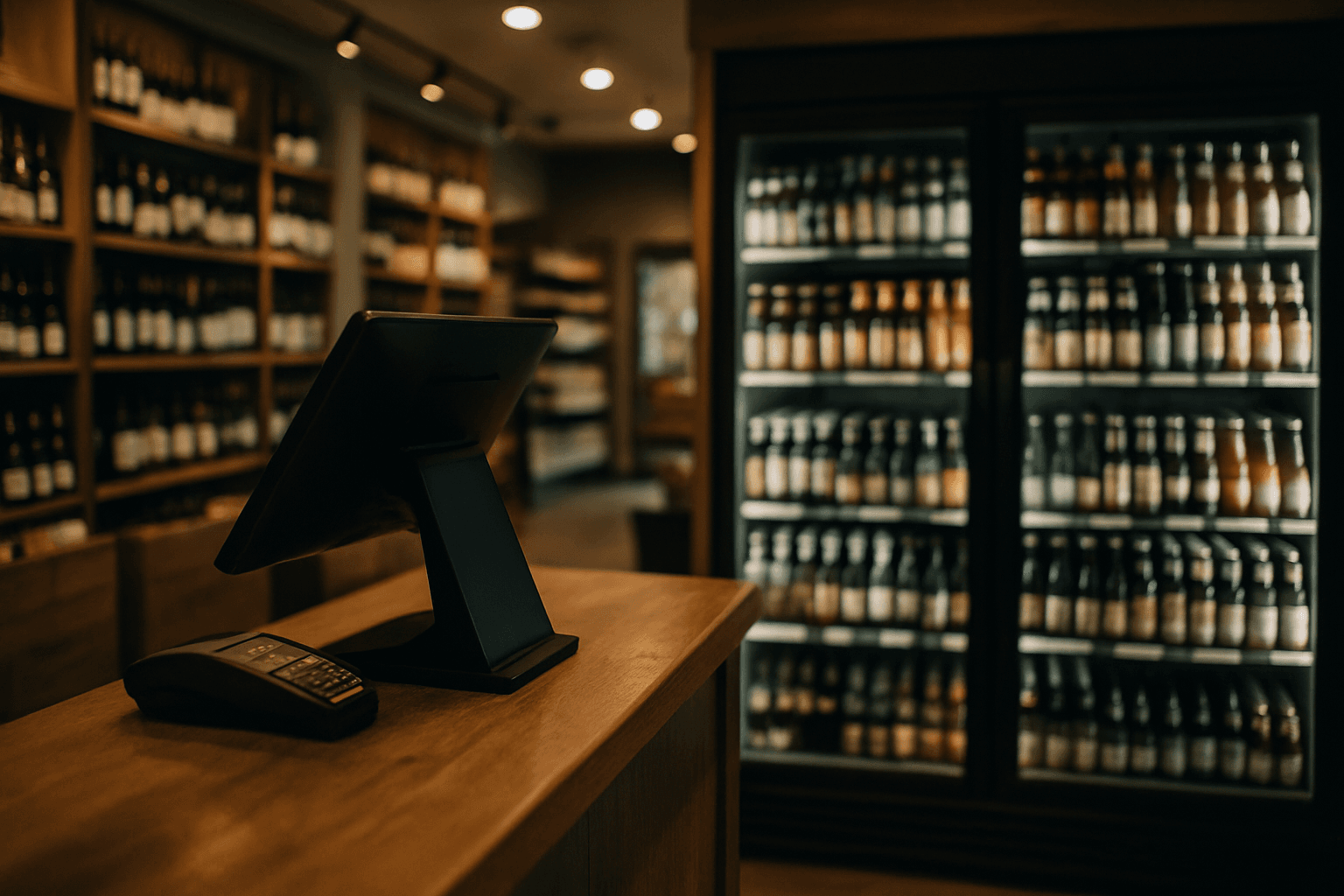
Discover how POS personalization in beverage retail boosts basket sizes by 27%. Learn strategies for liquor store POS systems that drive sales and loyalty.
- Your Regulars Already Expect You to Know Their Order, Your POS Should Too
- What POS Personalization Actually Means in Beverage Retail (It's Not Just Coupons)
- The Tech Stack Behind the Magic: Liquor Store POS Systems Built for Personalization
- 5 POS Personalization Strategies That Actually Increase Basket Size
- Real-World Results: What Beverage Retailers Are Seeing
Let's start with a question you already know the answer to: Why do you go back to the same bar, the same coffee shop, the same liquor store? It's not just the product. It's the person behind the counter who remembers you, what you drink, what you've been meaning to try, what you bought for your brother's birthday last year. That feeling of being known is one of the most powerful forces in retail. And right now, POS personalization in beverage retail is making it possible to deliver that feeling to every single customer who walks through your door, not just the ones your best employee happens to recognize.
Here's the kicker: stores that get this right aren't just earning goodwill. They're seeing basket sizes jump by as much as 27%. That's not a rounding error. That's the difference between a store that's getting by and one that's genuinely thriving. The technology exists today, the data backs it up, and the retailers who move first are building an advantage that compounds with every transaction.
In this post, we're going to break down exactly what POS personalization looks like in a liquor store context, not the buzzword version, but the practical, dollars-and-cents reality. We'll cover the tech stack that makes it work, five strategies you can actually implement, the real-world revenue impact, and how to choose the right system if you're ready to make the switch. Whether you're a single-location owner or managing a growing chain, this is the playbook.
Your Regulars Already Expect You to Know Their Order, Your POS Should Too
Think about the best bartender you've ever had. They remembered your name, knew you were a Woodford Reserve guy, and didn't miss a beat when you pivoted to mezcal last summer. That kind of memory isn't just impressive, it's what keeps you coming back. Now imagine giving every customer who walks into your liquor store that same experience. That's what a modern liquor store POS system can do, and it does it at scale.
This isn't a nice-to-have anymore. It's the competitive edge that separates thriving stores from the ones wondering where their regulars went.
The Bartender Effect: Why Personalization Feels Like Good Service
Here's the thing: personalization doesn't feel like marketing when it's done right. It feels like good service. It feels like someone paying attention. And in a U.S. retail market as crowded and competitive as beverage alcohol, that attention to detail is how you differentiate, whether you're an independent shop or a growing chain.
The technology has caught up to the ambition. Modern liquor store POS systems now offer 14+ specialized features, from integrated age verification to purchase-history-driven promotions, up from basic cash register functionality just a few years ago. Integrations like Thanx + Square are purpose-built to drive repeat visits and higher spend per transaction through loyalty-driven checkout personalization. This isn't theoretical. It's happening now.
What Up to 27% Higher Basket Sizes Actually Looks Like on Your Bottom Line
So let's talk numbers. McKinsey research consistently shows personalization drives 10–30% revenue lifts in retail. That 27% basket size increase sits at the upper end of what's achievable when you apply smart beverage retail personalization strategies through your POS, think targeted recommendations, loyalty triggers, and purchase-history-driven promotions.
If your average transaction is $35, a 27% lift means an extra $9.45 per customer. Even if only half your transactions benefit from personalization, multiply that across hundreds of weekly sales and you're looking at serious margin improvement, without adding a single new customer.
In the sections ahead, we'll break down exactly what POS personalization means in a liquor store context, the tech making it possible, and the specific strategies that increase basket size in liquor retail.
What POS Personalization Actually Means in Beverage Retail (It's Not Just Coupons)
Let's get one thing straight: POS personalization in beverage retail isn't about spitting out a generic 10%-off coupon at checkout. It's the ability to use customer purchase history, preferences, and behavior data, captured right at the point of sale, to deliver tailored recommendations, promotions, and experiences that genuinely increase spend per visit.
The industry is paying attention. Investors are putting real money into POS-based retail differentiation in the beverage space, most notably Mark Cuban, who backed a beverage retail POS play on Shark Tank . When that kind of capital flows into your category, the game is changing.
Discover 10 agentic AI workflows that automate liquor store operations, from inventory to compliance, with practical ...
Beyond the Generic Discount: Purchase History as a Recommendation Engine
Here's a concrete example. You've got a customer who buys Woodford Reserve every two weeks like clockwork. Your old-school POS, basically a glorified cash register, treats them exactly the same as someone grabbing a handle of well vodka. That's leaving money on the table.
A modern, CRM-integrated liquor store POS system recognizes that Woodford loyalist and nudges them toward the new Woodford Malt Whiskey release or a complementary bitters set. That's the difference between a discount and a recommendation, and it's how you increase basket size in liquor retail without cheapening your margins.
Today's beverage retail personalization strategies demand specialized POS capabilities: purchase history tracking, customer segmentation, automated promotion triggers, and beverage-specific categorization. Platforms built for speed and personalization at checkout are replacing the bare-bones systems of just a few years ago.
The Customer Journey Isn't a Straight Line Anymore
Your customers browse Instagram, check your inventory online, buy in-store, and expect you to remember all of it. The modern checkout experience needs to unify all of those touchpoints, recognizing that the person buying bourbon online Saturday night and browsing rosé in-store Sunday is the same customer.
In the most competitive retail market in the world, POS personalization in beverage retail is how you stop competing on price alone, and start competing on knowing your customer.
The Tech Stack Behind the Magic: Liquor Store POS Systems Built for Personalization
Here's the thing about POS personalization, it only works if your system was actually built for it. For years, most liquor stores ran on generic retail POS platforms that treated a bottle of Blanton's the same as a bag of chips. That's changing fast.
Specialized Beverage POS vs. Generic Retail Systems
A new generation of specialized platforms, BottlePOS, KORONA POS, Cheers POS, has emerged specifically for the beverage alcohol space. These aren't just cash registers with a liquor skin slapped on top. They offer industry-specific capabilities like integrated age verification, case-break tracking (because yes, selling a single beer from a six-pack is its own inventory nightmare), and beverage-specific categorization that distinguishes between a bourbon barrel-aged stout and a regular porter.
Why does that granularity matter for personalization? Because you can't recommend the right bottle to the right customer if your system doesn't understand what it's selling. These specialized features enable precise customer segmentation, and that's where the real beverage retail personalization strategies start paying off.
Essential Features That Power Smarter Selling
The modern liquor store POS system has evolved dramatically. We're talking smart inventory management, customer purchase history tracking, personalized promotions, automated reorder alerts, and margin analysis by category. This rapid feature expansion isn't happening by accident. It's the industry building personalization-ready infrastructure to increase basket size in liquor retail.
How Loyalty Is Getting Embedded Into Checkout
The Thanx + Square POS integration deserves a spotlight. It embeds loyalty directly into the checkout flow, no separate punch card, no app fumbling, no friction. The system recognizes returning customers and triggers personalized rewards designed to drive repeat visits and higher spend per transaction.
Meanwhile, Square's next-generation unified POS app is consolidating payments, inventory, and customer data into a single platform, enabling cross-channel personalization at every touchpoint. If you're a store owner evaluating systems right now, this convergence is exactly where the market is heading, and where meaningful basket size lifts become achievable.
Discover 7 AI inventory strategy moves for beverage retail. Adjust your liquor store inventory when non-alcoholic sal...
5 POS Personalization Strategies That Actually Increase Basket Size
These aren't theoretical ideas pulled from a marketing textbook. These are beverage retail personalization strategies that work at the register, on the floor, and in your customers' pockets.
Strategy 1: Smart Cross-Sells Based on Purchase History
When your POS knows a customer regularly buys Clase Azul Reposado, it can prompt staff, or a customer-facing screen, to suggest the matching sangrita mixer or a premium cocktail recipe kit. This is data-driven pairing at its best: not guessing, but recommending. The result? Add-on items that feel helpful, not pushy.
Strategy 2: Triggered Promotions at Checkout
Ditch the blanket 10%-off coupons. Instead, use your liquor store POS system to trigger personalized offers at the register. A customer buying three bottles of wine for a dinner party? Hit them with an "add a fourth for 15% off" prompt. Make the offer relevant and compelling enough that saying yes feels like a no-brainer. Loyalty-integrated checkout platforms are built specifically for this kind of real-time, context-aware promotion.
Strategy 3: Tiered Loyalty That Rewards Exploration
Create loyalty tiers that incentivize customers to venture outside their comfort zone. A bourbon loyalist who tries a rye for the first time earns bonus points. Over time, this expands their purchasing repertoire and naturally grows basket diversity and size. It's how you increase basket size in liquor retail without discounting your margins into oblivion.
Strategy 4: Geo-Targeted Offers That Drive Store Visits
Combine POS purchase data with geo-targeted push notifications. When a known gin buyer is within a mile of your store, ping them about that new craft gin arrival. In a market where new stores are opening constantly, this kind of omnichannel personalization is how you stay top-of-mind, and drive per-visit spend.
Strategy 5: Staff-Assisted Selling Powered by Customer Profiles
Equip your team with customer profiles pulled directly from the POS. When a regular walks in, staff can see their purchase history on a tablet and make informed suggestions. Think of it as the "favorite bartender" experience at retail scale, knowledgeable, personal, and remarkably effective at driving add-on purchases. The data your system already collects is your most underused sales tool.
Real-World Results: What Beverage Retailers Are Seeing
From Data to Dollars: Connecting Personalization to Revenue
Let's talk numbers, because this is where it gets exciting.
Say your average basket sits at $38. A 27% lift from personalized recommendations and promotions adds $10.26 per transaction. Now, not every transaction will see the full lift, realistically, personalization impacts a portion of your sales, particularly with returning customers whose data you've captured. But even a conservative scenario where half your daily transactions see a meaningful uplift adds up fast.
At 200 transactions a day with personalization impacting half of them at a 20–27% lift, you're looking at $1,000+ in daily incremental revenue, potentially $350,000, $500,000 annually for a single location.
A transparency moment: the 27% figure represents the higher end of what's possible. McKinsey's research shows personalization drives 10–30% revenue increases across retail. Beverage retail's high-frequency, preference-driven purchasing behavior, people buy what they like, regularly, places it at the upper end of that range. Your actual results depend on store size, customer base, and implementation quality.
The Compound Effect of Repeat Visits + Higher Spend
Here's where the real growth lives. Loyalty-driven checkout personalization doesn't just increase basket size, it brings customers back more often. More visits and higher spend per visit creates a compounding effect that accelerates over time.
Discover 7 AI demand forecasting triggers to optimize inventory, cut waste, and maximize summer sales at your liquor ...
Store owners, a practical note: you don't need to overhaul everything overnight. Start with purchase history tracking and one personalized promotion campaign. Measure the lift. Then expand. The best personalization strategies are built incrementally, not installed all at once.
Getting Started: Choosing the Right POS for Personalization
You don't need the fanciest system on the market. You need the right one. Your personalization strategy starts with this decision.
What to Look for in a Beverage Retail POS System
Here's your practical checklist. Before you sign anything, confirm the system can:
- Track individual customer purchase history, not just totals, but specific SKUs over time
- Integrate with loyalty programs natively, bolted-on solutions create data silos
- Trigger personalized promotions at checkout, real-time, not batch-processed later
- Offer beverage-specific inventory categorization, varietal, region, spirit type, price tier, for smarter segmentation
- Unify online and in-store data, because your customer buying bourbon online Saturday night and browsing rosé in-store Sunday is the same customer
Look at specialized beverage retail POS solutions, BottlePOS, KORONA POS, Cheers POS, over generic retail platforms. Industry-specific features like case-break tracking and age verification aren't just compliance tools. They feed directly into the data infrastructure that powers effective personalization.
Questions to Ask Before You Commit
Once you've narrowed your list, get specific with vendors. These questions separate the serious platforms from the slideware:
- What's the realistic onboarding timeline? (If they say "a few days" for a full personalization stack, dig deeper.)
- How does customer data migrate from my current system? Lost purchase history means starting your personalization strategies from scratch.
- Can I A/B test promotions? This is how you actually increase basket size in liquor retail, by testing what works, not guessing.
- What reporting do I get on personalization-driven revenue lift? You need to see exactly which recommendations and promotions are moving the needle.
The stores that win aren't necessarily the biggest, they're the ones making every customer interaction smarter. The right system pays for itself when your average basket grows because you finally know your customers instead of just serving them.
The Bottom Line: Personalization Isn't a Trend, It's the New Baseline
Here's the truth: the U.S. beverage retail market is one of the most competitive in the world, and it's only getting more crowded. New stores are opening constantly. When everyone has access to the same products and similar pricing, POS personalization in beverage retail becomes the differentiator, and it's quickly shifting from competitive advantage to baseline expectation.
The stores that start now will build customer relationships and data assets that compound over years. Your liquor store POS system should know your customers almost as well as you do. When it does, a meaningful increase in basket size isn't aspirational, it's just good business.
Whether you're running a single neighborhood shop or a multi-location chain, the strategy is the same: capture the data, use it thoughtfully, and let personalization do the heavy lifting on your average ticket. Your regulars will thank you. Your margins definitely will.
Ready to make the switch? Start by auditing your current POS capabilities against the checklist above. If your system can't track individual purchase history or trigger real-time promotions, you already know the answer. Explore specialized beverage retail POS platforms, run a pilot with one personalization strategy, and measure the results. The lift is waiting, you just need the right tools to unlock it.
Stay current on POS trends, personalization strategies, and everything shaping modern beverage retail, right here on LiquorChat ↗.