How to Build a RAG-Enhanced Wine Education Kiosk That Turns Browsing Customers Into Confident Buyers
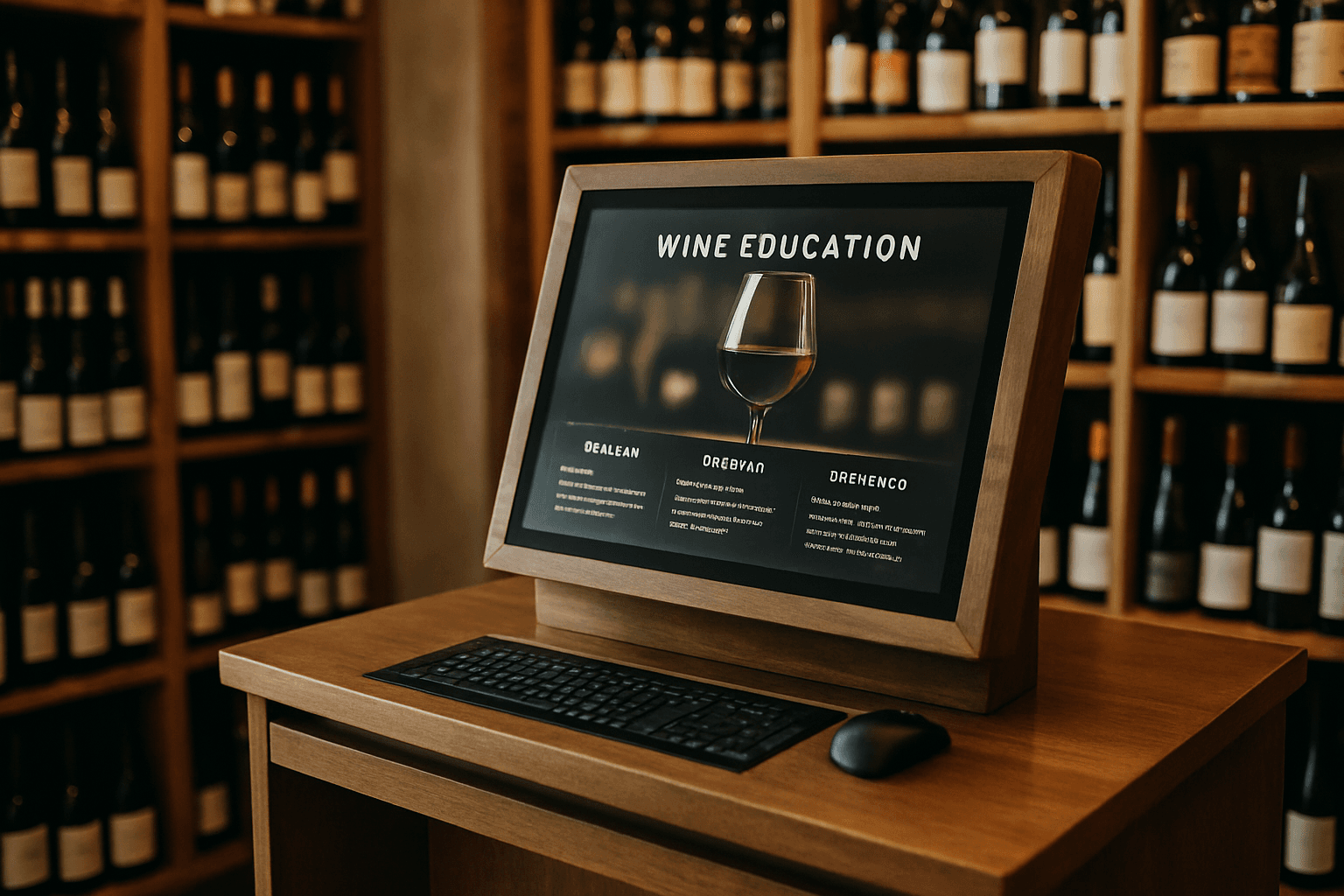
Learn how to build a wine education kiosk using RAG AI to boost customer confidence and sales. Step-by-step guide for liquor store owners and retailers.
- The Wine Wall Problem: Why Most Customers Leave Without Buying
- What Is RAG and Why It's the Right Architecture for Wine Retail
- The Technical Blueprint: Building Your RAG Wine Recommendation Engine
- Hardware and UX: What the Best AI Wine Kiosks Actually Look Like
- Keeping It Legal: Three-Tier Compliance and Kiosk Content Guardrails
Every liquor retailer knows the moment: a customer stands in front of the wine wall, overwhelmed, phone in one hand, bottle in the other, and your entire floor staff is tied up at the register. That customer isn't lacking interest. They're lacking guidance. And in an industry where the average store carries thousands of wine SKUs but staffs two to five people per shift [VERIFY, consider citing NBWA or IBISWorld data], that guidance gap is bleeding revenue every single day. The wine education kiosk, powered by Retrieval Augmented Generation, is how you close it.
This isn't a concept deck or a futurist's daydream. The underlying AI architecture is production-ready, the hardware costs less than a month of part-time labor, and the wine data to fuel it already exists in your POS system and in publicly available datasets. What's changed is that RAG now lets you combine your real-time inventory with sommelier-depth wine knowledge and deliver it conversationally, at the shelf, to every customer who walks in, without adding a single hour of payroll.
In this guide, we'll walk through the full build: the problem the kiosk solves, why RAG is the right architecture, the technical blueprint for your recommendation engine, hardware and UX decisions, three-tier compliance guardrails, ROI measurement, and a 30-day action plan to get from concept to deployed kiosk. Whether you're a single-store independent or a multi-location chain, this is your playbook.
The Wine Wall Problem: Why Most Customers Leave Without Buying
Picture the scene every Friday at 5:30 PM: a customer walks into your store, scans 800+ wine labels arranged floor-to-ceiling, picks up a bottle, reads the back, puts it down, picks up another, and walks out empty-handed. Your two staff members on shift are already ringing up regulars and restocking the bourbon aisle. Nobody's available to ask, "What are you cooking tonight?"
This is the wine wall problem, and it's costing you real revenue every single shift.
Most liquor stores carry hundreds to thousands of wine SKUs, yet staff a skeleton crew who can't possibly guide every browsing customer through that intimidating wall of labels. The result? Customers default to the same safe $12 bottle they always buy, or they leave altogether.
The Paradox of Choice in a 10,000-SKU Store
The psychology is well-documented: more options create more anxiety, not more sales. When a customer faces 40 Cabernets on a single shelf, the cognitive load becomes paralyzing. Traditional wine education at scale requires massive human capital, the South Beach Wine & Food Festival, for example, deploys roughly 1,500 trained students just to staff guided tastings across a single event [VERIFY, source from SOBEWFF or trade coverage]. That model doesn't translate to a Tuesday night in a strip-mall wine shop.
What Pennsylvania's Pronto Kiosk Experiment Taught Us
Consumer appetite for self-service wine technology isn't new. Back in 2011, Pronto wine kiosks were piloted in 24 Walmart stores across Pennsylvania, one of the earliest large-scale attempts at automated wine retail. The machines dispensed wine after ID verification, but they lacked any meaningful recommendation intelligence. The technology simply wasn't ready.
Now it is. RAG, Retrieval Augmented Generation, finally makes it possible to build an in-store recommendation system with the knowledge depth of a sommelier and the patience of a saint. One RAG practitioner tested their system against 65 wine books' worth of domain-specific content using multimodal Graph RAG, and publicly available wine review datasets contain thousands of rows of tasting notes and pairing data ready for ingestion. A RAG-powered recommendation engine can deliver that expertise 24/7 with zero incremental labor cost, no scheduling, no training, no turnover.
The kiosk has graduated from vending machine to virtual sommelier. Let's build one.
What Is RAG and Why It's the Right Architecture for Wine Retail
Understanding the technology behind the kiosk is essential, not because you need to become an AI engineer, but because knowing why RAG works will help you make smarter decisions about data, vendors, and long-term scalability.
RAG in 60 Seconds: How It Differs From a Basic Chatbot
Here's the simplest way to think about it: a standard chatbot is like a sommelier who studied wine ten years ago and never updated their knowledge. They can speak eloquently about Burgundy in the abstract, but they have no idea what's actually on your shelves, what it costs, or whether it's in stock.
Retrieval Augmented Generation fixes this by adding a critical step before the AI generates any response. Instead of relying solely on an LLM's frozen training data, a RAG-enhanced system first retrieves real-time, store-specific information, your actual inventory, tasting notes, pricing, producer stories, staff picks, and then generates a response grounded in that data.
Discover 7 AI-powered customer engagement tactics that transform cross-selling for liquor stores. Practical strategie...
The difference is night and day. A generic ChatGPT can tell a customer about Barolo in the abstract. A RAG-powered kiosk can say: "We have three Barolos in stock right now, here's the one that pairs with the braised short ribs you mentioned, it's in Aisle 4, and it's $8 less than the one next to it."
That's the gap between interesting and useful.
Why Generic AI Fails at Wine, and RAG Doesn't
Wine is one of the most information-dense consumer categories in existence. Tens of thousands of producers, vintage variation, regional appellation law, food pairing chemistry, the knowledge surface is enormous. Generic LLMs compress all of that into statistical averages, losing the specificity that actually drives purchase decisions.
RAG solves this by keeping your domain knowledge in a separate, queryable layer that the LLM references at inference time. Your inventory changes daily? The retrieval layer reflects that. A new vintage lands on the shelf? It's queryable within hours, not months. The earliest kiosk experiments, like the Pronto pilot, were limited to basic filtering. Today's RAG architecture transforms a retail kiosk from a glorified search bar into something that reasons across your entire catalog in real time.
The Technical Blueprint: Building Your RAG Wine Recommendation Engine
Now let's get into how to build it. Open-source tools have made this accessible to retailers who can follow a recipe. Here's the three-layer architecture that turns a tablet into your most knowledgeable floor employee.
Step 1: Curate Your Wine Knowledge Base
Your recommendation engine is only as good as what it knows. You need three data layers:
(a) Store inventory data. Pull your live SKU list from your POS or ERP, product names, prices, stock levels, shelf locations. This grounds every recommendation in what you actually sell today.
(b) Wine domain knowledge. This is where depth matters. Structured sources like Wine-Searcher, CellarTracker, and publicly available datasets give your system real expertise. One practitioner demonstrated that a well-built RAG system can absorb the equivalent of 65+ wine books, more knowledge than any single staff member carries.
(c) Local context. Staff picks, seasonal promotions, food pairing guides, event tie-ins. This layer is your competitive moat, it's what makes your kiosk feel like your store, not a generic search engine.
Step 2: Vector Embeddings and Semantic Search
Here's where it gets powerful. A vector database like Qdrant converts every wine description into a mathematical representation, an embedding, that captures meaning, not just keywords. When a customer types "something fruity but not too sweet for a summer barbecue," the system matches by semantic similarity. It understands that a dry Provençal rosé fits that intent even though the word "fruity" never appears in the tasting note. Traditional keyword search can't do this. Semantic search can.
Step 3: Connect the LLM Layer for Natural Conversation
The retrieval results get passed to an LLM, GPT-4, Claude, or open-source models like Llama, which generates a natural, conversational response. This is the layer that transforms the experience from database lookup to something that feels like talking to a knowledgeable staff member: "For your barbecue, I'd suggest the Domaine Houchart Rosé on aisle 3, it's dry with bright strawberry notes, and it's on our summer promo at $12.99."
Want to prototype without an enterprise budget? Open-source projects like aadii0408/Wine_Recommender_AI-Agent ↗ on GitHub provide accessible starting points with working RAG architectures you can adapt to your inventory.
Discover 9 critical luxury wine strategy moves for US liquor retailers, distributors, and brand managers navigating e...
Hardware and UX: What the Best AI Wine Kiosks Actually Look Like
With the backend architecture in place, the next question is what your customers actually see and touch. The best recommendation engine in the world is worthless if the physical experience doesn't earn those critical first 90 seconds of attention.
Lessons From PairAnything and WineKick
Don't start from scratch, study what's already working. PairAnything's Recommendation Kiosk is purpose-built to sit adjacent to wine displays, delivering real-time product education at the exact moment a customer is making a decision. WineKick raises the bar further with bottle images, tasting descriptions, and, critically, a store map showing exactly where to find the recommended product. That last detail is the UX standard your system needs to hit.
Placement, Screen Size, and the 90-Second Interaction Window
Hardware doesn't need to be complicated. A 15–22 inch touchscreen tablet or mounted display, connected to your RAG backend via Wi-Fi, gets the job done. Total cost for a basic setup: under $1,500 using a commercial tablet and floor stand.
The harder design challenge is time. The average browsing customer gives your kiosk 60–90 seconds. Design for three fast interaction paths:
- "What goes with [dish]?", food pairing mode
- "I liked [wine X], what else?", preference-based discovery
- "What's on sale / staff pick?", promotional mode
There's real consumer demand for guided wine education. Tria wine bar opened a dedicated event space for sommelier-led classes and tastings, confirming customers actively seek this kind of experience. A kiosk extends it to every hour your store is open, without the headcount.
Keeping It Legal: Three-Tier Compliance and Kiosk Content Guardrails
Technology is the easy part. Navigating the regulatory landscape of the three-tier system, where producers, distributors, and retailers operate under strict separation rules, is where many kiosk projects stall. Here's how to build yours on solid legal ground from day one.
In a three-tier system, a kiosk funded or content-controlled by a producer or distributor can trigger tied-house violations in many states. The fix is simple: retailers must own the kiosk and its content layer. Full stop.
What Your Kiosk Can and Can't Say
Your recommendation engine needs hard guardrails baked into the system prompt and retrieval filters. Configure it to never make health claims, never serve recommendations without an age-gate interaction, and always display your state's required disclaimers. Remember, even the basic Pronto self-service kiosks drew intense regulatory scrutiny back in 2011. An AI-powered deployment will face even more. Build compliance into the architecture, not as an afterthought.
Distributor and Producer Data Sharing Considerations
Here's the opportunity: providing structured product data, tasting notes, origin stories, food pairings, to a retailer's recommendation system is product education, not promotional consideration. It doesn't cross tied-house lines. Distributors who supply clean, structured portfolio data become the easiest suppliers to feature, and their bottles get recommended more often as a result.
Measuring ROI: What to Track After Your Kiosk Goes Live
Compliance is handled. The kiosk is on the floor. Now comes the question every owner and operator asks: is this thing actually making me money? A kiosk isn't just a customer-facing tool, it's a data engine. But only if you're measuring the right things.
Conversion Metrics That Matter
Start with four core KPIs:
- Kiosk interactions per day, baseline engagement tells you if placement and signage are working.
- Recommendation-to-purchase conversion rate, track this via QR code coupons printed at the kiosk or staff-assisted checkout flags. Even a modest conversion rate on kiosk-influenced purchases represents net-new revenue from customers who might have walked out empty-handed.
- Average bottle price of kiosk-influenced purchases vs. store average, RAG-powered recommendations consistently guide customers toward higher-confidence purchases, which typically means trading up a few dollars per bottle.
- Category exploration, are customers buying outside their usual varietal? This is where the system proves its value: turning Pinot Grigio-only buyers into Albariño converts.
Using Kiosk Data to Optimize Inventory and Planograms
Here's the hidden ROI: every interaction is a demand signal. If 40% of queries ask for "dry red under $20 for pasta," that tells you exactly what to stock, where to shelf it, and what to feature in your next endcap. This is real-time demand intelligence that normally takes months to surface through depletion reports, and it's data distributors and producers would pay to see.
Discover 7 AI-powered customer engagement strategies for liquor retailers. Learn how AI recommendation engines and re...
The feedback loop matters too. Gaps become immediately visible through unanswered queries. If customers keep asking about natural wines and your system returns thin results, that's a curation signal and an inventory signal in one.
This is where LiquorChat connects the dots. The kiosk isn't a standalone gadget, it's the front door to operationalizing AI across your entire business, from query-driven inventory optimization to smarter distributor ordering to planogram decisions backed by actual customer intent data. Not sell-through from last quarter. What people want right now.
Start Small, Scale Smart: Your 30-Day Action Plan
You've seen the architecture, the hardware, the compliance framework, and the ROI model. Now let's collapse all of it into a realistic timeline. You don't need a six-figure budget or a six-month runway. Here's how to get a functional wine education kiosk from concept to floor in four weeks.
Week-by-Week Implementation Roadmap
Week 1: Build Your Knowledge Base. Export and clean your wine inventory data, SKU, varietal, region, price, tasting notes, food pairings. This is the foundation of your RAG recommendation engine. Publicly available wine review datasets can supplement your catalog, but your proprietary inventory data is what makes the system yours.
Week 2: Choose Your Stack. DIY path: fork an open-source RAG wine recommender from GitHub, spin up a Qdrant vector database, and connect to an LLM API. The architecture scales, practitioners have demonstrated it handling tens of thousands of domain documents without degradation. Platform path: use LiquorChat's pre-built RAG infrastructure designed specifically for alc-bev retail, and skip the infrastructure headaches entirely.
Week 3: Test Relentlessly. Load your data and run 50 common customer queries, "What's a good Pinot Noir under $25?", "What pairs with salmon?" Recruit two staff members to stress-test and flag bad recommendations.
Week 4: Deploy. Put it on a tablet near your wine section. Add shelf signage: "Meet your AI sommelier." Track interactions. Iterate weekly.
When to DIY vs. When to Use a Platform Like LiquorChat
DIY makes sense if you have a developer on staff, want full control over your recommendation system, and are comfortable maintaining vector databases and prompt pipelines long-term.
A platform like LiquorChat makes sense for everyone else, which is most retailers. Pre-built alc-bev RAG infrastructure, compliance guardrails, and inventory integrations mean you're deploying in days, not debugging for months.
The Bottom Line: Your Wine Wall Is Talking, Start Listening
The wine wall problem isn't going away. SKU counts keep climbing, staffing keeps getting harder, and customers keep walking out the door because nobody was available to say, "Try this one." A wine education kiosk powered by RAG doesn't replace your best floor staff, it clones their expertise and makes it available to every customer, every hour, every day.
The building blocks are all here: open-source RAG architectures that can absorb tens of thousands of wine data points, vector databases that understand what a customer means rather than just what they type, LLMs that turn retrieval into natural conversation, and hardware that costs less than a case of premium Burgundy. The three-tier compliance path is clear. The ROI metrics are trackable from day one. And every unanswered query your kiosk logs is a demand signal your competitors don't have.
The retailers who move first don't just sell more wine, they build a real-time intelligence layer across their entire operation: smarter ordering, tighter inventory, stronger distributor relationships, and a customer experience that turns browsers into buyers and buyers into regulars.
Whether you're a single-store operator or a 50-location chain, LiquorChat can help you move from concept to deployed kiosk in weeks, not months. The technology is here. The consumer demand is proven. The only question is whether your competitors get there first.