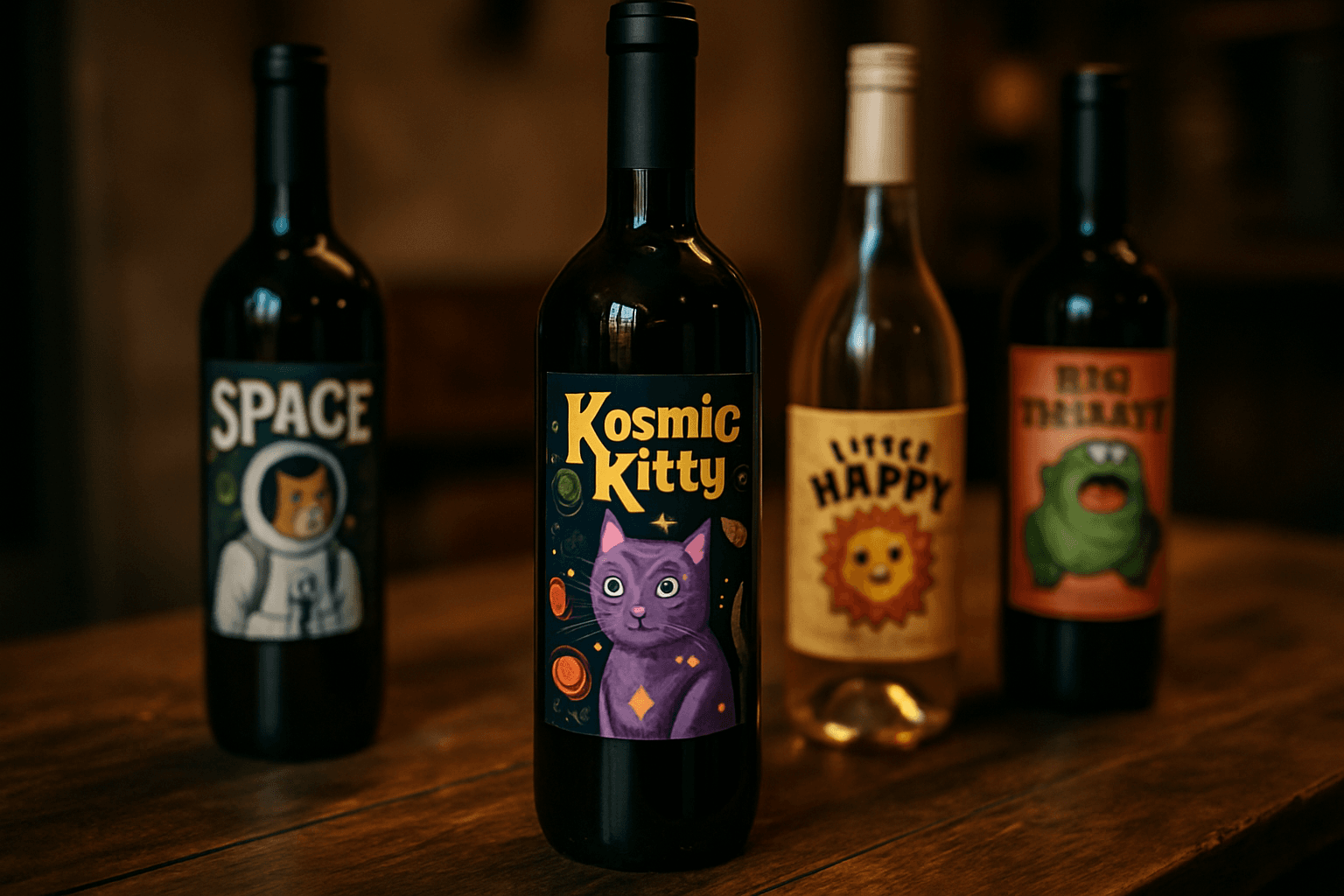
Kosmic Kitty Wines and the Rise of Anti-Serious Branding: What Disruptive Wine Labels Mean for Retail Assortment Strategy
for the title,
for sections,
for subsections
3. Add schema.org Article microdata on the tag
4. Do NOT include , , or — just the content
5. Use tags for paragraphs,
/ for lists
6. Add suggested alt text for any image placeholders as HTML comments
7. Keep the HTML clean and readable — no inline styles
8. Preserve all links from the markdown
Let me structure this:
- Main title:
- Introduction section
- Multiple elements for each major section
- for main sections
-
for subsections
- for the callout boxes or key quotes
- for bullet points
- for numbered steps (like the action plan)
- tags for links with proper href attributes
- for bold text
- for emphasis where needed
Let me identify the main sections from the markdown:
1. Introduction (no explicit heading but it's content before first h2)
2. Why Wine Labels Got Boring (And How That's Now a Competitive Opportunity)
- The challenge of shelf homogenization
- What shoppers see when every shelf looks the same
3. What Exactly Are Disruptive Wine Labels?
- Anti-serious branding defined
- The psychology of breaking the wine rulebook
4. Case Studies in Wine Category Disruption
- Big Fin: Jumping off the shelf
- 19 Crimes: When AR meets rebellion
- Kosmic Kitty Wines: The new wave of anti-serious branding
5. The Impact of Label Storytelling on Brand Success
- Why meaningful labels drive brand recognition
- Turning label appeal into customer loyalty
6. What Disruptive Wine Labels Mean for Your Retail Assortment Strategy
- Reading the Shelf: Where Disruptive Labels Fit
- Balancing Tradition and Disruption in Your Mix
- Evaluating Disruptive Wine Brands for Your Store
7. How to Evaluate Disruptive Wine Brands for Your Shelves
- Questions to Ask Before Adding a Disruptive Label
- The Quality-Disruption Balance
8. Getting Started: Your Action Plan for Disruptive Wine Labels
- Three steps to add disruptive wines today
- The future of wine packaging
9. Final Thoughts: Your Shelves, Your Story
The main call-to-action appears at the end, which I should treat as its own section rather than embedding it within another heading. I'll structure the closing with a strong paragraph and then highlight the actionable next steps that readers should take.
The Rise of Disruptive Wine Labels: A Practical Guide for Liquor Retailers
Walk into most liquor stores today and you'll notice something: wine shelves look remarkably similar. Rows of bottles compete for attention with nearly identical presentation — traditional labels, conservative colors, and messaging that assumes customers already know what they want. For liquor store owners, this sameness creates both a challenge and an opportunity. While customers may feel overwhelmed by endless options that blur together, stores that understand the power of disruptive wine labels can stand apart from competitors and capture attention that others are leaving on the table.
The good news? You don't need to overhaul your entire wine assortment strategy to benefit. A few well-chosen bottles with bold storytelling and unconventional design can transform your shelves from forgettable to memorable. In this guide, we'll explore why wine labels became so uniform, what "disruptive" really means, and how you can leverage these eye-catching bottles to drive sales and customer loyalty.
Why Wine Labels Got Boring (And How That's Now a Competitive Opportunity)
The challenge of shelf homogenization
For decades, wine labeling followed an unwritten rule: heritage, restraint, tradition. Brands competed on terroir, vintage, and family legacy. But when every bottle tells the same story, something gets lost.
Wine has been in danger of turning into a "boring sea of white noise," making disruptive alcohol branding a competitive advantage (Drink With Your Eyes) for brands willing to step outside the expected. One brand, Big Fin, literally "jumped off the shelf" by ignoring wine category norms of heritage, restraint, and tradition (Wine Category Disruption - Greatergood® Brand).
What shoppers see when every shelf looks the same
Wine labels can tell a story, communicate ideas, and create brand recognition that turn wine drinkers into loyal customers. The wine market is massive and growing — your shelves are crowded with competition. When everything looks similar, the opportunity to catch a shopper's eye disappears.
This is where your wine assortment strategy matters. Disruptive wine labels create built-in conversation starters. They pull customers in, make your shelves memorable, and help you stand apart from the store down the street. For liquor store owners willing to embrace anti-serious wine branding, that sea of sameness becomes someone else's problem — and your competitive edge.
What Exactly Are Disruptive Wine Labels?
Anti-serious branding defined
When we talk about disruptive wine labels, we're talking about a deliberate shift away from the traditional wine marketing playbook. Instead of relying on heritage imagery, elegant serif fonts, and restrained sophistication, anti-serious wine branding takes a bold, often playful approach that makes shoppers do a double-take.
The goal isn't just looking different — it's creating shelf-stopping visual disruption that makes shoppers pause and pick up the bottle. Think of it as the difference between a whisper and a shout in a crowded room.
The psychology of breaking the wine rulebook
The wine industry can leverage shocking labels to disrupt traditional branding norms and attract new demographics. This isn't just about aesthetics — it's about psychology.
Wine has been in danger of turning into a "boring sea of white noise," making disruptive alcohol branding a competitive advantage. Big Fin "jumped off the shelf" by ignoring wine category norms of heritage, restraint, and tradition.
The psychology is simple: your customers are bombarded with choices. A wine wearing a traditional label gets lost in the visual noise. But a bottle with an unexpected label? That creates conversation — and conversation creates conversions.
For your wine assortment strategy, stocking disruptive labels means giving hesitant shoppers permission to try something new. The unconventional label lowers the intimidation barrier and invites curiosity. That's the real power of anti-serious wine branding — it opens doors to new demographics who might otherwise walk right past the wine aisle.
Case Studies in Wine Category Disruption
The shift toward disruptive wine labels isn't just a trend — it's a strategic response to a real market problem. Wine has been in danger of turning into a "boring sea of white noise," making bold branding a competitive advantage for brands willing to break the mold.
Big Fin: Jumping off the shelf
Some of the most memorable launches in recent years succeeded precisely because they ignored what wine was "supposed" to look like. Big Fin "jumped off the shelf" by ignoring wine category norms of heritage, restraint, and tradition that had dominated shelf space for decades. The result? Instant differentiation in a crowded market.
19 Crimes: When AR meets rebellion
19 Crimes pioneered interactive wine experiences through augmented reality technology on their labels, transforming how shoppers engage with wine bottles. What began as an innovative approach to capturing attention evolved into one of the most recognized wine brands in the country. The lesson here is clear: innovative technology, when paired with a rebellious brand personality, creates connection. For your wine assortment strategy, this proves that cutting-edge marketing doesn't have to feel intimidating — it just needs to feel authentic.
Kosmic Kitty Wines: The new wave of anti-serious branding
Where 19 Crimes used technology to tell its story, Kosmic Kitty Wines takes a different approach. This brand represents the next evolution of anti-serious wine branding — bold, playful, and unapologetically fun. It refuses to play by traditional wine marketing rules, speaking directly to consumers tired of pretension.
Wine labels can tell a story, communicate ideas, and create brand recognition that turn wine drinkers into loyal customers. These disruptive wine labels prove that sometimes, the best way to win customers is to make them smile first and sip second.
The Impact of Label Storytelling on Brand Success
Why meaningful labels drive brand recognition
Wine has been called "a boring sea of white noise" in the crowded retail space, making disruptive wine marketing essential for standing out. Labels that tell a story communicate your brand's values and create recognition that turns browsers into buyers. Big Fin "jumped off the shelf" by ignoring category norms of heritage and tradition, proving that anti-serious wine branding works. The wine market is massive, and your wine assortment strategy must include bottles that start conversations before customers even pop the cork.
Turning label appeal into customer loyalty
Story-driven labels create emotional connections that go beyond taste profiles and price points. When a label makes someone laugh, think, or snap a photo for friends, it becomes memorable. These emotional moments drive repeat purchases and word-of-mouth referrals — free marketing your store benefits from every time that customer recommends you to their circle.
What Disruptive Wine Labels Mean for Your Retail Assortment Strategy
Reading the Shelf: Where Disruptive Labels Fit
Disruptive wine labels work best in the "discovery zone" of your store — the area where customers pause, explore, and look for something unexpected. 19 Crimes pioneered this space by using augmented reality to create interactive experiences that turned casual browsers into buyers. These labels grab attention because they tell stories, communicate ideas, and create brand recognition that turn wine drinkers into loyal customers.
Balancing Tradition and Disruption in Your Mix
Your wine assortment strategy shouldn't be all or nothing. Think of disruptive labels as seasoning, not the main course. The wine industry can leverage shocking labels to disrupt traditional branding norms and attract new demographics, but most customers still want a core selection of familiar classics alongside their adventurous finds. This balance positions your store as both trustworthy and exciting — a place where regulars feel comfortable and newcomers feel intrigued.
Evaluating Disruptive Wine Brands for Your Store
Not every disruptive label will work for every store — location, demographics, and customer base matter significantly. A college-town shop and a suburban family store need different approaches. Before adding any anti-serious wine branding to your shelves, ask yourself: Will this spark conversation with my specific customers? Does this align with my store's personality? Consider adding one or two disruptive labels as "conversation starters" that differentiate your selection from big-box competitors. Wine has been in danger of turning into a "boring sea of white noise," making disruptive alcohol branding a competitive advantage when chosen strategically.
How to Evaluate Disruptive Wine Brands for Your Shelves
Questions to Ask Before Adding a Disruptive Label
Before committing to any new addition, ask yourself: Does this brand's personality match my customer base? Anti-serious wine branding works best when your shoppers are looking for conversation starters and social sharing moments. A boutique in an entertainment district will move bold, attention-grabbing bottles differently than a shop targeting traditional oenophiles.
Also consider whether the brand's story resonates. Wine labels can tell a story, communicate ideas, and create brand recognition that turn wine drinkers into loyal customers. Does this narrative add something fresh to your current wine assortment strategy?
Finally, stay informed on compliance. Regulatory changes could reshape what claims and designs are permissible — especially for technology-driven campaigns like augmented reality labels.
The Quality-Disruption Balance
The flashiest label won't save mediocre wine. Disruptive wine labels grab attention, but taste quality determines whether customers return. Always request samples before stocking. Pair the novelty factor with solid product fundamentals.
Start small. Buy a few bottles, watch how they perform over a month, and track customer reactions. If they sell out, reinvest. If they sit, you'll know without overcommitting your shelf space.
Great disruptive wine marketing amplifies a quality product — it doesn't replace one.
Getting Started: Your Action Plan for Disruptive Wine Labels
Three steps to add disruptive wines today
-
Audit your current shelf. Walk your wine aisle with fresh eyes. Identify where disruptive wine labels could stand out against neighboring bottles. The wine industry has been fighting against becoming "a boring sea of white noise," making bold packaging a competitive advantage that attracts modern shoppers.
-
Start small. Add one or two attention-grabbing labels to your rotation and monitor sales and customer feedback. Watch how these bottles perform and whether they spark the conversations you're looking for.
-
Tell the story. Train your staff on the brand backstory so they can share it with curious shoppers. Wine labels can turn wine drinkers into loyal customers when your team knows how to communicate the narrative behind each bottle.
The future of wine packaging
Brands like Big Fin have "jumped off the shelf" by ignoring wine category norms of heritage and tradition. Your store should reflect that same energy. The wine industry can leverage shocking labels to attract new demographics, and your shelves should showcase that innovation.
Final Thoughts: Your Shelves, Your Story
The rise of disruptive wine labels represents a fundamental shift in how wine communicates its value. Gone are the days when heritage and tradition alone could carry a brand. Today's shoppers — especially younger demographics — want personality, story, and authenticity. They want wines that match their Instagram feed and spark conversations at dinner parties.
For liquor store owners, this shift creates real opportunity. Your shelves are the stage where these brands meet their customers. By thoughtfully curating a mix that includes bold, disruptive wine labels alongside traditional favorites, you become more than a transactional location. You become a destination — a place where shopping for wine feels like discovery.
Don't let your store blend into the background. Take a hard look at your current wine assortment strategy and ask yourself: Where's the personality? Where's the story? Where are the conversation starters?
The bottles that make customers smile, pause, and pick them up are the ones that'll keep them coming back. And that's how disruptive wine labels transform your business — one memorable bottle at a time.
Ready to shake up your wine selection? Start by visiting your distributors and asking specifically about their most innovative, conversation-starting wine labels. Bring one or two back, set them prominently on your shelf, and watch what happens. Your customers — and your bottom line — will thank you.
tags for paragraphs,
- /
- Audit your current shelf. Walk your wine aisle with fresh eyes. Identify where disruptive wine labels could stand out against neighboring bottles. The wine industry has been fighting against becoming "a boring sea of white noise," making bold packaging a competitive advantage that attracts modern shoppers.
- Start small. Add one or two attention-grabbing labels to your rotation and monitor sales and customer feedback. Watch how these bottles perform and whether they spark the conversations you're looking for.
- Tell the story. Train your staff on the brand backstory so they can share it with curious shoppers. Wine labels can turn wine drinkers into loyal customers when your team knows how to communicate the narrative behind each bottle.
- for lists
6. Add suggested alt text for any image placeholders as HTML comments
7. Keep the HTML clean and readable — no inline styles
8. Preserve all links from the markdown
Let me structure this:
- Main title:
- Introduction section
- Multiple elements for each major section
- for main sections
-
for subsections
- for the callout boxes or key quotes
- for bullet points
- for numbered steps (like the action plan)
- tags for links with proper href attributes
- for bold text
- for emphasis where needed
Let me identify the main sections from the markdown:
1. Introduction (no explicit heading but it's content before first h2)
2. Why Wine Labels Got Boring (And How That's Now a Competitive Opportunity)
- The challenge of shelf homogenization
- What shoppers see when every shelf looks the same
3. What Exactly Are Disruptive Wine Labels?
- Anti-serious branding defined
- The psychology of breaking the wine rulebook
4. Case Studies in Wine Category Disruption
- Big Fin: Jumping off the shelf
- 19 Crimes: When AR meets rebellion
- Kosmic Kitty Wines: The new wave of anti-serious branding
5. The Impact of Label Storytelling on Brand Success
- Why meaningful labels drive brand recognition
- Turning label appeal into customer loyalty
6. What Disruptive Wine Labels Mean for Your Retail Assortment Strategy
- Reading the Shelf: Where Disruptive Labels Fit
- Balancing Tradition and Disruption in Your Mix
- Evaluating Disruptive Wine Brands for Your Store
7. How to Evaluate Disruptive Wine Brands for Your Shelves
- Questions to Ask Before Adding a Disruptive Label
- The Quality-Disruption Balance
8. Getting Started: Your Action Plan for Disruptive Wine Labels
- Three steps to add disruptive wines today
- The future of wine packaging
9. Final Thoughts: Your Shelves, Your Story
The main call-to-action appears at the end, which I should treat as its own section rather than embedding it within another heading. I'll structure the closing with a strong paragraph and then highlight the actionable next steps that readers should take.
The Rise of Disruptive Wine Labels: A Practical Guide for Liquor Retailers
Walk into most liquor stores today and you'll notice something: wine shelves look remarkably similar. Rows of bottles compete for attention with nearly identical presentation — traditional labels, conservative colors, and messaging that assumes customers already know what they want. For liquor store owners, this sameness creates both a challenge and an opportunity. While customers may feel overwhelmed by endless options that blur together, stores that understand the power of disruptive wine labels can stand apart from competitors and capture attention that others are leaving on the table.
The good news? You don't need to overhaul your entire wine assortment strategy to benefit. A few well-chosen bottles with bold storytelling and unconventional design can transform your shelves from forgettable to memorable. In this guide, we'll explore why wine labels became so uniform, what "disruptive" really means, and how you can leverage these eye-catching bottles to drive sales and customer loyalty.
Why Wine Labels Got Boring (And How That's Now a Competitive Opportunity)
The challenge of shelf homogenization
For decades, wine labeling followed an unwritten rule: heritage, restraint, tradition. Brands competed on terroir, vintage, and family legacy. But when every bottle tells the same story, something gets lost.
Wine has been in danger of turning into a "boring sea of white noise," making disruptive alcohol branding a competitive advantage (Drink With Your Eyes) for brands willing to step outside the expected. One brand, Big Fin, literally "jumped off the shelf" by ignoring wine category norms of heritage, restraint, and tradition (Wine Category Disruption - Greatergood® Brand).
What shoppers see when every shelf looks the same
Wine labels can tell a story, communicate ideas, and create brand recognition that turn wine drinkers into loyal customers. The wine market is massive and growing — your shelves are crowded with competition. When everything looks similar, the opportunity to catch a shopper's eye disappears.
This is where your wine assortment strategy matters. Disruptive wine labels create built-in conversation starters. They pull customers in, make your shelves memorable, and help you stand apart from the store down the street. For liquor store owners willing to embrace anti-serious wine branding, that sea of sameness becomes someone else's problem — and your competitive edge.
What Exactly Are Disruptive Wine Labels?
Anti-serious branding defined
When we talk about disruptive wine labels, we're talking about a deliberate shift away from the traditional wine marketing playbook. Instead of relying on heritage imagery, elegant serif fonts, and restrained sophistication, anti-serious wine branding takes a bold, often playful approach that makes shoppers do a double-take.
The goal isn't just looking different — it's creating shelf-stopping visual disruption that makes shoppers pause and pick up the bottle. Think of it as the difference between a whisper and a shout in a crowded room.
The psychology of breaking the wine rulebook
The wine industry can leverage shocking labels to disrupt traditional branding norms and attract new demographics. This isn't just about aesthetics — it's about psychology.
Wine has been in danger of turning into a "boring sea of white noise," making disruptive alcohol branding a competitive advantage. Big Fin "jumped off the shelf" by ignoring wine category norms of heritage, restraint, and tradition.
The psychology is simple: your customers are bombarded with choices. A wine wearing a traditional label gets lost in the visual noise. But a bottle with an unexpected label? That creates conversation — and conversation creates conversions.
For your wine assortment strategy, stocking disruptive labels means giving hesitant shoppers permission to try something new. The unconventional label lowers the intimidation barrier and invites curiosity. That's the real power of anti-serious wine branding — it opens doors to new demographics who might otherwise walk right past the wine aisle.
Case Studies in Wine Category Disruption
The shift toward disruptive wine labels isn't just a trend — it's a strategic response to a real market problem. Wine has been in danger of turning into a "boring sea of white noise," making bold branding a competitive advantage for brands willing to break the mold.
Big Fin: Jumping off the shelf
Some of the most memorable launches in recent years succeeded precisely because they ignored what wine was "supposed" to look like. Big Fin "jumped off the shelf" by ignoring wine category norms of heritage, restraint, and tradition that had dominated shelf space for decades. The result? Instant differentiation in a crowded market.
19 Crimes: When AR meets rebellion
19 Crimes pioneered interactive wine experiences through augmented reality technology on their labels, transforming how shoppers engage with wine bottles. What began as an innovative approach to capturing attention evolved into one of the most recognized wine brands in the country. The lesson here is clear: innovative technology, when paired with a rebellious brand personality, creates connection. For your wine assortment strategy, this proves that cutting-edge marketing doesn't have to feel intimidating — it just needs to feel authentic.
Kosmic Kitty Wines: The new wave of anti-serious branding
Where 19 Crimes used technology to tell its story, Kosmic Kitty Wines takes a different approach. This brand represents the next evolution of anti-serious wine branding — bold, playful, and unapologetically fun. It refuses to play by traditional wine marketing rules, speaking directly to consumers tired of pretension.
Wine labels can tell a story, communicate ideas, and create brand recognition that turn wine drinkers into loyal customers. These disruptive wine labels prove that sometimes, the best way to win customers is to make them smile first and sip second.
The Impact of Label Storytelling on Brand Success
Why meaningful labels drive brand recognition
Wine has been called "a boring sea of white noise" in the crowded retail space, making disruptive wine marketing essential for standing out. Labels that tell a story communicate your brand's values and create recognition that turns browsers into buyers. Big Fin "jumped off the shelf" by ignoring category norms of heritage and tradition, proving that anti-serious wine branding works. The wine market is massive, and your wine assortment strategy must include bottles that start conversations before customers even pop the cork.
Turning label appeal into customer loyalty
Story-driven labels create emotional connections that go beyond taste profiles and price points. When a label makes someone laugh, think, or snap a photo for friends, it becomes memorable. These emotional moments drive repeat purchases and word-of-mouth referrals — free marketing your store benefits from every time that customer recommends you to their circle.
What Disruptive Wine Labels Mean for Your Retail Assortment Strategy
Reading the Shelf: Where Disruptive Labels Fit
Disruptive wine labels work best in the "discovery zone" of your store — the area where customers pause, explore, and look for something unexpected. 19 Crimes pioneered this space by using augmented reality to create interactive experiences that turned casual browsers into buyers. These labels grab attention because they tell stories, communicate ideas, and create brand recognition that turn wine drinkers into loyal customers.
Balancing Tradition and Disruption in Your Mix
Your wine assortment strategy shouldn't be all or nothing. Think of disruptive labels as seasoning, not the main course. The wine industry can leverage shocking labels to disrupt traditional branding norms and attract new demographics, but most customers still want a core selection of familiar classics alongside their adventurous finds. This balance positions your store as both trustworthy and exciting — a place where regulars feel comfortable and newcomers feel intrigued.
Evaluating Disruptive Wine Brands for Your Store
Not every disruptive label will work for every store — location, demographics, and customer base matter significantly. A college-town shop and a suburban family store need different approaches. Before adding any anti-serious wine branding to your shelves, ask yourself: Will this spark conversation with my specific customers? Does this align with my store's personality? Consider adding one or two disruptive labels as "conversation starters" that differentiate your selection from big-box competitors. Wine has been in danger of turning into a "boring sea of white noise," making disruptive alcohol branding a competitive advantage when chosen strategically.
How to Evaluate Disruptive Wine Brands for Your Shelves
Questions to Ask Before Adding a Disruptive Label
Before committing to any new addition, ask yourself: Does this brand's personality match my customer base? Anti-serious wine branding works best when your shoppers are looking for conversation starters and social sharing moments. A boutique in an entertainment district will move bold, attention-grabbing bottles differently than a shop targeting traditional oenophiles.
Also consider whether the brand's story resonates. Wine labels can tell a story, communicate ideas, and create brand recognition that turn wine drinkers into loyal customers. Does this narrative add something fresh to your current wine assortment strategy?
Finally, stay informed on compliance. Regulatory changes could reshape what claims and designs are permissible — especially for technology-driven campaigns like augmented reality labels.
The Quality-Disruption Balance
The flashiest label won't save mediocre wine. Disruptive wine labels grab attention, but taste quality determines whether customers return. Always request samples before stocking. Pair the novelty factor with solid product fundamentals.
Start small. Buy a few bottles, watch how they perform over a month, and track customer reactions. If they sell out, reinvest. If they sit, you'll know without overcommitting your shelf space.
Great disruptive wine marketing amplifies a quality product — it doesn't replace one.
Getting Started: Your Action Plan for Disruptive Wine Labels
Three steps to add disruptive wines today
The future of wine packaging
Brands like Big Fin have "jumped off the shelf" by ignoring wine category norms of heritage and tradition. Your store should reflect that same energy. The wine industry can leverage shocking labels to attract new demographics, and your shelves should showcase that innovation.
Final Thoughts: Your Shelves, Your Story
The rise of disruptive wine labels represents a fundamental shift in how wine communicates its value. Gone are the days when heritage and tradition alone could carry a brand. Today's shoppers — especially younger demographics — want personality, story, and authenticity. They want wines that match their Instagram feed and spark conversations at dinner parties.
For liquor store owners, this shift creates real opportunity. Your shelves are the stage where these brands meet their customers. By thoughtfully curating a mix that includes bold, disruptive wine labels alongside traditional favorites, you become more than a transactional location. You become a destination — a place where shopping for wine feels like discovery.
Don't let your store blend into the background. Take a hard look at your current wine assortment strategy and ask yourself: Where's the personality? Where's the story? Where are the conversation starters?
The bottles that make customers smile, pause, and pick them up are the ones that'll keep them coming back. And that's how disruptive wine labels transform your business — one memorable bottle at a time.
Ready to shake up your wine selection? Start by visiting your distributors and asking specifically about their most innovative, conversation-starting wine labels. Bring one or two back, set them prominently on your shelf, and watch what happens. Your customers — and your bottom line — will thank you.
for main sections -
for subsections
- for the callout boxes or key quotes
- for bullet points
- for numbered steps (like the action plan)
- tags for links with proper href attributes
- for bold text
- for emphasis where needed
Let me identify the main sections from the markdown:
1. Introduction (no explicit heading but it's content before first h2)
2. Why Wine Labels Got Boring (And How That's Now a Competitive Opportunity)
- The challenge of shelf homogenization
- What shoppers see when every shelf looks the same
3. What Exactly Are Disruptive Wine Labels?
- Anti-serious branding defined
- The psychology of breaking the wine rulebook
4. Case Studies in Wine Category Disruption
- Big Fin: Jumping off the shelf
- 19 Crimes: When AR meets rebellion
- Kosmic Kitty Wines: The new wave of anti-serious branding
5. The Impact of Label Storytelling on Brand Success
- Why meaningful labels drive brand recognition
- Turning label appeal into customer loyalty
6. What Disruptive Wine Labels Mean for Your Retail Assortment Strategy
- Reading the Shelf: Where Disruptive Labels Fit
- Balancing Tradition and Disruption in Your Mix
- Evaluating Disruptive Wine Brands for Your Store
7. How to Evaluate Disruptive Wine Brands for Your Shelves
- Questions to Ask Before Adding a Disruptive Label
- The Quality-Disruption Balance
8. Getting Started: Your Action Plan for Disruptive Wine Labels
- Three steps to add disruptive wines today
- The future of wine packaging
9. Final Thoughts: Your Shelves, Your Story
The main call-to-action appears at the end, which I should treat as its own section rather than embedding it within another heading. I'll structure the closing with a strong paragraph and then highlight the actionable next steps that readers should take.
The Rise of Disruptive Wine Labels: A Practical Guide for Liquor Retailers
Walk into most liquor stores today and you'll notice something: wine shelves look remarkably similar. Rows of bottles compete for attention with nearly identical presentation — traditional labels, conservative colors, and messaging that assumes customers already know what they want. For liquor store owners, this sameness creates both a challenge and an opportunity. While customers may feel overwhelmed by endless options that blur together, stores that understand the power of disruptive wine labels can stand apart from competitors and capture attention that others are leaving on the table.
The good news? You don't need to overhaul your entire wine assortment strategy to benefit. A few well-chosen bottles with bold storytelling and unconventional design can transform your shelves from forgettable to memorable. In this guide, we'll explore why wine labels became so uniform, what "disruptive" really means, and how you can leverage these eye-catching bottles to drive sales and customer loyalty.
Why Wine Labels Got Boring (And How That's Now a Competitive Opportunity)
The challenge of shelf homogenization
For decades, wine labeling followed an unwritten rule: heritage, restraint, tradition. Brands competed on terroir, vintage, and family legacy. But when every bottle tells the same story, something gets lost.
Wine has been in danger of turning into a "boring sea of white noise," making disruptive alcohol branding a competitive advantage (Drink With Your Eyes) for brands willing to step outside the expected. One brand, Big Fin, literally "jumped off the shelf" by ignoring wine category norms of heritage, restraint, and tradition (Wine Category Disruption - Greatergood® Brand).
What shoppers see when every shelf looks the same
Wine labels can tell a story, communicate ideas, and create brand recognition that turn wine drinkers into loyal customers. The wine market is massive and growing — your shelves are crowded with competition. When everything looks similar, the opportunity to catch a shopper's eye disappears.
This is where your wine assortment strategy matters. Disruptive wine labels create built-in conversation starters. They pull customers in, make your shelves memorable, and help you stand apart from the store down the street. For liquor store owners willing to embrace anti-serious wine branding, that sea of sameness becomes someone else's problem — and your competitive edge.
What Exactly Are Disruptive Wine Labels?
Anti-serious branding defined
When we talk about disruptive wine labels, we're talking about a deliberate shift away from the traditional wine marketing playbook. Instead of relying on heritage imagery, elegant serif fonts, and restrained sophistication, anti-serious wine branding takes a bold, often playful approach that makes shoppers do a double-take.
The goal isn't just looking different — it's creating shelf-stopping visual disruption that makes shoppers pause and pick up the bottle. Think of it as the difference between a whisper and a shout in a crowded room.
The psychology of breaking the wine rulebook
The wine industry can leverage shocking labels to disrupt traditional branding norms and attract new demographics. This isn't just about aesthetics — it's about psychology.
Wine has been in danger of turning into a "boring sea of white noise," making disruptive alcohol branding a competitive advantage. Big Fin "jumped off the shelf" by ignoring wine category norms of heritage, restraint, and tradition.
The psychology is simple: your customers are bombarded with choices. A wine wearing a traditional label gets lost in the visual noise. But a bottle with an unexpected label? That creates conversation — and conversation creates conversions.
For your wine assortment strategy, stocking disruptive labels means giving hesitant shoppers permission to try something new. The unconventional label lowers the intimidation barrier and invites curiosity. That's the real power of anti-serious wine branding — it opens doors to new demographics who might otherwise walk right past the wine aisle.
Case Studies in Wine Category Disruption
The shift toward disruptive wine labels isn't just a trend — it's a strategic response to a real market problem. Wine has been in danger of turning into a "boring sea of white noise," making bold branding a competitive advantage for brands willing to break the mold.
Big Fin: Jumping off the shelf
Some of the most memorable launches in recent years succeeded precisely because they ignored what wine was "supposed" to look like. Big Fin "jumped off the shelf" by ignoring wine category norms of heritage, restraint, and tradition that had dominated shelf space for decades. The result? Instant differentiation in a crowded market.
19 Crimes: When AR meets rebellion
19 Crimes pioneered interactive wine experiences through augmented reality technology on their labels, transforming how shoppers engage with wine bottles. What began as an innovative approach to capturing attention evolved into one of the most recognized wine brands in the country. The lesson here is clear: innovative technology, when paired with a rebellious brand personality, creates connection. For your wine assortment strategy, this proves that cutting-edge marketing doesn't have to feel intimidating — it just needs to feel authentic.
Kosmic Kitty Wines: The new wave of anti-serious branding
Where 19 Crimes used technology to tell its story, Kosmic Kitty Wines takes a different approach. This brand represents the next evolution of anti-serious wine branding — bold, playful, and unapologetically fun. It refuses to play by traditional wine marketing rules, speaking directly to consumers tired of pretension.
Wine labels can tell a story, communicate ideas, and create brand recognition that turn wine drinkers into loyal customers. These disruptive wine labels prove that sometimes, the best way to win customers is to make them smile first and sip second.
The Impact of Label Storytelling on Brand Success
Why meaningful labels drive brand recognition
Wine has been called "a boring sea of white noise" in the crowded retail space, making disruptive wine marketing essential for standing out. Labels that tell a story communicate your brand's values and create recognition that turns browsers into buyers. Big Fin "jumped off the shelf" by ignoring category norms of heritage and tradition, proving that anti-serious wine branding works. The wine market is massive, and your wine assortment strategy must include bottles that start conversations before customers even pop the cork.
Turning label appeal into customer loyalty
Story-driven labels create emotional connections that go beyond taste profiles and price points. When a label makes someone laugh, think, or snap a photo for friends, it becomes memorable. These emotional moments drive repeat purchases and word-of-mouth referrals — free marketing your store benefits from every time that customer recommends you to their circle.
What Disruptive Wine Labels Mean for Your Retail Assortment Strategy
Reading the Shelf: Where Disruptive Labels Fit
Disruptive wine labels work best in the "discovery zone" of your store — the area where customers pause, explore, and look for something unexpected. 19 Crimes pioneered this space by using augmented reality to create interactive experiences that turned casual browsers into buyers. These labels grab attention because they tell stories, communicate ideas, and create brand recognition that turn wine drinkers into loyal customers.
Balancing Tradition and Disruption in Your Mix
Your wine assortment strategy shouldn't be all or nothing. Think of disruptive labels as seasoning, not the main course. The wine industry can leverage shocking labels to disrupt traditional branding norms and attract new demographics, but most customers still want a core selection of familiar classics alongside their adventurous finds. This balance positions your store as both trustworthy and exciting — a place where regulars feel comfortable and newcomers feel intrigued.
Evaluating Disruptive Wine Brands for Your Store
Not every disruptive label will work for every store — location, demographics, and customer base matter significantly. A college-town shop and a suburban family store need different approaches. Before adding any anti-serious wine branding to your shelves, ask yourself: Will this spark conversation with my specific customers? Does this align with my store's personality? Consider adding one or two disruptive labels as "conversation starters" that differentiate your selection from big-box competitors. Wine has been in danger of turning into a "boring sea of white noise," making disruptive alcohol branding a competitive advantage when chosen strategically.
How to Evaluate Disruptive Wine Brands for Your Shelves
Questions to Ask Before Adding a Disruptive Label
Before committing to any new addition, ask yourself: Does this brand's personality match my customer base? Anti-serious wine branding works best when your shoppers are looking for conversation starters and social sharing moments. A boutique in an entertainment district will move bold, attention-grabbing bottles differently than a shop targeting traditional oenophiles.
Also consider whether the brand's story resonates. Wine labels can tell a story, communicate ideas, and create brand recognition that turn wine drinkers into loyal customers. Does this narrative add something fresh to your current wine assortment strategy?
Finally, stay informed on compliance. Regulatory changes could reshape what claims and designs are permissible — especially for technology-driven campaigns like augmented reality labels.
The Quality-Disruption Balance
The flashiest label won't save mediocre wine. Disruptive wine labels grab attention, but taste quality determines whether customers return. Always request samples before stocking. Pair the novelty factor with solid product fundamentals.
Start small. Buy a few bottles, watch how they perform over a month, and track customer reactions. If they sell out, reinvest. If they sit, you'll know without overcommitting your shelf space.
Great disruptive wine marketing amplifies a quality product — it doesn't replace one.
Getting Started: Your Action Plan for Disruptive Wine Labels
Three steps to add disruptive wines today
The future of wine packaging
Brands like Big Fin have "jumped off the shelf" by ignoring wine category norms of heritage and tradition. Your store should reflect that same energy. The wine industry can leverage shocking labels to attract new demographics, and your shelves should showcase that innovation.
Final Thoughts: Your Shelves, Your Story
The rise of disruptive wine labels represents a fundamental shift in how wine communicates its value. Gone are the days when heritage and tradition alone could carry a brand. Today's shoppers — especially younger demographics — want personality, story, and authenticity. They want wines that match their Instagram feed and spark conversations at dinner parties.
For liquor store owners, this shift creates real opportunity. Your shelves are the stage where these brands meet their customers. By thoughtfully curating a mix that includes bold, disruptive wine labels alongside traditional favorites, you become more than a transactional location. You become a destination — a place where shopping for wine feels like discovery.
Don't let your store blend into the background. Take a hard look at your current wine assortment strategy and ask yourself: Where's the personality? Where's the story? Where are the conversation starters?
The bottles that make customers smile, pause, and pick them up are the ones that'll keep them coming back. And that's how disruptive wine labels transform your business — one memorable bottle at a time.
Ready to shake up your wine selection? Start by visiting your distributors and asking specifically about their most innovative, conversation-starting wine labels. Bring one or two back, set them prominently on your shelf, and watch what happens. Your customers — and your bottom line — will thank you.
- for bullet points
-
- for numbered steps (like the action plan)
- tags for links with proper href attributes
- for bold text
- for emphasis where needed
Let me identify the main sections from the markdown:
1. Introduction (no explicit heading but it's content before first h2)
2. Why Wine Labels Got Boring (And How That's Now a Competitive Opportunity)
- The challenge of shelf homogenization
- What shoppers see when every shelf looks the same
3. What Exactly Are Disruptive Wine Labels?
- Anti-serious branding defined
- The psychology of breaking the wine rulebook
4. Case Studies in Wine Category Disruption
- Big Fin: Jumping off the shelf
- 19 Crimes: When AR meets rebellion
- Kosmic Kitty Wines: The new wave of anti-serious branding
5. The Impact of Label Storytelling on Brand Success
- Why meaningful labels drive brand recognition
- Turning label appeal into customer loyalty
6. What Disruptive Wine Labels Mean for Your Retail Assortment Strategy
- Reading the Shelf: Where Disruptive Labels Fit
- Balancing Tradition and Disruption in Your Mix
- Evaluating Disruptive Wine Brands for Your Store
7. How to Evaluate Disruptive Wine Brands for Your Shelves
- Questions to Ask Before Adding a Disruptive Label
- The Quality-Disruption Balance
8. Getting Started: Your Action Plan for Disruptive Wine Labels
- Three steps to add disruptive wines today
- The future of wine packaging
9. Final Thoughts: Your Shelves, Your Story
The main call-to-action appears at the end, which I should treat as its own section rather than embedding it within another heading. I'll structure the closing with a strong paragraph and then highlight the actionable next steps that readers should take.
The Rise of Disruptive Wine Labels: A Practical Guide for Liquor Retailers
Walk into most liquor stores today and you'll notice something: wine shelves look remarkably similar. Rows of bottles compete for attention with nearly identical presentation — traditional labels, conservative colors, and messaging that assumes customers already know what they want. For liquor store owners, this sameness creates both a challenge and an opportunity. While customers may feel overwhelmed by endless options that blur together, stores that understand the power of disruptive wine labels can stand apart from competitors and capture attention that others are leaving on the table.
The good news? You don't need to overhaul your entire wine assortment strategy to benefit. A few well-chosen bottles with bold storytelling and unconventional design can transform your shelves from forgettable to memorable. In this guide, we'll explore why wine labels became so uniform, what "disruptive" really means, and how you can leverage these eye-catching bottles to drive sales and customer loyalty.
Why Wine Labels Got Boring (And How That's Now a Competitive Opportunity)
The challenge of shelf homogenization
For decades, wine labeling followed an unwritten rule: heritage, restraint, tradition. Brands competed on terroir, vintage, and family legacy. But when every bottle tells the same story, something gets lost.
Wine has been in danger of turning into a "boring sea of white noise," making disruptive alcohol branding a competitive advantage (Drink With Your Eyes) for brands willing to step outside the expected. One brand, Big Fin, literally "jumped off the shelf" by ignoring wine category norms of heritage, restraint, and tradition (Wine Category Disruption - Greatergood® Brand).
What shoppers see when every shelf looks the same
Wine labels can tell a story, communicate ideas, and create brand recognition that turn wine drinkers into loyal customers. The wine market is massive and growing — your shelves are crowded with competition. When everything looks similar, the opportunity to catch a shopper's eye disappears.
This is where your wine assortment strategy matters. Disruptive wine labels create built-in conversation starters. They pull customers in, make your shelves memorable, and help you stand apart from the store down the street. For liquor store owners willing to embrace anti-serious wine branding, that sea of sameness becomes someone else's problem — and your competitive edge.
What Exactly Are Disruptive Wine Labels?
Anti-serious branding defined
When we talk about disruptive wine labels, we're talking about a deliberate shift away from the traditional wine marketing playbook. Instead of relying on heritage imagery, elegant serif fonts, and restrained sophistication, anti-serious wine branding takes a bold, often playful approach that makes shoppers do a double-take.
The goal isn't just looking different — it's creating shelf-stopping visual disruption that makes shoppers pause and pick up the bottle. Think of it as the difference between a whisper and a shout in a crowded room.
The psychology of breaking the wine rulebook
The wine industry can leverage shocking labels to disrupt traditional branding norms and attract new demographics. This isn't just about aesthetics — it's about psychology.
Wine has been in danger of turning into a "boring sea of white noise," making disruptive alcohol branding a competitive advantage. Big Fin "jumped off the shelf" by ignoring wine category norms of heritage, restraint, and tradition.
The psychology is simple: your customers are bombarded with choices. A wine wearing a traditional label gets lost in the visual noise. But a bottle with an unexpected label? That creates conversation — and conversation creates conversions.
For your wine assortment strategy, stocking disruptive labels means giving hesitant shoppers permission to try something new. The unconventional label lowers the intimidation barrier and invites curiosity. That's the real power of anti-serious wine branding — it opens doors to new demographics who might otherwise walk right past the wine aisle.
Case Studies in Wine Category Disruption
The shift toward disruptive wine labels isn't just a trend — it's a strategic response to a real market problem. Wine has been in danger of turning into a "boring sea of white noise," making bold branding a competitive advantage for brands willing to break the mold.
Big Fin: Jumping off the shelf
Some of the most memorable launches in recent years succeeded precisely because they ignored what wine was "supposed" to look like. Big Fin "jumped off the shelf" by ignoring wine category norms of heritage, restraint, and tradition that had dominated shelf space for decades. The result? Instant differentiation in a crowded market.
19 Crimes: When AR meets rebellion
19 Crimes pioneered interactive wine experiences through augmented reality technology on their labels, transforming how shoppers engage with wine bottles. What began as an innovative approach to capturing attention evolved into one of the most recognized wine brands in the country. The lesson here is clear: innovative technology, when paired with a rebellious brand personality, creates connection. For your wine assortment strategy, this proves that cutting-edge marketing doesn't have to feel intimidating — it just needs to feel authentic.
Kosmic Kitty Wines: The new wave of anti-serious branding
Where 19 Crimes used technology to tell its story, Kosmic Kitty Wines takes a different approach. This brand represents the next evolution of anti-serious wine branding — bold, playful, and unapologetically fun. It refuses to play by traditional wine marketing rules, speaking directly to consumers tired of pretension.
Wine labels can tell a story, communicate ideas, and create brand recognition that turn wine drinkers into loyal customers. These disruptive wine labels prove that sometimes, the best way to win customers is to make them smile first and sip second.
The Impact of Label Storytelling on Brand Success
Why meaningful labels drive brand recognition
Wine has been called "a boring sea of white noise" in the crowded retail space, making disruptive wine marketing essential for standing out. Labels that tell a story communicate your brand's values and create recognition that turns browsers into buyers. Big Fin "jumped off the shelf" by ignoring category norms of heritage and tradition, proving that anti-serious wine branding works. The wine market is massive, and your wine assortment strategy must include bottles that start conversations before customers even pop the cork.
Turning label appeal into customer loyalty
Story-driven labels create emotional connections that go beyond taste profiles and price points. When a label makes someone laugh, think, or snap a photo for friends, it becomes memorable. These emotional moments drive repeat purchases and word-of-mouth referrals — free marketing your store benefits from every time that customer recommends you to their circle.
What Disruptive Wine Labels Mean for Your Retail Assortment Strategy
Reading the Shelf: Where Disruptive Labels Fit
Disruptive wine labels work best in the "discovery zone" of your store — the area where customers pause, explore, and look for something unexpected. 19 Crimes pioneered this space by using augmented reality to create interactive experiences that turned casual browsers into buyers. These labels grab attention because they tell stories, communicate ideas, and create brand recognition that turn wine drinkers into loyal customers.
Balancing Tradition and Disruption in Your Mix
Your wine assortment strategy shouldn't be all or nothing. Think of disruptive labels as seasoning, not the main course. The wine industry can leverage shocking labels to disrupt traditional branding norms and attract new demographics, but most customers still want a core selection of familiar classics alongside their adventurous finds. This balance positions your store as both trustworthy and exciting — a place where regulars feel comfortable and newcomers feel intrigued.
Evaluating Disruptive Wine Brands for Your Store
Not every disruptive label will work for every store — location, demographics, and customer base matter significantly. A college-town shop and a suburban family store need different approaches. Before adding any anti-serious wine branding to your shelves, ask yourself: Will this spark conversation with my specific customers? Does this align with my store's personality? Consider adding one or two disruptive labels as "conversation starters" that differentiate your selection from big-box competitors. Wine has been in danger of turning into a "boring sea of white noise," making disruptive alcohol branding a competitive advantage when chosen strategically.
How to Evaluate Disruptive Wine Brands for Your Shelves
Questions to Ask Before Adding a Disruptive Label
Before committing to any new addition, ask yourself: Does this brand's personality match my customer base? Anti-serious wine branding works best when your shoppers are looking for conversation starters and social sharing moments. A boutique in an entertainment district will move bold, attention-grabbing bottles differently than a shop targeting traditional oenophiles.
Also consider whether the brand's story resonates. Wine labels can tell a story, communicate ideas, and create brand recognition that turn wine drinkers into loyal customers. Does this narrative add something fresh to your current wine assortment strategy?
Finally, stay informed on compliance. Regulatory changes could reshape what claims and designs are permissible — especially for technology-driven campaigns like augmented reality labels.
The Quality-Disruption Balance
The flashiest label won't save mediocre wine. Disruptive wine labels grab attention, but taste quality determines whether customers return. Always request samples before stocking. Pair the novelty factor with solid product fundamentals.
Start small. Buy a few bottles, watch how they perform over a month, and track customer reactions. If they sell out, reinvest. If they sit, you'll know without overcommitting your shelf space.
Great disruptive wine marketing amplifies a quality product — it doesn't replace one.
Getting Started: Your Action Plan for Disruptive Wine Labels
Three steps to add disruptive wines today
The future of wine packaging
Brands like Big Fin have "jumped off the shelf" by ignoring wine category norms of heritage and tradition. Your store should reflect that same energy. The wine industry can leverage shocking labels to attract new demographics, and your shelves should showcase that innovation.
Final Thoughts: Your Shelves, Your Story
The rise of disruptive wine labels represents a fundamental shift in how wine communicates its value. Gone are the days when heritage and tradition alone could carry a brand. Today's shoppers — especially younger demographics — want personality, story, and authenticity. They want wines that match their Instagram feed and spark conversations at dinner parties.
For liquor store owners, this shift creates real opportunity. Your shelves are the stage where these brands meet their customers. By thoughtfully curating a mix that includes bold, disruptive wine labels alongside traditional favorites, you become more than a transactional location. You become a destination — a place where shopping for wine feels like discovery.
Don't let your store blend into the background. Take a hard look at your current wine assortment strategy and ask yourself: Where's the personality? Where's the story? Where are the conversation starters?
The bottles that make customers smile, pause, and pick them up are the ones that'll keep them coming back. And that's how disruptive wine labels transform your business — one memorable bottle at a time.
Ready to shake up your wine selection? Start by visiting your distributors and asking specifically about their most innovative, conversation-starting wine labels. Bring one or two back, set them prominently on your shelf, and watch what happens. Your customers — and your bottom line — will thank you.
