Liquor Store Price Intelligence: How Independents Track Big-Box Pricing on Their Top 100 SKUs
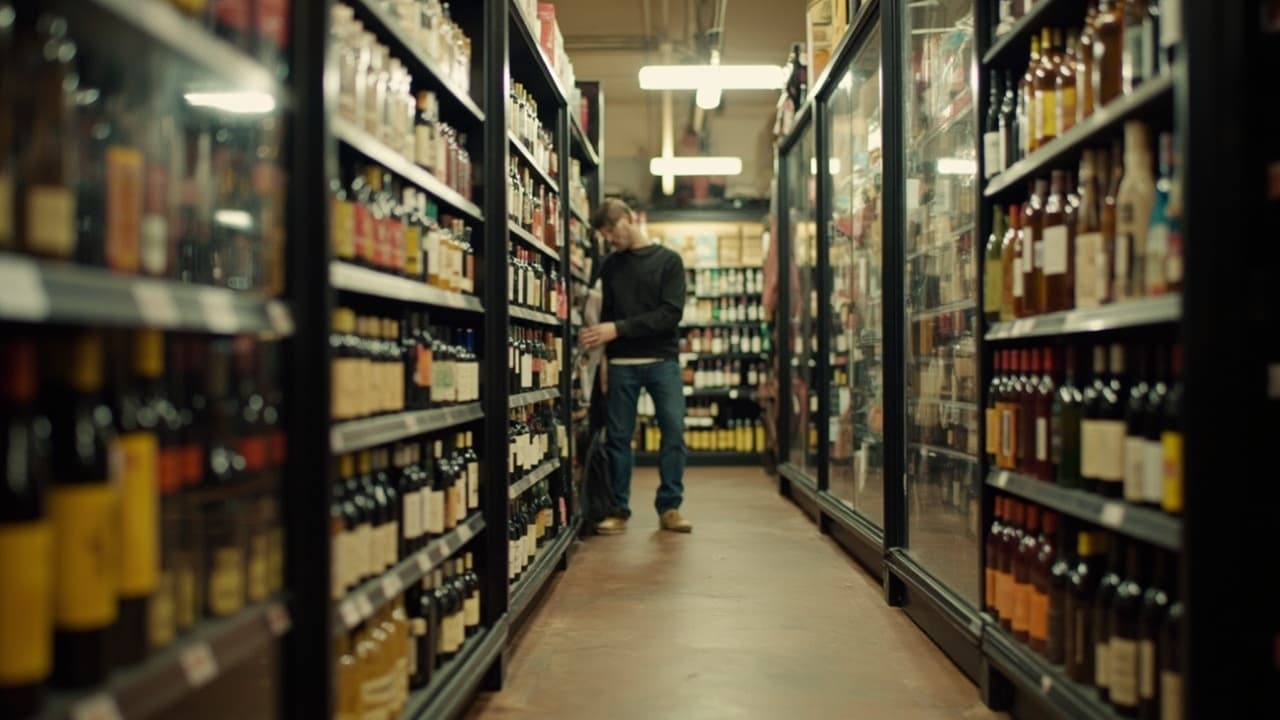
Liquor store price intelligence for independents: track big-box pricing on your top-selling SKUs and know when to match or bundle instead.
- Quick answer
- The short answer for one independent store
- The problem, as owners describe it
- How liquor store price intelligence works, step by step
- What you get, and why each piece earns its place
Quick answer
Liquor store price intelligence is the weekly habit of checking what the big box nearby charges for the SKUs that actually pay your rent, then deciding on purpose whether to match or hold. For an independent, that list is a short set of your best sellers, not your entire shelf. LiquorChat helps you build the list from what your online storefront sells, identify the competitors worth watching using our documented local competitor process, and respond in the same storefront with a price change, a bundle, or an AI recommendation. Always confirm your state's posted-price and minimum-markup rules first.
The short answer for one independent store
This is a weekly loop built for one specific buyer: the owner of one or two independent stores sitting a few miles from a big-box or grocery chain that sells wine and spirits. The loop's whole job is to tell you when that chain drops price on the bottles carrying your volume.
Here is the loop in a sentence: pick your top-selling SKUs from real storefront sales, define the competitor set, collect published prices, decide match or hold, execute in the storefront, then measure.
Why bother? Because competitor price data pulled from online liquor stores is what surfaces margin erosion, pricing gaps, and promotional strategies (Actowiz via LinkedIn ↗).
The 100-SKU list is our recommended starting size, a practical cap on what one person can review weekly, not a measured threshold. Treat this competitor price tracking work as an operating habit the platform supports, not a magic price robot.
Want the full picture before you start? See our real-time price intelligence overview of alcohol retail price monitoring, the 7 AI pricing intelligence moves to make before the next supplier price increase, and our ROI framework for measuring payback on a first AI investment.
One flag up front: your state's posted-price and minimum-markup rules sit above every recommendation in this post. Compliance first, then price.
The problem, as owners describe it
Price leakage is concentrated, not general. A few recognizable bottles get beaten in public while the rest of the shelf goes unwatched, and the owner ends up feeling beaten on price everywhere.
Three versions of the same complaint come up again and again. These are paraphrased composites of what we hear in sales conversations, not quotes from any one owner:
- The chain down the road puts the best-selling 1.75L vodka under the owner's cost-plus number, and the owner hears about it from a customer instead of a report.
- Nobody has time to check the whole shelf, and most owners cannot say with confidence which items actually matter.
- When they do match, they hand back margin on the one bottle the shopper was going to buy anyway.
That last one is the trap. Matching blind turns competitor price tracking into margin donation on the item that was already in the cart.
Most owners are already doing this homework by hand, inconsistently. Our own internal process docs on manually identifying local competitors and on pulling rival rankings in SEMrush exist precisely because that chore is real and repeatable (internal docs: Steps to Manually Identify Local Competitors, Quick Steps to Identify Top Competitors in SEMrush).
And shoppers look before they drive. Your prices and the chain's are both public. Our own Google Search Console shows "liquor store near me" at 1,116 impressions, 9 clicks, and an average position of 5.8 over 90 days. Small traffic, but a useful reminder that people are searching for a store before they ever walk into one.
How liquor store price intelligence works, step by step
It is a seven-step weekly loop: build the SKU list, name the competitor set, pull published prices, decide match or hold, execute, brief, and compliance-check.
Step 1, build the list from order history. Pull your top sellers from your LiquorChat storefront order history, not from gut feel. We cap the list near 100 SKUs, and that is our operating judgment rather than sourced research: 100 is roughly what one owner can actually review in a weekly brief, and shoppers only carry a reference price for recognizable, repeat-purchase bottles.
Step 2, define the competitor set. Use our documented local competitor process: manually identify the stores actually in your trade area (Steps to Manually Identify Local Competitors), shortlist with tool-assisted research (Quick Steps to Identify Top Competitors in SEMrush), then review each rival's public catalog page by page (Competitor Analysis, Page-by-Page). Our recommendation is a small set, two to four stores. Go wider than that and the weekly brief quietly stops happening.
Step 3, collect the price data. Competitive data comes from competitors' own public-facing web catalogs, menus, and category pages, so it is exactly as current as the page they publish. That data pinpoints margin erosion, pricing gaps, and promotional strategies (Actowiz via LinkedIn ↗) and can include discount patterns and stock levels (Food Data Scrape ↗). That is a cadence, not a live feed, which is why a weekly refresh is the honest standard for alcohol retail price monitoring.
Step 4, decide match or hold. Match when the SKU is a known-price anchor, velocity is high, and the gap is wide enough that a shopper notices. Otherwise hold and bundle: apply Alex Hormozi's charge-what-it's-worth principle and price on the value you deliver rather than on what your competitor charges, then lean on cross-merchandising, the old endcap trick of placing complementary items outside their home category, like lime juice and margarita mix at the end of the tequila aisle, to grow the basket while the anchor price stays intact.
Step 5, execute in one place. Update the price in your LiquorChat storefront, surface the bundle through AI-powered product recommendations, and let automated customer service answer "do you price match?" the same way every time.
Step 6, the Monday morning brief. Six fields: SKU, your price, their published price, the gap, recent unit movement, recommended action. Keep the standard simple. It has to fit on one screen.
Step 7, compliance gate every action. Age-gate your storefront and respect regulated-category rules on your public pages, because beverage alcohol layers regulation on top of everything a normal retailer does online. Our own internal competitor review treats regulatory considerations as part of the landscape rather than an afterthought (internal doc: IC Competitor review). Never attach a health claim to a price promotion, and never tie a promotion to consumption volume.
If you want the tooling view of this same loop, our AI monitoring tools breakdown and the seven moves to make before a supplier increase pick up where this section ends.
Smart Ordering for Liquor Stores
LiquorChat specializes in digital marketing strategies that drive real results. Let us show you what's possible.
Schedule a CallWhat you get, and why each piece earns its place
On LiquorChat this is a workflow, not a data feed. You get a liquor-specific e-commerce storefront, online ordering and delivery, AI-powered product recommendations, automated customer service, and our competitor-analysis playbooks.
The storefront is your system of record for which SKUs actually sell online, and it is the single place you change a price or publish a bundle. One edit, one source of truth, no spreadsheet drift.
AI product recommendations are how you hold price without losing the sale. When a shopper lands on a tracked SKU, a recommended mixer or glassware pairing turns a price comparison into a basket. It is endcap logic applied to a web page.
Automated customer service answers "why is this more than the big chain?" at 9pm with the same scripted answer you would give at noon. Consistency is what protects a pricing policy.
Built for liquor means age-gating and regulated-category handling are part of how your public pages work, not bolted on after launch.
The playbooks come with the engagement: competitor shortlisting in SEMrush, page-by-page competitor review, manual trade-area competitor identification, and the regulatory-consideration review from our competitor landscape work.
What is not included: we do not sell a live price feed, a scraper product, or automatic repricing. This is built for one or two stores, not as a replacement for an enterprise pricing suite.
Proof: our first-party numbers, and what they do not say
Our first-party data proves search demand and engagement, not margin lift. We have no study of our own tying liquor store price intelligence to protected margins, so here is exactly what we can show.
Over 90 days, our own Google Search Console recorded 1,116 impressions and 9 clicks for "liquor store near me" at an average position of 5.8. Two more non-branded local queries from the same window: "lebanon liquor store" at 596 impressions, 1 click, average position 8.6, and "liquor store berea ky" at 316 impressions, 0 clicks, average position 8.4.
Read those carefully. They show steady local search demand paired with weak click capture from mid-page positions. They do not measure price comparison, and they are not evidence of a large traffic channel.
The branded contrast, same source: "spirit haven liquor store lawrence" produced 149 impressions and 15 clicks at an average position of 1.8. Descriptively, a branded query sitting near the top of page one converted attention far more efficiently in this sample. That is all it says. It does not prove loyalty, and it does not justify holding your price.
On payback, one engagement: a two-store owner could not justify our under-$10k per month retainer as a flat monthly line item until we walked an ROI-versus-total-investment model of 2-3x early and 6-7x by month six, paired with a start-small-and-scale-later scope. That combination closed the deal on the call. Those are modeled figures from a single engagement, not typical results.
Judge the program the way retail activation gets measured, against purchase behavior, performance, and product availability (Circana ↗), not a feeling about price perception. Run your own math with our step-by-step AI ROI framework.
Pricing and what it takes to start
Pricing is quoted from our current pricing sheet, so ask for a quote for your store count rather than guessing from a blog post (internal doc: MASTER LiquorChat Pricing.csv).
What we can say about structure comes from precedent. The two-store owner above would not accept a flat monthly line item, so the engagement was scoped start small and scale later, with the investment judged against total return rather than monthly cost (IC precedent, anonymized).
Be candid about fit at the low end. We have also lost deals here: an owner with a firm budget well below our under-$10k per month retainer wanted social ads only, and a six-month commitment was genuinely the wrong purchase for him (IC precedent, anonymized). Pricing software is not the first dollar every operator should spend.
Day one you need four things: a live online catalog, SKU-level sales you can pull yourself, two to four named local competitors, and one person who owns the Monday brief.
Worth raising in the same conversation: some retailers protect margin by passing card processing costs to card-paying customers instead of touching shelf price, the dual pricing model Myron Golden teaches. Surcharging is restricted or prohibited in some states and governed by card network rules, so confirm legality locally before you post a sign.
Realistic ramp, based on how these engagements usually go: about a week to build the list and the competitor set, then a weekly cadence from there.
When liquor store price intelligence is the wrong first move
Five situations where this should wait.
Control and posted-price states. If your state posts retail prices or enforces a minimum markup on your categories, tracking tells you what the chain charges but gives you no legal room to move. Confirm with your state ABC authority first. Our own internal competitor review treats regulatory considerations as step zero before any pricing program (internal doc: IC Competitor review).
Stores whose top SKUs barely overlap big-box assortment. A shop built on single-barrel picks, allocated bourbon, and local craft has no competitor reference price to track. Put that effort into cross-merchandising instead: bundle across beer, wine, and spirits, and engineer adjacencies like lime juice at the end of the tequila aisle.
Owners with a firm small monthly budget who want one channel only. We lost the deal described above for exactly this reason, and it was the right outcome. Run the AI ROI math before you buy any pricing software.
Stores with no online catalog or SKU-level sales data. Fix the storefront first. Without sales data, your top-seller list is a guess.
Multi-location chains already running enterprise pricing suites, where another layer of alcohol retail price monitoring just duplicates existing tooling. Focus on multi-location fundamentals instead.
The takeaway
Think of this like checking the weather before you load the truck. You are not trying to control the sky, you are just refusing to be surprised by it.
A short list of the bottles that pay your rent. Two to four competitors worth watching. One brief that fits on a single screen. And a pricing decision you made on purpose, instead of one a customer made for you at the register. That is the whole habit, and it is far more approachable than most owners expect.
Ready to build your first list? Ask us for a quote for your store count, and we will help you pull your top sellers straight from your own storefront data, with your state's posted-price and minimum-markup rules checked before anything moves.
Why track a short list of SKUs instead of my whole shelf?
Where does the competitive price data come from, and how current is it?
When should I match a lower price and when should I hold and bundle?
Can state law limit what I do with price intelligence?
What does a useful Monday morning price alert actually look like?
References
- Circana, Retail Industry Expertise ↗
- Actowiz (LinkedIn), competitor pricing data across online liquor stores ↗
- Product Data Scrape, How Liquor Retail Intelligence Solves Pricing Challenges ↗
- Food Data Scrape, Next-Gen Liquor Pricing Data Intelligence ↗
- Food Data Scrape, Extract Alcohol Retail Pricing Data in the USA ↗
- CheersPOS, Current Trends and Pricing Strategies for Liquor Stores in 2025 ↗
- Intentionally Creative, 8 Proven Strategies to Compete With Big Box Liquor Stores ↗
- r/whiskey, Small Stores VS Big Box Chains ↗
- r/datascience, AI to improve revenue of liquor/wine retail stores ↗
- Skuuudle, Competitor Price Trackers ↗
- Pricefy, Competitor Price Monitoring & Repricing Software ↗
- Pagecrawl, Best Competitor Price Tracking Tools ↗
- LiquorChat, AI Pricing Intelligence for Liquor Retail
First-party figures in this post come from our own Google Search Console (90-day window) and anonymized LiquorChat engagement precedent. Internal documents referenced: Steps to Manually Identify Local Competitors; Quick Steps to Identify Top Competitors in SEMrush; Competitor Analysis, Page-by-Page; IC Competitor review; MASTER LiquorChat Pricing.csv.
LiquorChat Team (Editorial Team, LiquorChat)