Samsung's AI Wine Fridge and the Rise of Smart Appliance Integration: What It Means for Beverage Retailers
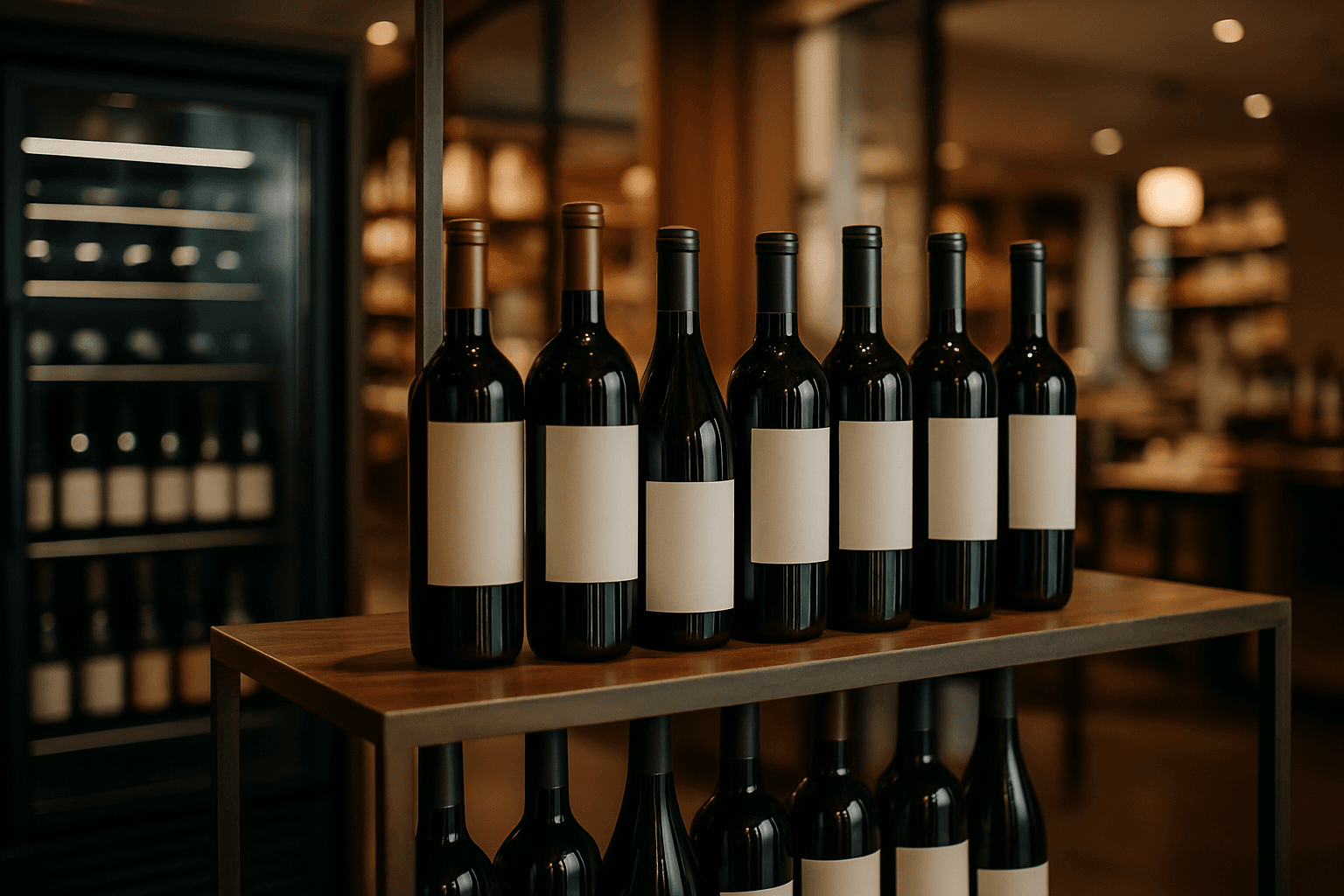
Samsung's smart wine fridge AI beverage retail impact: how AI-powered home inventory tools reshape replenishment, recommendations, and retailer strategy.
- Samsung's Infinite AI Wine Refrigerator: What Just Happened
- The Competitive Landscape: Samsung Isn't Alone
- Why Beverage Retailers Should Pay Attention Right Now
- How AI Home Inventory Reshapes the Recommendation Game
- Practical Moves: What Retailers, Distributors, and Producers Should Do Today
A $4,300 appliance just redefined what "inventory intelligence" means, and it's sitting on a consumer's countertop, not behind your POS terminal. Samsung's Infinite AI Wine Refrigerator, now shipping in South Korea, uses computer vision and Google Gemini integration to catalog, track, and recommend wine with a level of sophistication that most beverage retailers haven't achieved in their own operations. For an industry still wrestling with manual cycle counts, phone-and-fax ordering, and fragmented product data, the smart wine fridge AI beverage retail implications are immediate and concrete.
This isn't a CES concept render. It's a production appliance that scans bottles on entry, builds a living inventory, suggests food pairings, and, with Gemini's reasoning capabilities rolling out in 2026, will soon influence what your highest-value customers buy before they ever walk into your store. The question isn't whether consumer-grade AI will reshape purchasing behavior in the alc-bev industry. It already has in grocery, in meal kits, in coffee subscriptions. The question is whether retailers, distributors, and producers across the three-tier system will adapt before the gap between consumer expectations and trade-side capabilities becomes unmanageable.
Below, we break down exactly what Samsung shipped, who else is in the race, and, most importantly, what every tier of the beverage industry should be doing about it this week. No hype. Just the operational reality of what happens when your customer's kitchen gets smarter than your back office.
Samsung's Infinite AI Wine Refrigerator: What Just Happened
In late 2025, Samsung quietly did something that should have every beverage retailer paying attention: it shipped a smart wine fridge with AI that thinks about wine the way a sommelier does, and put it on a consumer's kitchen counter.
The Samsung AI Wine Refrigerator launched in South Korea as a production appliance with real AI capabilities that automatically scans, catalogs, and manages a consumer's entire wine collection. For an industry where inventory intelligence has traditionally lived behind distributor firewalls and POS back offices, that's a significant shift.
The Hardware: 101 Bottles, 3 Zones, and a Camera on Top
The Infinite AI Wine Refrigerator stores up to 101 bottles across three independent cooling zones, each optimized for different wine types, reds, whites, and sparkling can all coexist at their ideal temperatures simultaneously. For context, the LG SIGNATURE Wine Cellar, previously the premium benchmark, holds just 65 bottles.
But the real story is the top-mounted camera. It scans bottles as they enter and leave the unit, building a living inventory without the consumer lifting a finger. Samsung also added a dedicated compartment for cheese, fruit, nuts, and cured meats, positioning this as a full entertaining hub rather than passive storage. UK retail data from late 2025 suggests surging consumer interest in high-tech wine coolers and drinks trolleys, and Samsung is betting that smart appliance integration in liquor retail starts right here, in the home.
The Software: AI Wine Manager Meets Google Gemini
The onboard AI Wine Manager does what most retailers still struggle to do at scale: it tracks every bottle, surfaces detailed wine information, and suggests food pairings, automatically. Samsung is integrating Google Gemini into its appliance ecosystem, with a full feature showcase planned for CES 2026 that will deepen the platform's ability to reason about wine regions, vintages, and pairing logic.
This is AI wine storage technology moving from novelty to utility. And when consumers start expecting this level of intelligence at home, they'll inevitably expect it everywhere they buy.
The Competitive Landscape: Samsung Isn't Alone
Samsung's launch didn't happen in a vacuum. The smart appliance category for wine and beverage is already a multi-front competition, and the pace of investment signals that major manufacturers see this as a durable growth market, not a one-off product cycle.
LG SIGNATURE, Rocco, and the Smart Cooler Arms Race
LG SIGNATURE has been in this space with its smart wine cellar featuring InstaView knock-to-see-through glass and an Auto-Open Door. Lower capacity than Samsung's three-zone system? Sure. But it's proof that multiple major OEMs see AI wine storage technology as a growth category worth serious R&D investment.
Meanwhile, startups like Rocco are flanking the majors entirely, targeting craft beer and natural wine enthusiasts who'd never buy a traditional cellar but absolutely want a connected smart fridge that tracks what they're drinking. That expands the addressable consumer base well beyond the collector demographic, pulling in exactly the younger, experience-driven buyers that retailers and producers are fighting to reach.
Discover how California's AB 1585 wine labeling bill sparks three-tier system modernization with AI talks. Key insigh...
Commercial Crossover: 365 Retail Markets and AI-Powered Age Verification
Here's where it gets directly relevant to your store. On the commercial side, 365 Retail Markets already offers PicoCooler Vision, smart coolers with AI-powered age verification integrated with CLEAR. That's a signal liquor retail operators should watch closely, because it points to a future where AI-driven beverage merchandising flows seamlessly from consumer kitchens into retail environments.
The convergence is unmistakable: consumer appliances are gaining the same inventory intelligence the trade side has been slowly adopting. The real question for retailers and distributors isn't whether this matters, it's who adapts faster.
Why Beverage Retailers Should Pay Attention Right Now
Your Customer Is Building a Smarter Cellar Than Your Back Office
Here's the uncomfortable reality: when a consumer's Samsung fridge knows exactly what bottles they have, what they've consumed this month, and what food pairings they prefer, and your POS system still requires manual cycle counts, a dangerous intelligence gap is forming between your customer and your store.
This isn't hypothetical. Consumer adoption of smart wine appliances is accelerating, and Gemini integration will make these devices significantly smarter through 2026.
Now consider your operation. You're managing 10,000+ SKUs with a small team, already struggling with inventory accuracy. Imagine a customer walking in who knows precisely what they need to restock, because their AI-powered fridge told them, and expecting your staff to match that level of specificity. That's the new baseline expectation, and it's being set by an appliance, not a competitor.
The Replenishment Signal You're Not Capturing
Smart appliances create implicit replenishment signals. A consumer finishes a bottle of Sancerre on Tuesday. Their fridge registers the empty slot. A push notification suggests a reorder. The retailer who captures that signal, via integration, loyalty program, or proactive outreach, wins the sale. The one who doesn't loses it to whoever does.
We've seen this movie before. Smart refrigerators and auto-replenishment through Amazon reshaped grocery purchasing patterns. The three-tier system adds complexity to beverage retail, but the consumer behavior shift is identical.
And here's what makes this especially high-stakes: that ~$4,300 price point means early adopters are your highest-value wine customers, the ones consistently spending $30, $100+ per bottle. Losing their repeat business to a frictionless digital reorder path would disproportionately gut your margins.
How AI Home Inventory Reshapes the Recommendation Game
The inventory gap is one problem. But there's a second, arguably larger shift happening simultaneously: the battle for who controls the recommendation. Until now, that influence lived in your staff's expertise, your shelf placement, and your distributor's push. Smart appliances are about to redistribute that power, directly into the consumer's kitchen.
From Store Shelf to Kitchen Context: The New Personalization Frontier
Samsung's Gemini integration transforms the smart wine fridge from a beverage retail novelty into something far more consequential: a recommendation engine living in the consumer's kitchen. It won't just monitor inventory, it will actively suggest wines, food pairings, and purchasing decisions before that consumer ever walks into your store.
Think about that. An appliance that influences what your customer buys next, powered by the same class of large language model that's reshaping search, commerce, and content discovery across every other industry.
Explore 7 critical distributor consolidation trends reshaping liquor distribution logistics and the three-tier system...
What Google Gemini Integration Really Means for Brand Discovery
For producers and brand managers: This is a new discovery channel. When Gemini suggests a Barolo pairing with aged Parmigiano and your brand isn't in its knowledge base, you're invisible at the exact moment of highest purchase intent. Full stop.
For retailers: Stocking and merchandising strategies may need to account for what AI assistants recommend, not just what your distributor rep pushes. The brands that get surfaced by these engines will drive demand you didn't create.
Here's what's critical: this mirrors the RAG (Retrieval-Augmented Generation) architecture that powers platforms like LiquorChat, pulling real product data into AI-generated recommendations through structured retrieval pipelines and tool orchestration. Samsung is putting that same capability pattern directly in consumers' hands. Retailers without their own AI-powered recommendation layer, one that uses agentic workflows to dynamically match inventory, customer preferences, and margin targets, risk ceding influence to a kitchen appliance.
The AI wine storage technology race isn't about temperature control anymore. It's about controlling the recommendation.
Practical Moves: What Retailers, Distributors, and Producers Should Do Today
The smart wine fridge AI beverage retail wave isn't a five-year-out scenario. Samsung's appliance is already on sale, Gemini integration is imminent, and consumer adoption is accelerating. The window to prepare is open, but it's closing. Here's what each tier should be doing this week.
For Retailers: Build the Bridge Before the Gap Widens
Audit your digital inventory accuracy today. If a consumer's AI wine fridge has better data on their collection than your POS has on your shelf stock, you've already lost the convenience battle. Invest in real-time inventory tools. Even basic barcode scanning apps that sync with your point-of-sale can close this gap before smart appliance integration in liquor retail becomes the norm.
Launch or strengthen a wine club or loyalty program that captures purchase history and preferences. When auto-replenishment platforms emerge, and they will, the retailer with the richest customer preference data becomes the natural integration partner. The one scrambling to build a customer database from scratch gets bypassed entirely.
For Distributors: Prepare for Data-Driven Reorder Patterns
Expect order patterns to shift as affluent consumers move toward predictable, AI-managed replenishment cycles. Think smaller, more frequent reorders of specific SKUs rather than bulk seasonal buys. Start modeling now how your logistics and route planning would handle that shift.
The phone-and-fax order chaos that still defines much of the three-tier workflow cannot survive in a world where the end consumer has AI-managed inventory. Digitizing your order pipeline, starting with API-capable ordering systems, isn't optional. It's the infrastructure that lets you capture automated reorder signals when they arrive.
For Producers and Brand Managers: Get Into the AI Knowledge Graph
Google Gemini will power Samsung's recommendation engine by pulling from available knowledge bases. If your tasting notes, varietal info, pairing suggestions, and regional details are locked in PDFs or inconsistent across platforms, you simply won't surface when a smart fridge recommends a replacement bottle.
Make your product data comprehensive, structured, and machine-readable. Then consider early partnerships with smart appliance platforms. Being a launch partner in Samsung or LG's recommendation ecosystem could become this decade's equivalent of securing prime shelf placement, except the shelf is inside 10,000 kitchens.
Pernod Ricard India's potential IPO could reshape spirits distribution. Explore what a listing means for the three-ti...
Quick Help Guide: 60-Second Action Items by Role
Three role-specific actions you can execute immediately, each designed to put you one step ahead before the next wave of smart appliance integration hits.
Retailer: One Thing to Do This Week
Pull your top 50 wine SKUs by revenue. Verify every one has complete, accurate product data in your POS, name, varietal, region, vintage, price. No shortcuts. This is the foundation for any future AI integration or recommendation engine, whether it's a smart wine fridge connection or an in-store kiosk. Thirty minutes with your team. Do it Monday.
Distributor: One Conversation to Have This Month
Ask your tech team or platform provider one question: "Can our ordering system accept API-based reorder triggers?" If the answer is no, or worse, "what's an API?", you've just identified your next infrastructure priority. AI-powered appliances will eventually generate automated replenishment signals. Your systems need to catch them.
Producer: One Data Task to Prioritize Now
Google your top 3 products right now. If the first-page results don't show structured tasting notes, food pairings, and accurate retail pricing, your brand is invisible to AI recommendation engines. Platforms like Samsung's will surface products with rich, structured data first. Fix your web presence now, not after the next wave of launches makes it urgent.
The Bigger Picture: Smart Appliances Are the Canary in the Coal Mine
Samsung's AI wine fridge isn't the disruption, it's the signal. The real disruption is the convergence of consumer-grade AI inventory management, AI-powered recommendation engines, and frictionless digital commerce. When Gemini integration rolls out across Samsung appliances, every kitchen becomes a potential point-of-sale terminal that can bypass your store entirely. Every layer of the three-tier system will feel that pressure.
Consumer AI Adoption Will Outpace Trade AI Adoption, Unless You Act
The alc-bev industry has historically lagged other retail sectors in technology adoption, some estimates suggest by 5–10 years. Smart appliance integration is compressing that timeline to months. Consumers aren't waiting. When a smart wine fridge manages inventory better than your POS system, you have a problem that no amount of floor staff expertise can paper over.
The retailers and brands that treat this as a wake-up call, not a novelty headline, will still be winning customer loyalty when every kitchen has one of these devices.
What Happens Next Is Up to You
The smart wine fridge AI beverage retail shift isn't coming, it's here. Samsung shipped a production appliance that outperforms most trade-side inventory systems. Google Gemini is about to turn it into a recommendation engine with more influence over your best customers' next purchase than your floor staff. And competitors across the OEM landscape are piling in behind them.
But here's the thing: the three-tier system has survived every technological disruption it's faced, not by ignoring the shift, but by adapting faster than the threat could mature. E-commerce didn't kill the local retailer who built a delivery program. DTC didn't eliminate the distributor who digitized their order flow. And a smart fridge won't replace the retailer who matches its intelligence and exceeds its convenience.
The playbook is clear. Clean your data. Know your best customers by name. Build the digital infrastructure that lets you capture replenishment signals instead of losing them. And if you want AI that's built for your side of the counter, not the consumer's kitchen, talk to LiquorChat ↗. We're building the AI layer the three-tier system needs, purpose-built agentic workflows, real-time inventory intelligence, and recommendation pipelines that rival any AI sommelier Samsung can ship, to not just survive this wave, but lead it.