Outshinery Lite Hits 4 Million Configurations: How AI-Generated Product Photography Is Cutting Go-to-Market Timelines for Beverage Brands
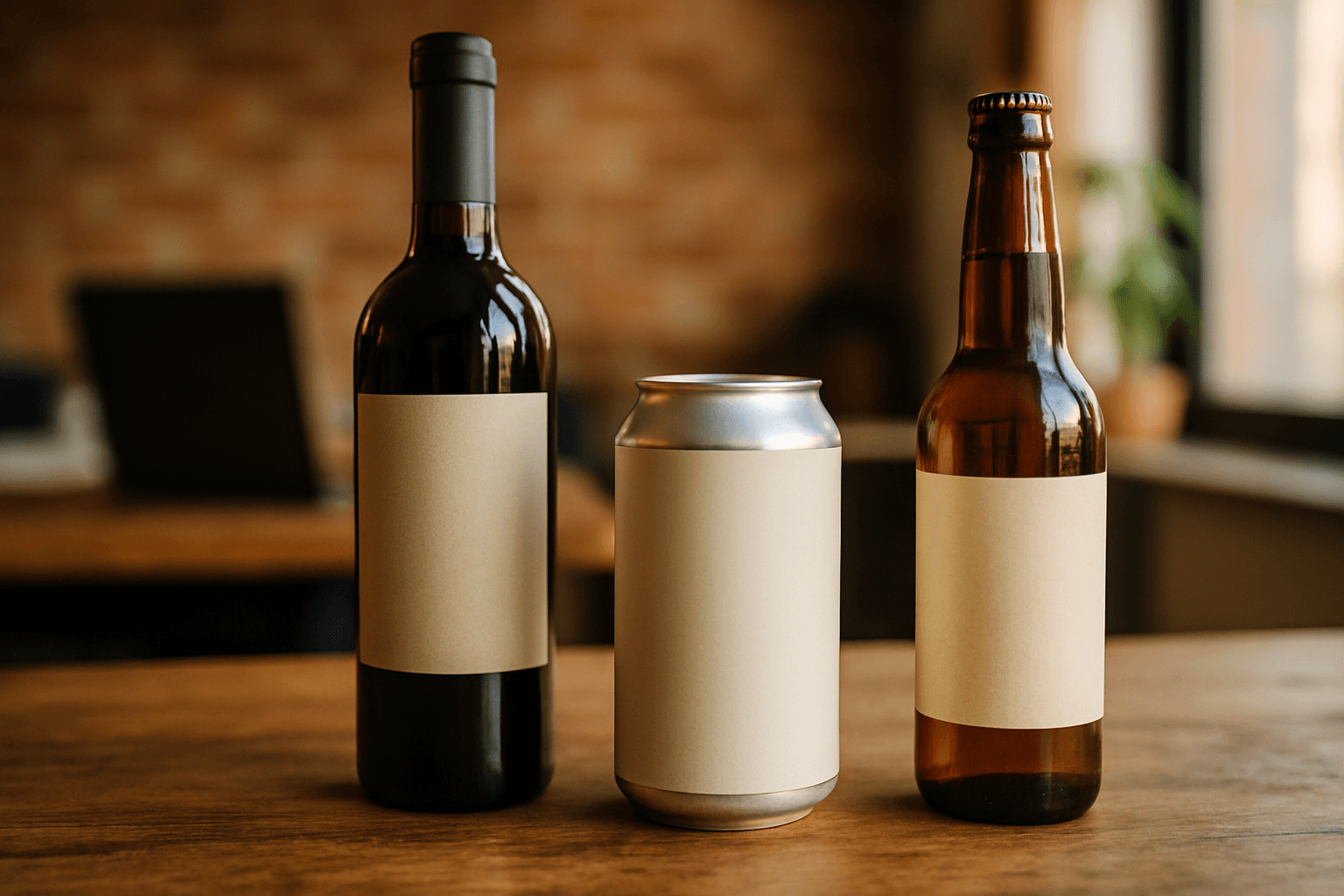
AI-generated product photography helps beverage brands launch faster. Outshinery Lite hits 4M configurations, see how AI imagery cuts costs and boosts conversions.
- The Bottleneck Nobody Talks About: Why Product Photography Stalls Beverage Launches
- What 4 Million Configurations Actually Means, And Why It Matters
- The Competitive Landscape: Who Else Is Solving Beverage Product Photography with AI
- From Creative Tool to Go-to-Market Infrastructure: The Real Shift Happening in 2025
- TTB Compliance: What You Need to Know Before Using AI-Generated Imagery
Every beverage brand has the same dirty secret: the product was ready weeks before anyone could actually sell it. Not because of formulation delays, regulatory holdups, or distributor negotiations, but because there were no images. In an industry where a single SKU needs a dozen image formats before it touches a single shelf, the camera has quietly become the most expensive bottleneck in the three-tier system. AI-generated product photography for beverage brands isn't just changing that equation, it's eliminating it entirely.
Outshinery Lite just crossed 4 million configurations, with over 2,000 wineries, distilleries, breweries, and RTD brands generating production-ready imagery without a single studio session. That milestone isn't a press release number, it's a structural shift in how beverage products get to market.
When a BigCommerce study across 12,000 merchants shows a 49% median conversion rate increase from AI-enhanced product photography, and competitors like WizCommerce are documenting 95% cost reductions, the question is no longer whether AI imagery works for alcohol beverage brands. It's whether you can afford to keep waiting for a photographer.
This piece breaks down what's actually happening, the technology, the compliance landscape, the competitive field, the ROI math, and the agentic workflows that are turning product photography from a creative task into automated go-to-market infrastructure. Whether you're a producer launching seasonal variants, a distributor with 500 SKUs missing images in your portal, or a retailer trying to get accurate bottle shots onto your e-commerce listings, the playbook is shifting under your feet. Here's what you need to know.
The Bottleneck Nobody Talks About: Why Product Photography Stalls Beverage Launches
Here's a scenario that plays out thousands of times a year across the industry: A craft spirits producer finalizes a new expression. The liquid is dialed in, pricing is set, the TTB label approval came through. Everything's ready to go, except nobody can actually sell it yet.
Why? Because there are no product images.
The labels aren't back from the printer. Or the bottles aren't filled. Or the one photographer who understands beverage lighting is booked out six weeks. Meanwhile, the launch window is shrinking, the distributor's quarterly reset is approaching, and competitors are already filling the shelf space you were targeting.
The Hidden Cost of Waiting for the Perfect Shot
Every day without a product image is a day your SKU is invisible to buyers. In a market where retailers are managing 10,000+ SKUs and making split-second decisions about what earns shelf space, invisibility equals zero velocity. Full stop.
The data backs this up: BigCommerce's study across 12,000 merchants found a 49% median conversion rate increase from AI-enhanced product photography, meaning the quality and availability of your imagery directly moves units. Yet most emerging brands treat photography as an afterthought, something that happens after production rather than running parallel to it.
Traditional studio shoots carry hidden costs beyond the photographer's day rate, styling, retouching, reformatting for every use case, and the opportunity cost of weeks lost. WizCommerce has documented a 95% cost reduction and 10x speed improvement when AI replaces traditional production workflows. That's not a marginal gain. That's a fundamentally different go-to-market timeline.
How the Three-Tier System Multiplies the Imagery Problem
The three-tier system doesn't just add regulatory complexity, it multiplies your imagery needs at every level.
- Producers need hero shots for their DTC site and social campaigns.
- Distributors need clean cutouts for order portals and sell sheets loaded onto sales reps' iPads.
- Retailers need formatted images for POS shelf-talkers, online menus, and e-commerce listings, each with different specs, backgrounds, aspect ratios, and compliance requirements.
One product. Three tiers. Easily a dozen distinct image formats before you've sold a single bottle. And when you're waiting on a single studio session to generate the source file for all of those assets, one scheduling delay cascades across the entire chain.
Discover 9 voice commerce AI tools transforming US liquor retail. Compare top voice ordering systems and conversation...
This is precisely why AI-generated product photography for beverage brands has moved from novelty to operational necessity. The industry is clearly voting with its feet. The bottleneck isn't formulation or compliance anymore, it's visualization. And AI is eliminating it.
⚡ Quick Help Guide for Producers (30 seconds): Don't wait for final packaging to start building go-to-market assets. Upload your approved label file to an AI visualization tool like Outshinery Lite today and generate photorealistic, sell-sheet-ready images before the first bottle is even filled. Send them to your distributor rep this week so they can start pre-selling during their next account visit. The brands winning shelf space right now aren't the ones with the best liquid, they're the ones whose images showed up first.
What 4 Million Configurations Actually Means, And Why It Matters
Understanding the bottleneck is one thing. Understanding the scale of the solution replacing it is another, and that's where Outshinery Lite's milestone becomes instructive.
Four million isn't a vanity metric. It's a signal that AI product visualization has crossed the chasm from early-adopter experiment to operational infrastructure.
Outshinery Lite hitting 4 million configurations means that over 2,000 beverage brands, wineries, craft distilleries, breweries, RTD startups, are now generating photorealistic product imagery without cameras, without studios, and without shipping a single physical sample. That's not a pilot program. That's an industry default.
Inside Outshinery Lite's Self-Service Model
The workflow is deceptively simple. A brand uploads label artwork, selects a bottle shape from a library of formats, and configures lighting, background, and scene composition. Production-ready images come back in minutes.
Not weeks. Not after coordinating a photographer's schedule, overnighting samples, and running three rounds of retouching. Minutes.
This is scalable visualization. A producer launching a new vintage across 15 SKUs can generate every image variant, lifestyle shots, e-commerce cutouts, sell sheet assets, before the wine is even bottled. That's a fundamental compression of go-to-market timelines that ripples through the entire three-tier chain, getting imagery into distributor portals and retail shelves faster.
3D Rendering vs. Generative AI: A Critical Distinction for Compliance
Here's where it gets important, and where most coverage gets it wrong.
Outshinery Lite uses 3D rendering, not generative AI. The distinction matters enormously. 3D rendering builds a photorealistic model from the actual label file and a precise bottle geometry. Every element on that image corresponds to something real. Generative AI, by contrast, hallucinates pixels, inventing visual details that may not match the actual product.
Existing TTB advertising regulations (27 CFR Parts 4, 5, and 7) prohibit imagery that misrepresents the appearance, color, or characteristics of an alcohol beverage product. 3D rendering from verified label artwork inherently sidesteps this risk. Pure generative AI does not, and that's a compliance exposure most brands haven't thought through yet.
That compliance distinction becomes even more critical when you look at the broader competitive landscape, because not every tool in this space is built the same way.
The Competitive Landscape: Who Else Is Solving Beverage Product Photography with AI
The market for AI product photography in the beverage space is no longer a one-player game. That's actually a good sign, it means the category is real, the demand is validated, and the tools are maturing fast enough to warrant serious evaluation. Here's how the landscape is shaping up.
BottleShots.ai: The Vertical SaaS Play
BottleShots.ai launched as a US-based SaaS built specifically for wine bottle imagery, backed by 15+ years of food and beverage imaging experience. Its existence tells us something important: general-purpose AI image generators like Midjourney and DALL-E aren't cutting it for beverage brands that need label accuracy, correct glass coloring, and compliant product representations. The industry is moving toward vertical-specific tools purpose-built for alcohol beverage imagery, and BottleShots is betting that specialization wins.
WizCommerce and Coast Team Studio: Speed and Cost Benchmarks
WizCommerce's AI Video Generator is making aggressive claims: 95% cost reduction and 10x speed improvement over traditional studio production. Whether those numbers hold across every use case, they're resetting buyer expectations across the category. Coast Team Studio is also entering the space. These benchmarks matter because they establish a new baseline, if you're still paying $150+ per SKU for studio shots and waiting weeks for delivery, you're overpaying by an order of magnitude.
Where Outshinery Fits in the Stack
Outshinery's differentiation is architectural. Its 3D rendering approach delivers greater accuracy and regulatory compliance than pure generative AI competitors, critical when TTB label requirements and brand consistency are non-negotiable. With 4 million configurations and 2,000+ brands actively using the platform, this is proven scale that newer entrants simply haven't matched.
For context, LiquorChat, the AI platform purpose-built for the alcohol beverage industry, evaluates tool maturity through its Proof of Usefulness scoring framework. Not every AI photography solution is equally ready for production-grade go-to-market workflows, and that evaluation layer matters as the competitive field gets crowded.
⚡ Quick Help Guide for Distributors (30 seconds): Audit your product catalog right now, how many SKUs have missing, outdated, or inconsistent images across your ordering platform? AI visualization tools can backfill hundreds of SKU images in a single afternoon. Start with your top 50 velocity items that have the worst imagery. Better product photography drives measurably higher conversion rates in B2B ordering portals, those 50 SKUs are the fastest ROI you'll find this quarter.
From Creative Tool to Go-to-Market Infrastructure: The Real Shift Happening in 2025
With multiple players now competing in the space and the cost-speed equation settled, the conversation is moving past which tool to a more fundamental question: how does AI imagery fit into the broader operational stack? The answer is reshaping how the most forward-thinking brands think about launch velocity.
Here's the reframe the industry needs to hear: AI-generated product photography for beverage brands is no longer a creative tool. It's go-to-market infrastructure.
Speed, Scalability, Personalization, and Performance
The broader AI product photography market in 2025–2026 is defined by four pillars, speed, scalability, personalization, and performance, not just aesthetics. Product imagery is now a data pipeline problem, not an art direction problem.
When you're launching 30 new SKUs across three states and need imagery for distributor portals, retail POS systems, and e-commerce simultaneously, you don't need a photographer. You need a pipeline.
How AI Imagery Plugs Into Agentic Workflows
Now connect this to LiquorChat's agentic AI framework. Imagine a multi-agent workflow where:
- Agent 1 monitors your new product registrations
- Agent 2 automatically generates imagery via Outshinery's API
- Agent 3 reformats those assets to each distributor's portal specs
- Agent 4 pushes finished images directly to retail partners' POS systems
That's tool orchestration applied to beverage marketing, and it's buildable today.
RAG (Retrieval-Augmented Generation) makes this consistent at scale. Each agent pulls the correct label files, bottle specs, and brand guidelines from your existing asset library, no manual intervention, no off-brand hero shots slipping through.
The punchline: AI product photography in the beverage industry isn't a standalone tool anymore. It's a node in an automated go-to-market system, and the brands treating it that way are launching faster than everyone else.
Of course, speed means nothing if it runs afoul of federal regulators. And as AI imagery becomes more prevalent, and more photorealistic, the compliance stakes are rising in parallel.
Let our team show you what's possible.
our team specializes in branding strategies that drive real results. Let us show you what's possible.
Schedule a CallTTB Compliance: What You Need to Know Before Using AI-Generated Imagery
Let's address this head-on: as AI product visualization helps beverage brands accelerate go-to-market timelines, and with thousands of brands already using these tools, the compliance question isn't theoretical. It's urgent.
Current TTB Regulatory Framework for AI Imagery
The TTB's existing advertising regulations are clear: imagery must not misrepresent the appearance, color, or characteristics of the product. While the TTB has not yet issued AI-specific rulemaking, the existing framework under 27 CFR Parts 4, 5, and 7 applies directly to AI-generated visuals. Your AI-generated bottle shot needs to accurately represent the actual label, bottle shape, liquid color, and packaging as approved.
This is where methodology matters enormously. Outshinery Lite's approach, 3D rendering from actual label files, produces what's essentially a digital twin of your real product. That's fundamentally different from generative AI creating images from text prompts, which produces approximations. One starts from your approved artwork; the other guesses at it.
Practical Compliance Checklist
Before publishing any AI-generated product imagery, verify:
- ✅ Label artwork matches your approved COLA exactly
- ✅ Bottle shape and color are accurate
- ✅ Liquid color representation is faithful
- ✅ No misleading environmental or lifestyle elements were generated
- ✅ Source files used for generation are archived
🔊 Quick Help Guide for Brand Managers (30 seconds): Before publishing any AI-generated product image, do a side-by-side comparison with your approved COLA submission. If the AI image would cause a consumer to expect something different from what's in the bottle, don't use it. Screenshot your comparison and file it, that's your compliance paper trail. Takes two minutes. Saves you an enforcement headache.
ROI Breakdown: The Math on AI Product Photography vs. Traditional Studio Shoots
Compliance covered, let's talk about the number that ultimately drives adoption decisions: return on investment. The math here isn't close, and it gets more lopsided the more SKUs you manage.
Cost Per Image: Studio vs. AI Across Volume Tiers
Let's run the numbers. A traditional studio shoot for a single bottle, photographer, styling, retouching, studio rental, runs $150, $500+ per SKU. For a producer with 20 SKUs launching seasonal variants, that's $3,000, $10,000 per cycle, plus 2–4 weeks of lead time before you have usable assets.
AI product visualization compresses this to minutes and single-digit dollars per configuration. Even discounting the most aggressive vendor benchmarks by half, the economics are transformative, especially for small and mid-size producers who previously couldn't justify professional photography for every SKU in their portfolio.
The volume tiers tell the story: the more SKUs you manage, the wider the cost gap becomes.
Time-to-Market Impact on Depletion Velocity
Speed isn't abstract, it's cases. If AI imagery gets your new product into distributor sell sheets 3 weeks earlier, and your average weekly depletion rate is 2 cases per account across 50 accounts, that's 300 incremental cases captured simply by having an image ready on day one.
On the DTC side, better product images are the single highest-ROI investment in your digital storefront. BigCommerce's 12,000-merchant study confirmed that AI-enhanced imagery drives a 49% median conversion rate lift, for producers selling direct, that's revenue you're leaving on the table every day your product page features a phone snapshot instead of a professional-quality render.
What's Next: Where AI Product Visualization Is Headed for Beverage Brands
The ROI case is already decisive for today's tools. But the trajectory of this technology points toward something far more powerful, and the brands paying attention now will have a significant head start.
Dynamic Personalization and Retailer-Specific Rendering
The next frontier: contextual rendering at scale. Imagine one base configuration automatically generating a holiday-themed bottle shot for your December email, a summer patio scene for June social, and a clean white background for your distributor's B2B portal, no reshoots, no designer queue. Outshinery Lite's architecture already signals this trajectory. With thousands of brands on the platform, the infrastructure for dynamic, personalized imagery is forming fast.
The Integration Layer: APIs, Agents, and Automated Asset Pipelines
The real competitive moat isn't the image, it's the pipeline. As Outshinery, BottleShots.ai, and WizCommerce mature their APIs, go-to-market strategies will hinge on connecting AI imagery directly to your PIM, distributor portals, retail content systems, and social schedulers. This is where agentic AI and multi-agent orchestration transform a photography tool into automated infrastructure.
The Bottom Line: Imagery Is Infrastructure Now
The era of treating product photography as a post-production afterthought is over. AI-generated product photography for beverage brands has matured from a curiosity into a core operational capability, one that directly impacts launch speed, conversion rates, distributor relationships, and depletion velocity at every level of the three-tier system.
The data points are unambiguous: 4 million configurations across 2,000+ brands on Outshinery Lite. A 49% median conversion rate lift from better imagery. Cost reductions measured in orders of magnitude. And a compliance framework, anchored in 3D rendering rather than generative hallucination, that holds up under TTB scrutiny.
But the real story isn't any single tool. It's the shift from standalone image creation to integrated, agentic go-to-market pipelines where imagery generation is automated, compliant, and connected to every system in your distribution chain. The brands building that infrastructure today aren't just saving money on photography. They're compressing their entire launch cycle, and capturing shelf space, accounts, and cases that slower competitors will never get back.
If you're still scheduling studio shoots for every new SKU, you're already behind. Start with one tool, one SKU, one test, and measure the time savings. Then ask LiquorChat how to connect that capability to the rest of your go-to-market stack. The bottleneck has been eliminated. The only question is whether you'll keep standing in line for one anyway.