Who Really Pays for Wine Tariffs? What New Research Means for Retail Pricing Strategy and AI-Assisted Margin Protection
for the title,
for sections,
for subsections
3. Add schema.org Article microdata on the tag
4. Do NOT include , , or , just the content
5. Use tags for paragraphs,
/ for lists
6. Add suggested alt text for any image placeholders as HTML comments
7. Keep the HTML clean and readable, no inline styles
8. Preserve all links from the markdown
Let me parse through the markdown and convert it:
Title: Wine Tariffs Retail Impact: A Liquor Store Owner's Guide to Protecting Margins in 2025
Main sections:
1. The Wine Tariff Situation: What Liquor Store Owners Need to Know
2. Wine Tariffs Are Reshaping Retail Prices, Here's What We Know
- Current Market Conditions for Imported Wine
- Why the Tariff Situation Is More Complex Than It Seems
3. The Hidden Economics: Who Actually Absorbs Tariff Costs?
- Understanding Tariff Incidence in the Wine Supply Chain
- Why Your Suppliers Can't Simply Absorb the Hit
4. The Budget Wine Crisis: How Tariffs Disproportionately Hurt Entry-Level Buyers
- Why Affordable Wine Imports Bear the Heaviest Burden
- Shrinking Selections at the Bottom of the Market
5. Understanding Wine Margins, And Why They're Harder to Protect Now
- The Margin Landscape Every Retailer Should Understand
- Why Current Conditions Threaten Profitability Targets
6. AI Margin Protection Tools: Your New Pricing Strategy Ally
- How AI Can Monitor Market Conditions in Real Time
- Dynamic Pricing Adjustments Without Losing Customers
7. Practical Steps to Protect Your Wine Margins Amid Uncertainty
- Portfolio Diversification Strategies
- Transparent Pricing Communication With Customers
8. Looking Ahead: Navigating Wine Trade Volatility
- What Liquor Retailers Should Watch For
- Building a Resilient Business Model
9. Ready to Take Control of Your Margins?
10. Sources
I'll focus on the key strategic approaches for liquor store owners dealing with tariff impacts. The guide emphasizes AI-driven margin protection and practical strategies for navigating wine trade volatility. Retailers can leverage AI tools to monitor market conditions in real-time and make dynamic pricing adjustments that maintain customer loyalty. Diversification of wine portfolios and transparent pricing communication emerge as critical resilience tactics for independent wine retailers facing economic uncertainties.
The sources highlight industry reporting from Wine Enthusiast, Global Banking and Finance, and Daily.sevenfifty.com, providing comprehensive insights into tariff implications for wine markets. Retailers are advised to build flexible systems that can adapt to ongoing trade developments.
Wine Tariffs Retail Impact: A Liquor Store Owner's Guide to Protecting Margins in 2025
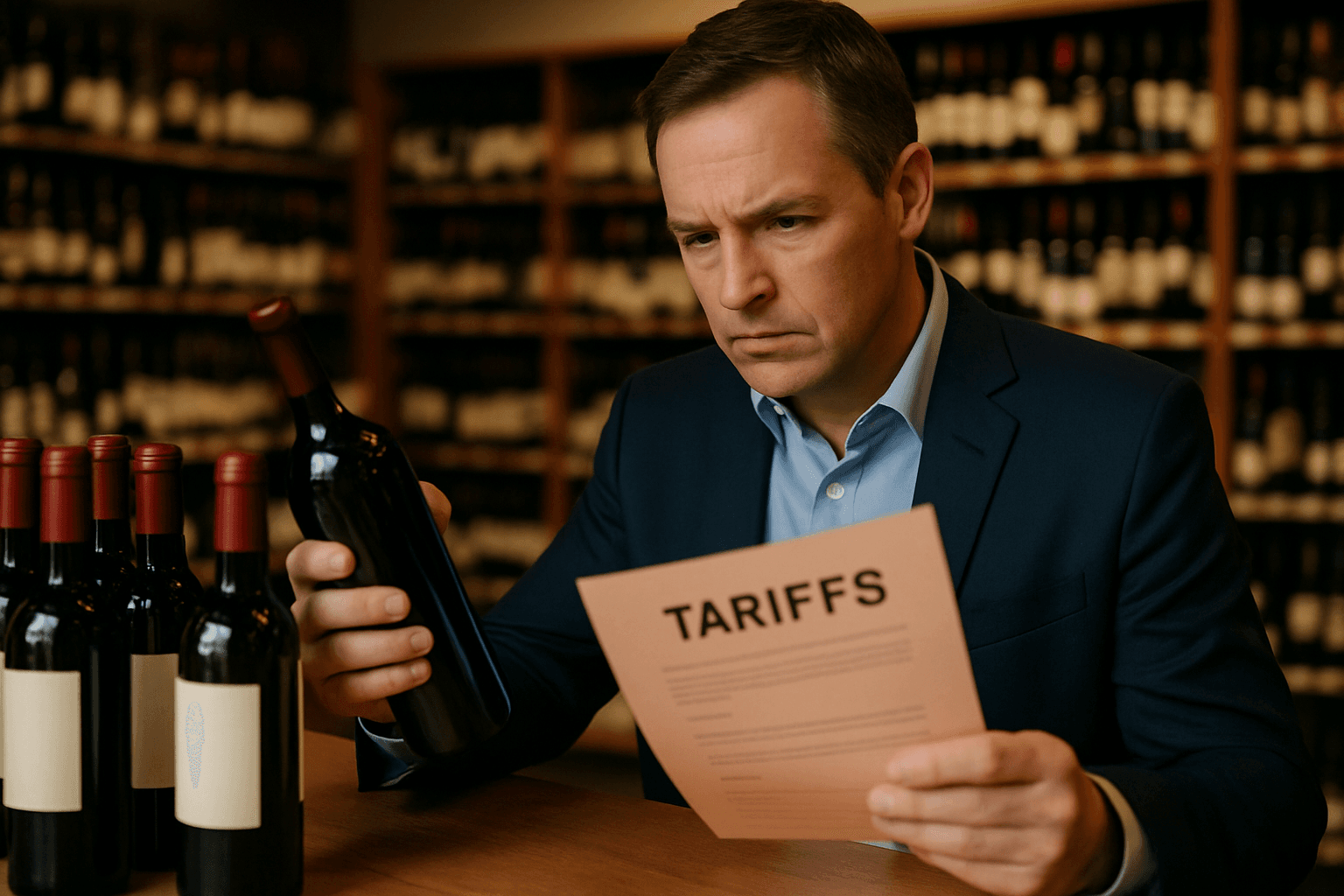
The bottle your customer picked up last month was $12.99. Now the tag says $14.50, and they're standing at your counter, price tag in hand, asking why. Do you apologize for the increase, blame your supplier, or explain trade policy?
If you've been fielding these questions more often lately, you're not alone. Across the country, liquor store owners are navigating a shifting landscape where imported wine costs don't behave the way they used to. European suppliers are cutting their own prices to stay competitive, yet American consumers are still paying more at the register. Tariff pressures are squeezing margins from multiple directions at once, and the familiar playbook isn't cutting it anymore.
This guide breaks down what's actually happening with wine tariffs retail impact, why the economics are more complicated than they appear, and, most importantly, what you can do to protect your business. We'll walk through current market conditions, the hidden dynamics behind cost absorption, which segments feel the pinch hardest, and practical tools to keep your margins healthy even when external pressures spike.
The Wine Tariff Situation: What Liquor Store Owners Need to Know
The tariff conversation isn't theoretical anymore, it's showing up in your cost sheets, your reorder decisions, and yes, your customers' reactions at checkout.
Here's what we know from recent trade reporting: a 10% tariff on all imported goods remains in effect, with additional measures specifically targeting alcoholic beverages from certain regions. These layers of tariffs have created a complex cost environment that doesn't always behave the way retailers expect.
For the wine industry, this means suppliers face their own pressures, retailers face margin compression, and consumers face higher shelf prices. Understanding each layer helps you make smarter decisions about what to stock, how to price, and when to adjust.
Wine Tariffs Are Reshaping Retail Prices, Here's What We Know
Current Market Conditions for Imported Wine
The wine tariffs retail impact is already visible on shelves across the country. As Global Banking and Finance reported, retail shelf prices on some imported wine brands climbed 5-12% in 2025. At the same time, European producers have been reducing their own prices to maintain market position, yet American consumers are still paying more at checkout.
This situation varies by region. A 15% tariff on European wines is affecting wine retailers in Southeastern North Carolina, as reported by WECT/Wilmington in November 2025. Holiday wine selections have also shrunk, with imported wine prices climbing in some markets, reducing choices for consumers during peak purchasing seasons.
Italian wine exports to the U.S. have experienced significant disruption as the market adjusts. These shifts are reshaping what bottles appear on retail floors and at what price points.
Why the Tariff Situation Is More Complex Than It Seems
The disconnect between producer price cuts and retail price increases creates a confusing landscape for inventory planning. Here's where it gets interesting for your liquor retail pricing strategy: European producers are absorbing some costs to stay competitive, but those savings aren't fully reaching consumers.
Understanding the real wine tariffs retail impact means looking beyond headline numbers to how tariffs ripple through supply chains. The key takeaway? Build flexibility into your pricing strategy now so you're not caught flat-footed as conditions continue evolving.
The Hidden Economics: Who Actually Absorbs Tariff Costs?
Understanding Tariff Incidence in the Wine Supply Chain
Here's something most business owners don't realize about wine tariffs retail impact: tariffs rarely fall entirely on one party. Economic research on tariff incidence shows that costs distribute across supply chains, with pain shared between producers, importers, retailers, and consumers. The current reality validates this theory. European producers have been making significant price concessions to stay competitive, but American consumers are still facing higher shelf prices in many cases.
This phenomenon, where tariff costs ripple through multiple layers, means your liquor retail pricing strategy can't assume suppliers will simply absorb everything. As Italian wine exports to the U.S. have declined due to tariffs, the market is adjusting in real time, with producers absorbing what they can, but there's a floor to how far goodwill and price concessions can stretch.
Why Your Suppliers Can't Simply Absorb the Hit
Here's the uncomfortable truth: European wineries have already made significant concessions trying to stay competitive. The room for additional absorption is shrinking fast.
Add in compounding pressures, currency fluctuations, elevated shipping costs, and rising operational expenses, and the math gets tougher. While you'll want to verify specific logistics data with your partners, these secondary cost increases stack on top of tariff burdens, leaving importers with impossible choices: raise prices and risk losing shelf space, or eat the margin and risk going under.
For retailers, this means you need proactive margin protection. AI margin protection tools can help you model tariff scenarios and adjust pricing dynamically rather than reacting after margins have already eroded. Understanding where the supply chain pressure points are, and staying ahead of them, becomes essential as we navigate ongoing trade developments.
The Budget Wine Crisis: How Tariffs Disproportionately Hurt Entry-Level Buyers
Why Affordable Wine Imports Bear the Heaviest Burden
When a tariff applies to an imported product, percentage-based costs hit entry-level wines the hardest. These affordable bottles operate on tighter margins, so the same percentage increase represents a larger portion of the final retail price compared to premium segments. The theory goes that those with the least financial flexibility end up absorbing the greatest impact, a price increase means far more to a budget-conscious shopper than to a collector.
As documented in recent wine tariffs retail impact reporting, retail shelf prices on some imported wine brands already climbed significantly in 2025. For everyday shoppers, even modest price jumps can shift purchasing behavior toward domestic alternatives or lower-tier options.
Shrinking Selections at the Bottom of the Market
For independent liquor retailers, tariff pressures create operational squeeze. A 15% tariff on European wines has affected wine retailers in regions like Southeastern North Carolina, where store owners report product availability concerns and narrowing selections at the value tier.
Imported wine prices have jumped significantly as U.S. tariffs shrink holiday selections, leaving price-sensitive customers with fewer affordable options. Small operators struggle to offset these increases without raising prices or cutting variety, both of which risk alienating core customers.
This dynamic makes smart liquor retail pricing strategy essential. Retailers exploring AI margin protection tools may find that technology helps balance competitive pricing with profitability, even when external costs spike unexpectedly.
Understanding Wine Margins, And Why They're Harder to Protect Now
The Margin Landscape Every Retailer Should Understand
Wine and spirit retailers typically operate with varying margin structures, according to industry benchmarks from Epos Now, many stores aim for margins in the 40-50% range for spirit profitability. Understanding where your store sits relative to these benchmarks helps you identify where you have cushion and where you're exposed. What matters most is knowing your actual numbers and building a pricing strategy flexible enough to adapt when external pressures squeeze those margins.
Why Current Conditions Threaten Profitability Targets
The wine tariffs retail impact has moved from theoretical to tangible across regions. Retail shelf prices on some imported wine brands have climbed significantly in 2025, according to Global Banking and Finance. Meanwhile, European producers have been cutting their own prices, but American consumers are still seeing higher shelf prices, meaning the savings aren't reaching retailers or buyers.
Italian wine exports to the U.S. have declined due to tariffs, and 15% tariffs on European wines have affected retailers in multiple regions. These aren't isolated incidents, they represent the ongoing trade uncertainty reshaping your supply chain.
This is where a smart liquor retail pricing strategy becomes critical. Without tools that monitor margin erosion in real time, protecting profitability targets becomes guesswork. AI margin protection tools can help you respond quickly when costs shift, turning uncertainty into manageable, data-driven decisions.
AI Margin Protection Tools: Your New Pricing Strategy Ally
How AI Can Monitor Market Conditions in Real Time
The wine tariffs retail impact isn't slowing down. With imported wine prices climbing and European producers cutting their own prices while American consumers still face higher shelf prices, the margin squeeze is real. That's where AI margin protection tools come in, not as a replacement for your judgment, but as a partner that helps you see the whole picture faster.
AI-powered pricing platforms designed for retail can continuously track competitor pricing, supplier costs, and market shifts. Think of it like having a tireless assistant who never sleeps, scanning for changes that could hurt your margins. While you'll want to verify directly with vendors whether they work with wine and spirits specifically, the technology itself is built for exactly this kind of ongoing market monitoring.
Dynamic Pricing Adjustments Without Losing Customers
Machine learning algorithms can analyze your product portfolio to spot patterns, highlighting which items can absorb tariff costs and which are price-sensitive. The goal isn't to change prices constantly and confuse your customers. Instead, it's about making smarter, data-supported decisions on your liquor retail pricing strategy before you hit print on that new shelf tag.
AI gives you the information. You still make the call.
Practical Steps to Protect Your Wine Margins Amid Uncertainty
Portfolio Diversification Strategies
The wine tariffs retail impact has made single-source wine sourcing increasingly risky. Diversifying your portfolio to include domestic producers and countries with potentially more favorable trade arrangements can help buffer your business from tariff-driven price swings. Italian wine exports to the U.S. have declined as the market adjusts, demonstrating how quickly supply chains can be disrupted when relying heavily on one region.
Alongside geographic diversification, regularly review slow-moving wine inventory and consider promotional pricing to optimize shelf space for higher-margin opportunities. Shifting inventory that isn't selling lets you reinvest in bottles with better return potential.
Transparent Pricing Communication With Customers
When retail shelf prices on some imported wine brands have climbed significantly in 2025, customers notice. Transparent communication about pricing factors, including external forces like tariffs, builds loyalty rather than resentment. Framing price adjustments as industry-wide realities rather than store-specific decisions helps customers understand you're navigating the same challenges they are.
Your liquor retail pricing strategy should include proactive messaging. Consider in-store signage or email updates explaining that tariff-related cost increases are driving price changes, rather than markups. This honesty transforms a potential pain point into a trust-building opportunity.
Exploring AI margin protection tools can also help you identify optimal pricing adjustments in real time as conditions shift.
Looking Ahead: Navigating Wine Trade Volatility
What Liquor Retailers Should Watch For
The tariff landscape remains fluid. While some higher proposed tariff rates have faced postponement, baseline tariffs on imported goods remain in effect. As Daily.sevenfifty.com reports, the current environment includes a 10% tariff on all imported goods, with additional measures targeting alcoholic beverages that have already driven wine tariff retail impact across store floors nationwide. Imported wine prices have jumped as U.S. tariffs continue to reshape the market, leaving retailers to manage both supply constraints and margin pressure.
This isn't a temporary blip, it's a structural shift requiring active management.
Building a Resilient Business Model
Success in this environment means building a liquor retail pricing strategy that can flex with changing costs. Retailers who adapt successfully will likely combine strategic purchasing with pricing optimization to protect profits while maintaining customer satisfaction. This requires two things: visibility into your margins and flexibility in your pricing strategy.
Investing in tools that provide real-time margin insight, whether through better POS reporting or AI-powered platforms, allows you to make purchasing and pricing decisions based on actual data rather than guesswork. The stores that will thrive aren't those waiting for tariff relief, they're the ones building adaptive systems today.
Ready to Take Control of Your Margins?
The wine tariffs retail impact isn't going away, but that doesn't mean your margins have to suffer. The retailers who'll come out ahead are the ones treating this as an opportunity to build smarter systems rather than simply weathering the storm.
Start with what you can control right now: review your current margin data, identify which imported wines are most exposed to tariff pressures, and map out your diversification options. Then explore tools, whether it's better inventory reporting, dynamic pricing software, or AI-powered margin protection, that give you the visibility to act before problems reach your bottom line.
Your customers still want great wine at fair prices. Your job isn't to fight the tariff environment, it's to build a business that thrives within it.
tags for paragraphs,
- /
- for lists
6. Add suggested alt text for any image placeholders as HTML comments
7. Keep the HTML clean and readable, no inline styles
8. Preserve all links from the markdown
Let me parse through the markdown and convert it:
Title: Wine Tariffs Retail Impact: A Liquor Store Owner's Guide to Protecting Margins in 2025
Main sections:
1. The Wine Tariff Situation: What Liquor Store Owners Need to Know
2. Wine Tariffs Are Reshaping Retail Prices, Here's What We Know
- Current Market Conditions for Imported Wine
- Why the Tariff Situation Is More Complex Than It Seems
3. The Hidden Economics: Who Actually Absorbs Tariff Costs?
- Understanding Tariff Incidence in the Wine Supply Chain
- Why Your Suppliers Can't Simply Absorb the Hit
4. The Budget Wine Crisis: How Tariffs Disproportionately Hurt Entry-Level Buyers
- Why Affordable Wine Imports Bear the Heaviest Burden
- Shrinking Selections at the Bottom of the Market
5. Understanding Wine Margins, And Why They're Harder to Protect Now
- The Margin Landscape Every Retailer Should Understand
- Why Current Conditions Threaten Profitability Targets
6. AI Margin Protection Tools: Your New Pricing Strategy Ally
- How AI Can Monitor Market Conditions in Real Time
- Dynamic Pricing Adjustments Without Losing Customers
7. Practical Steps to Protect Your Wine Margins Amid Uncertainty
- Portfolio Diversification Strategies
- Transparent Pricing Communication With Customers
8. Looking Ahead: Navigating Wine Trade Volatility
- What Liquor Retailers Should Watch For
- Building a Resilient Business Model
9. Ready to Take Control of Your Margins?
10. Sources
I'll focus on the key strategic approaches for liquor store owners dealing with tariff impacts. The guide emphasizes AI-driven margin protection and practical strategies for navigating wine trade volatility. Retailers can leverage AI tools to monitor market conditions in real-time and make dynamic pricing adjustments that maintain customer loyalty. Diversification of wine portfolios and transparent pricing communication emerge as critical resilience tactics for independent wine retailers facing economic uncertainties.
The sources highlight industry reporting from Wine Enthusiast, Global Banking and Finance, and Daily.sevenfifty.com, providing comprehensive insights into tariff implications for wine markets. Retailers are advised to build flexible systems that can adapt to ongoing trade developments.
Wine Tariffs Retail Impact: A Liquor Store Owner's Guide to Protecting Margins in 2025
The bottle your customer picked up last month was $12.99. Now the tag says $14.50, and they're standing at your counter, price tag in hand, asking why. Do you apologize for the increase, blame your supplier, or explain trade policy?
If you've been fielding these questions more often lately, you're not alone. Across the country, liquor store owners are navigating a shifting landscape where imported wine costs don't behave the way they used to. European suppliers are cutting their own prices to stay competitive, yet American consumers are still paying more at the register. Tariff pressures are squeezing margins from multiple directions at once, and the familiar playbook isn't cutting it anymore.
This guide breaks down what's actually happening with wine tariffs retail impact, why the economics are more complicated than they appear, and, most importantly, what you can do to protect your business. We'll walk through current market conditions, the hidden dynamics behind cost absorption, which segments feel the pinch hardest, and practical tools to keep your margins healthy even when external pressures spike.
The Wine Tariff Situation: What Liquor Store Owners Need to Know
The tariff conversation isn't theoretical anymore, it's showing up in your cost sheets, your reorder decisions, and yes, your customers' reactions at checkout.
Here's what we know from recent trade reporting: a 10% tariff on all imported goods remains in effect, with additional measures specifically targeting alcoholic beverages from certain regions. These layers of tariffs have created a complex cost environment that doesn't always behave the way retailers expect.
For the wine industry, this means suppliers face their own pressures, retailers face margin compression, and consumers face higher shelf prices. Understanding each layer helps you make smarter decisions about what to stock, how to price, and when to adjust.
Wine Tariffs Are Reshaping Retail Prices, Here's What We Know
Current Market Conditions for Imported Wine
The wine tariffs retail impact is already visible on shelves across the country. As Global Banking and Finance reported, retail shelf prices on some imported wine brands climbed 5-12% in 2025. At the same time, European producers have been reducing their own prices to maintain market position, yet American consumers are still paying more at checkout.
This situation varies by region. A 15% tariff on European wines is affecting wine retailers in Southeastern North Carolina, as reported by WECT/Wilmington in November 2025. Holiday wine selections have also shrunk, with imported wine prices climbing in some markets, reducing choices for consumers during peak purchasing seasons.
Italian wine exports to the U.S. have experienced significant disruption as the market adjusts. These shifts are reshaping what bottles appear on retail floors and at what price points.
Why the Tariff Situation Is More Complex Than It Seems
The disconnect between producer price cuts and retail price increases creates a confusing landscape for inventory planning. Here's where it gets interesting for your liquor retail pricing strategy: European producers are absorbing some costs to stay competitive, but those savings aren't fully reaching consumers.
Understanding the real wine tariffs retail impact means looking beyond headline numbers to how tariffs ripple through supply chains. The key takeaway? Build flexibility into your pricing strategy now so you're not caught flat-footed as conditions continue evolving.
The Hidden Economics: Who Actually Absorbs Tariff Costs?
Understanding Tariff Incidence in the Wine Supply Chain
Here's something most business owners don't realize about wine tariffs retail impact: tariffs rarely fall entirely on one party. Economic research on tariff incidence shows that costs distribute across supply chains, with pain shared between producers, importers, retailers, and consumers. The current reality validates this theory. European producers have been making significant price concessions to stay competitive, but American consumers are still facing higher shelf prices in many cases.
This phenomenon, where tariff costs ripple through multiple layers, means your liquor retail pricing strategy can't assume suppliers will simply absorb everything. As Italian wine exports to the U.S. have declined due to tariffs, the market is adjusting in real time, with producers absorbing what they can, but there's a floor to how far goodwill and price concessions can stretch.
Why Your Suppliers Can't Simply Absorb the Hit
Here's the uncomfortable truth: European wineries have already made significant concessions trying to stay competitive. The room for additional absorption is shrinking fast.
Add in compounding pressures, currency fluctuations, elevated shipping costs, and rising operational expenses, and the math gets tougher. While you'll want to verify specific logistics data with your partners, these secondary cost increases stack on top of tariff burdens, leaving importers with impossible choices: raise prices and risk losing shelf space, or eat the margin and risk going under.
For retailers, this means you need proactive margin protection. AI margin protection tools can help you model tariff scenarios and adjust pricing dynamically rather than reacting after margins have already eroded. Understanding where the supply chain pressure points are, and staying ahead of them, becomes essential as we navigate ongoing trade developments.
The Budget Wine Crisis: How Tariffs Disproportionately Hurt Entry-Level Buyers
Why Affordable Wine Imports Bear the Heaviest Burden
When a tariff applies to an imported product, percentage-based costs hit entry-level wines the hardest. These affordable bottles operate on tighter margins, so the same percentage increase represents a larger portion of the final retail price compared to premium segments. The theory goes that those with the least financial flexibility end up absorbing the greatest impact, a price increase means far more to a budget-conscious shopper than to a collector.
As documented in recent wine tariffs retail impact reporting, retail shelf prices on some imported wine brands already climbed significantly in 2025. For everyday shoppers, even modest price jumps can shift purchasing behavior toward domestic alternatives or lower-tier options.
Shrinking Selections at the Bottom of the Market
For independent liquor retailers, tariff pressures create operational squeeze. A 15% tariff on European wines has affected wine retailers in regions like Southeastern North Carolina, where store owners report product availability concerns and narrowing selections at the value tier.
Imported wine prices have jumped significantly as U.S. tariffs shrink holiday selections, leaving price-sensitive customers with fewer affordable options. Small operators struggle to offset these increases without raising prices or cutting variety, both of which risk alienating core customers.
This dynamic makes smart liquor retail pricing strategy essential. Retailers exploring AI margin protection tools may find that technology helps balance competitive pricing with profitability, even when external costs spike unexpectedly.
Understanding Wine Margins, And Why They're Harder to Protect Now
The Margin Landscape Every Retailer Should Understand
Wine and spirit retailers typically operate with varying margin structures, according to industry benchmarks from Epos Now, many stores aim for margins in the 40-50% range for spirit profitability. Understanding where your store sits relative to these benchmarks helps you identify where you have cushion and where you're exposed. What matters most is knowing your actual numbers and building a pricing strategy flexible enough to adapt when external pressures squeeze those margins.
Why Current Conditions Threaten Profitability Targets
The wine tariffs retail impact has moved from theoretical to tangible across regions. Retail shelf prices on some imported wine brands have climbed significantly in 2025, according to Global Banking and Finance. Meanwhile, European producers have been cutting their own prices, but American consumers are still seeing higher shelf prices, meaning the savings aren't reaching retailers or buyers.
Italian wine exports to the U.S. have declined due to tariffs, and 15% tariffs on European wines have affected retailers in multiple regions. These aren't isolated incidents, they represent the ongoing trade uncertainty reshaping your supply chain.
This is where a smart liquor retail pricing strategy becomes critical. Without tools that monitor margin erosion in real time, protecting profitability targets becomes guesswork. AI margin protection tools can help you respond quickly when costs shift, turning uncertainty into manageable, data-driven decisions.
AI Margin Protection Tools: Your New Pricing Strategy Ally
How AI Can Monitor Market Conditions in Real Time
The wine tariffs retail impact isn't slowing down. With imported wine prices climbing and European producers cutting their own prices while American consumers still face higher shelf prices, the margin squeeze is real. That's where AI margin protection tools come in, not as a replacement for your judgment, but as a partner that helps you see the whole picture faster.
AI-powered pricing platforms designed for retail can continuously track competitor pricing, supplier costs, and market shifts. Think of it like having a tireless assistant who never sleeps, scanning for changes that could hurt your margins. While you'll want to verify directly with vendors whether they work with wine and spirits specifically, the technology itself is built for exactly this kind of ongoing market monitoring.
Dynamic Pricing Adjustments Without Losing Customers
Machine learning algorithms can analyze your product portfolio to spot patterns, highlighting which items can absorb tariff costs and which are price-sensitive. The goal isn't to change prices constantly and confuse your customers. Instead, it's about making smarter, data-supported decisions on your liquor retail pricing strategy before you hit print on that new shelf tag.
AI gives you the information. You still make the call.
Practical Steps to Protect Your Wine Margins Amid Uncertainty
Portfolio Diversification Strategies
The wine tariffs retail impact has made single-source wine sourcing increasingly risky. Diversifying your portfolio to include domestic producers and countries with potentially more favorable trade arrangements can help buffer your business from tariff-driven price swings. Italian wine exports to the U.S. have declined as the market adjusts, demonstrating how quickly supply chains can be disrupted when relying heavily on one region.
Alongside geographic diversification, regularly review slow-moving wine inventory and consider promotional pricing to optimize shelf space for higher-margin opportunities. Shifting inventory that isn't selling lets you reinvest in bottles with better return potential.
Transparent Pricing Communication With Customers
When retail shelf prices on some imported wine brands have climbed significantly in 2025, customers notice. Transparent communication about pricing factors, including external forces like tariffs, builds loyalty rather than resentment. Framing price adjustments as industry-wide realities rather than store-specific decisions helps customers understand you're navigating the same challenges they are.
Your liquor retail pricing strategy should include proactive messaging. Consider in-store signage or email updates explaining that tariff-related cost increases are driving price changes, rather than markups. This honesty transforms a potential pain point into a trust-building opportunity.
Exploring AI margin protection tools can also help you identify optimal pricing adjustments in real time as conditions shift.
Looking Ahead: Navigating Wine Trade Volatility
What Liquor Retailers Should Watch For
The tariff landscape remains fluid. While some higher proposed tariff rates have faced postponement, baseline tariffs on imported goods remain in effect. As Daily.sevenfifty.com reports, the current environment includes a 10% tariff on all imported goods, with additional measures targeting alcoholic beverages that have already driven wine tariff retail impact across store floors nationwide. Imported wine prices have jumped as U.S. tariffs continue to reshape the market, leaving retailers to manage both supply constraints and margin pressure.
This isn't a temporary blip, it's a structural shift requiring active management.
Building a Resilient Business Model
Success in this environment means building a liquor retail pricing strategy that can flex with changing costs. Retailers who adapt successfully will likely combine strategic purchasing with pricing optimization to protect profits while maintaining customer satisfaction. This requires two things: visibility into your margins and flexibility in your pricing strategy.
Investing in tools that provide real-time margin insight, whether through better POS reporting or AI-powered platforms, allows you to make purchasing and pricing decisions based on actual data rather than guesswork. The stores that will thrive aren't those waiting for tariff relief, they're the ones building adaptive systems today.
Ready to Take Control of Your Margins?
The wine tariffs retail impact isn't going away, but that doesn't mean your margins have to suffer. The retailers who'll come out ahead are the ones treating this as an opportunity to build smarter systems rather than simply weathering the storm.
Start with what you can control right now: review your current margin data, identify which imported wines are most exposed to tariff pressures, and map out your diversification options. Then explore tools, whether it's better inventory reporting, dynamic pricing software, or AI-powered margin protection, that give you the visibility to act before problems reach your bottom line.
Your customers still want great wine at fair prices. Your job isn't to fight the tariff environment, it's to build a business that thrives within it.