5 Ways AI Kiosks Pay for Themselves in a Liquor Store Within 90 Days
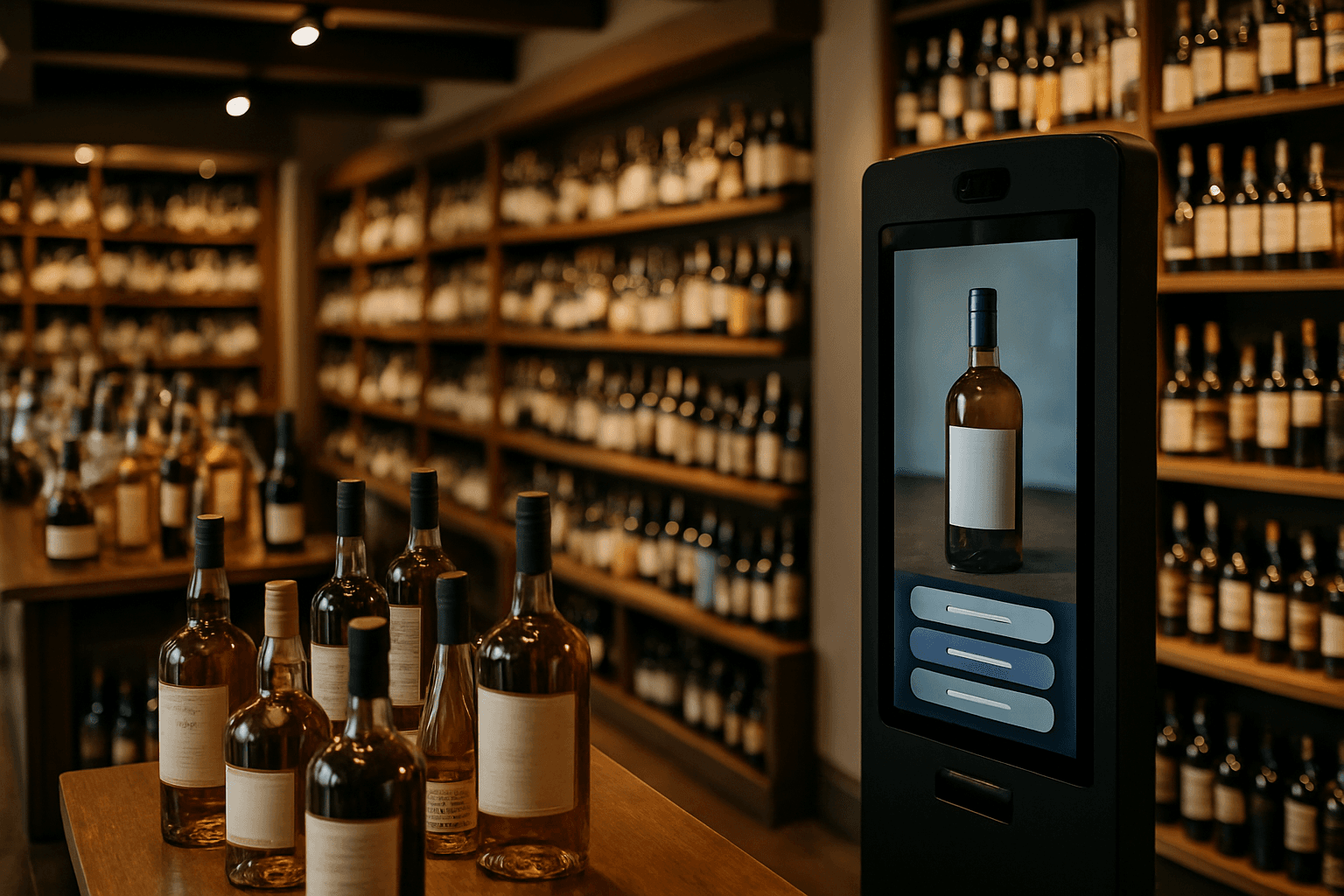
Discover how AI kiosks for liquor stores deliver ROI in under 90 days through upselling, labor savings, inventory automation, and smarter customer experiences.
- Why Liquor Stores Are Ripe for an AI Kiosk Revolution
- Way #1: AI-Powered Upselling That Actually Works
- Way #2: Smarter Inventory Management That Cuts Waste and Stockouts
- Way #3: Labor Reallocation, Not Replacement, but Redistribution
- Way #4: Data-Driven Customer Experiences That Build Loyalty
You spent more time choosing your store's POS system than most people spend buying a car, and it still can't tell a customer which rosé pairs with grilled salmon. That's not a failure of effort. It's a failure of tools. And it's exactly why AI kiosks for liquor stores are turning into the fastest ROI play in specialty retail right now.
Here's the pitch in plain English: a single interactive kiosk on your shop floor can upsell smarter than your best employee on their best day, cut inventory waste you didn't even know you had, and free up your team to do the high-value work that actually builds your business. Not in a year. Not in six months. In 90 days or less.
That sounds aggressive, we know. But when your starting point is handwritten shelf tags and a prayer that the seasonal stock moves before it collects dust, the math works faster than you'd expect.
Below, we're breaking down five specific ways these kiosks pay for themselves, with real-world examples from retailers and venues already doing it. No hype, no hand-waving. Just the numbers, the proof, and a clear picture of what this looks like in a store that probably isn't that different from yours.
Why Liquor Stores Are Ripe for an AI Kiosk Revolution
Let's be honest: most liquor stores are running on technology that was outdated when flip phones were cool. And that's not a dig, it's an opportunity.
A Low-Tech Industry With Massive Upside
The liquor store industry has historically relied on manual workflows for everything from inventory counts to product recommendations. That low baseline means even modest automation gains, better inventory accuracy, smarter labor allocation, stronger upsell conversion, produce outsized ROI compared to industries that digitized years ago. When your competition is a clipboard and gut instinct, the bar for improvement isn't just low. It's on the floor.
That gap between where liquor retail is and where it could be is exactly what makes AI kiosks such a compelling investment right now. You don't need to revolutionize the entire operation. You just need to stop leaving money on the counter.
What an AI Kiosk Actually Does in a Liquor Store
So what does this technology actually look like in practice? Picture an interactive, self-service touchscreen on your shop floor, something between a helpful employee and a sommelier who never calls in sick. Customers walk up, describe what they're looking for (a bourbon under $40, a wine for pasta night, a mezcal cocktail recipe), and the kiosk delivers personalized recommendations pulled from your real-time inventory and POS data.
This isn't theoretical. Several major retailers have already proven the model:
- BJ's Wholesale Club expanded in-club digital kiosks for personalized wine and cocktail recommendations in early 2026, proving self-service kiosk retail works at scale.
- Calgary Co-op deployed AI-powered kiosks pulling real-time inventory data in late 2025, reducing out-of-stock frustration and increasing basket size.
- Fenway Park and TD Garden rolled out AI-driven suggestive selling that measurably increased per-transaction spend at concession stands.
The technology is production-ready. The ROI is real. And when your starting point is "I think we have that in the back," the gains compound fast, which is exactly why a 90-day payback isn't wishful thinking.
Now let's break down the five specific ways these kiosks earn back every dollar, starting with the one that hits your register first.
Way #1: AI-Powered Upselling That Actually Works
From "Can I Help You?" to Personalized Recommendations at the Shelf
Let's be honest, most customers who walk into a liquor store don't want to flag down an employee and admit they have no idea what they're looking for. They'd rather browse quietly, grab something familiar, and leave.
An AI kiosk flips that dynamic entirely.
Instead of a generic greeting, the kiosk uses purchase context, flavor preferences, and real-time trending data to meet customers exactly where they are. Someone browsing the bourbon aisle doesn't just get pointed toward the usual suspects, they get a small-batch recommendation that fits their taste profile and a cocktail bitters pairing they didn't know they needed. That's not pushy upselling. That's genuinely useful guidance, and it moves higher-margin bottles off the shelf.
7 easy strategies for liquor stores to boost sales during soccer season using Abstract Ice's new ball-shaped ice. Sea...
City Hive's Tipsy Bot has already demonstrated that AI can handle nuanced alcohol shopping conversations, from dialing in flavor preferences to completing a purchase, effectively replicating what a seasoned floor associate can do.
The Numbers Behind the Upsell
Here's what made me a believer: the AI-driven suggestive selling deployed at Fenway Park and TD Garden increased per-transaction sales in environments where the interaction window is maybe 30 seconds. Now imagine that same approach working on a customer who's browsing a spirits aisle for five minutes.
The math is simple but powerful: even a $2, $4 bump in average basket size across hundreds of daily transactions adds up to thousands per month. That's your kiosk paying its own rent, and then some.
Upselling puts more money in the register. But the next lever works the other side of the equation, keeping money from leaking out the back door.
Way #2: Smarter Inventory Management That Cuts Waste and Stockouts
Here's a dirty secret in liquor retail: dead stock is a silent profit killer. That limited-edition pumpkin spice whiskey that flew off shelves in October? By January, it's collecting dust and tying up capital. Trendy spirits that fizzle, seasonal overbuys, and misread demand signals cost stores thousands every year.
This is where AI kiosks for liquor stores start pulling double duty, they're not just selling, they're thinking about your stockroom.
Real-Time Inventory Intelligence at the Point of Recommendation
Calgary Co-op nailed this in their late-2025 rollout: their AI kiosk connects directly to inventory data so it never recommends something that isn't on the shelf. Think about what that eliminates. No more customers getting excited about a recommendation only to find an empty spot where the bottle should be. That kind of out-of-stock disappointment doesn't just lose one sale, it erodes trust.
When every recommendation is a completable transaction, basket size and customer satisfaction go up simultaneously.
Automated Reorder Triggers and Shrinkage Detection
The ROI gets even more compelling behind the scenes. AI-integrated POS systems automate inventory counts, flag shrinkage anomalies, and trigger reorders before you hit zero stock. Bottlecapps has reported that AI-powered inventory tools can dramatically cut waste by analyzing actual purchasing patterns instead of relying on gut feelings.
Reducing overstock by just 5–10% and eliminating even a handful of stockout events per week recovers real dollars that go straight to your bottom line. That's not theoretical, that's smarter shelves paying for themselves one decision at a time.
So the kiosk is boosting what you sell and tightening what you stock. But there's a third lever that store owners often overlook, and it has everything to do with your team.
Way #3: Labor Reallocation, Not Replacement, but Redistribution
Here's a question your staff answers fifteen times a day: "What's a good bourbon for under $60?" Here's another: "What pairs well with steak?"
These aren't bad questions. They're just repetitive ones. And every minute your best employee spends answering them is a minute they're not building a relationship with the regular who drops $200 a visit or restocking that end cap that's been empty since lunch.
Discover 7 AI inventory management strategies for liquor stores to cut waste, automate reordering, and boost profits ...
This is where AI kiosks earn their keep, not by replacing your team, but by handling the predictable 80% so your people can focus on the valuable 20%.
Let the Kiosk Handle the FAQ, Let Your Team Handle the VIP
Think of the kiosk as the sommelier you couldn't justify hiring. It handles the flavor-preference conversations, the "what goes with" questions, and the price-range filtering, all without pulling your experienced staff off the floor. Meanwhile, your team is free to do what humans do best: build relationships, manage tastings, and close the big sales.
BJ's Wholesale Club was confident enough in this model to expand its kiosk platform across clubs in early 2026. You don't scale something that isn't freeing up labor and driving revenue.
Addressing the Labor-Cost Question Head-On
Let's talk about the elephant in the room. When AI-driven selling tools show up, it raises fair questions about labor displacement. Liquor store owners should hear this directly: the goal isn't cutting headcount. It's making every labor hour more productive and revenue-generating.
The math is straightforward. If reallocation lets you operate one fewer shift per week or delay a planned hire by six months, those savings alone can cover your kiosk costs well within 90 days. Your people are your competitive advantage. The kiosk just makes sure they're spending time where it actually counts.
That brings us to something less obvious but arguably more valuable in the long run: what happens when every customer interaction starts teaching you something.
Way #4: Data-Driven Customer Experiences That Build Loyalty
Here's something most store owners don't think about when they install an AI kiosk: every single interaction is quietly building a playbook for running your business better.
Every Interaction Is a Data Point
When a customer walks up to a kiosk and searches for "smoky mezcal under $40," that's not just a transaction, it's intelligence. What people search for, what recommendations they accept or reject, what price points make them pull the trigger, all of it creates a living data layer that gets smarter over time.
This is the core idea behind multi-channel AI platforms like LiquorChat: every touchpoint, whether it's in-store, online, or on mobile, feeds the same intelligence engine. The kiosk doesn't just sell bottles. It teaches you what your customers actually want.
That data flows directly back into your purchasing decisions, shelf layout, and promotional strategy. Instead of guessing which new mezcal to stock, you know, because 47 customers searched for it last month and your current selection didn't have it.
Turning Browsing Into Buying (and Buying Into Returning)
But the real long-game ROI lever? Loyalty. Customers who receive personalized recommendations feel seen. They come back more often. And repeat visit frequency is one of the most powerful, and chronically undervalued, metrics in liquor retail.
A kiosk that remembers a customer prefers peated Scotch and flags a new Islay arrival isn't just making a sale. It's earning the next five visits. In an industry where most stores offer zero personalization, that kind of experience becomes a genuine competitive moat.
Data and loyalty are powerful on their own. But the fifth and final lever is what ties everything together, and it's the reason the ROI doesn't just hold at 90 days but actually accelerates after that.
Discover 7 AI-powered customer engagement tactics that transform cross-selling for liquor stores. Practical strategie...
Way #5: A Multi-Channel AI Layer That Compounds Over Time
Here's the thing most people get wrong about AI kiosks for liquor stores: they think it's about the screen. It's not. The screen is just the part customers touch.
In-Store Kiosk + Online Chatbot + POS Integration = One Brain
The real power is the unified intelligence layer behind it, a single system connecting your in-store kiosk, online chatbot, and POS data so they all learn together. That's exactly what platforms like LiquorChat are building: one brain that knows your inventory, your customers, and your sales patterns across every touchpoint.
Disclosure: This post is brought to you in partnership with LiquorChat.
When a customer browses mezcal on your website at 10 p.m. and walks into your store the next afternoon, the kiosk already knows what they were looking at. That continuity isn't creepy, it's the same thing a great bartender does when they remember your usual. It just scales.
The 90-Day Payback Is Just the Beginning
Here's where the investment shifts from expense to strategic asset. Month 1, the kiosk pays for itself through upsells and labor savings. Month 6, the data is reshaping your purchasing strategy. Month 12, it's your competitive moat, while the store down the street is still guessing what to order.
The 90-day payback isn't the finish line. It's the starting gun.
The Bottom Line: 90 Days Is Conservative
Adding Up the Five ROI Levers
Let's recap what we're actually stacking here:
- Upselling lift, $2, $4 per transaction adds up fast across hundreds of daily sales
- Inventory waste reduction, fewer dead-stock dollars, fewer stockout events
- Labor reallocation, your team focuses on high-value work, not repetitive Q&A
- Data-driven loyalty, personalized experiences that earn repeat visits
- Compounding multi-channel intelligence, every interaction makes the system smarter
Each one moves the needle on its own. Together, they compound in ways that make 90 days look conservative.
The proof points are already out there: BJ's is scaling kiosks across clubs, Calgary Co-op is connecting AI to real-time inventory, and venues like Fenway Park are seeing measurable per-transaction lifts. This isn't early-adopter territory anymore. It's the new baseline.
How to Get Started Without Overhauling Everything
You don't need to rewire your entire operation. Start with one kiosk in a high-traffic aisle, right next to the whiskey wall or the wine section where customers already linger. Measure basket size and interaction rates for 30 days. Let the data make the case for expansion, not a sales pitch.
That's the beauty of AI kiosks for liquor stores: they prove themselves quickly, and they scale only when the numbers say so. No massive upfront overhaul. No leap of faith. Just a smarter way to run the store you've already built, one that starts paying you back before the next quarter ends.
Want to see what an AI kiosk could look like in your store? Let's talk. We'll help you run the numbers for your specific setup, no commitment, just math.