60-Second Tactic: Build a Multi-Agent Weather-and-Trend Alert That Auto-Adjusts Your Chilled Red Wine Merchandising Before a Heat Wave Hits
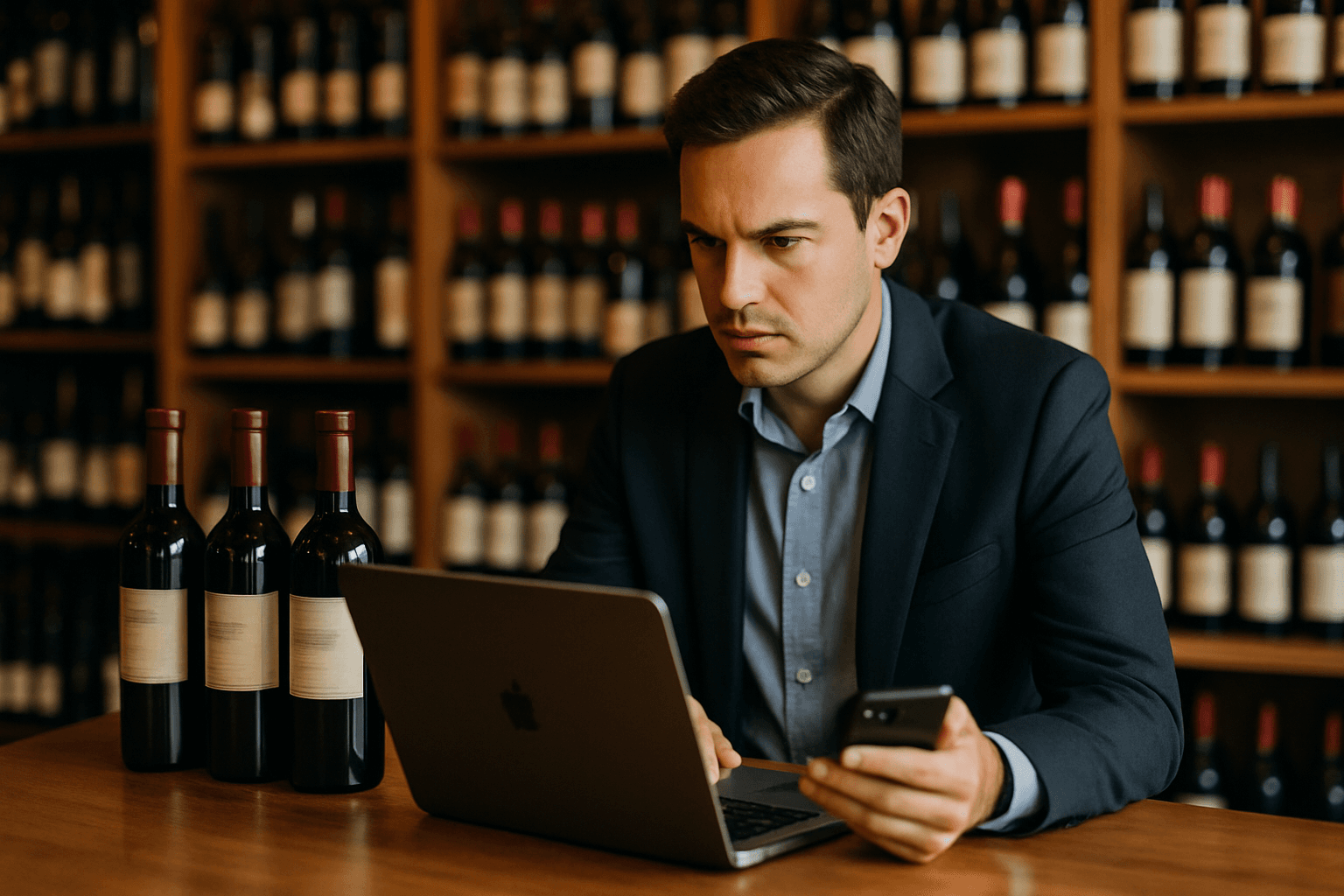
Learn how AI weather-based demand forecasting liquor retail tools auto-adjust chilled red wine merchandising before heat waves. 60-second setup tactic inside.
- Why Your Chilled Red Wine Section Should Watch the Weather Forecast (Even If You Don't)
- The 60-Second Setup: How the Multi-Agent Alert Actually Works
- Under the Hood: The Agentic Architecture That Makes This Possible
- What the Data Says: Why Weather-Triggered Merchandising Outperforms Gut Instinct
- Your 60-Second Action Plan: Set It Up Right Now
Every summer, the same scene plays out in thousands of liquor stores across the country. The thermometer climbs past 95°F, a customer walks in looking for something red but refreshing, and the staff realizes, too late, that the cold box is stocked with the same Chardonnay and Pinot Grigio it's held since April. Someone hustles a few bottles of Beaujolais into the cooler, but warm wine takes hours to chill, and by the time the selection looks intentional, the hottest shopping days have already passed. It's a margin leak hiding in plain sight, and it happens because most stores treat weather as background noise rather than a demand signal.
It doesn't have to work this way. AI weather-based demand forecasting in liquor retail has reached a tipping point where a single-store operator with a zip code and a POS export can access the same predictive infrastructure that billion-dollar distributors are deploying right now. We're not talking about a chatbot that suggests wine pairings. We're talking about a multi-agent system that monitors weather forecasts, cross-references your actual sales history, and texts you a specific, SKU-level action plan 72 hours before the heat hits, so your cooler is stocked, your endcap is built, and your customers find exactly what they want before they even knew they wanted it.
This post walks you through the entire system: why weather-triggered merchandising outperforms gut instinct, how the multi-agent architecture works under the hood, and, most importantly, how to set the whole thing up in 60 seconds flat. Whether you're a retailer managing a wall of 10,000 SKUs with a skeleton crew, a distributor tired of emergency reorder calls on day three of a heat wave, or a producer wondering why your chilled-friendly reds aren't getting cooler placement, this is the playbook.
Why Your Chilled Red Wine Section Should Watch the Weather Forecast (Even If You Don't)
The $0 Merchandising Mistake You're Making Every Heat Wave
Here's the pattern: temperatures spike, someone on staff scrambles to move a few bottles into the cold box, and by the time you've got a decent chilled red selection visible, the heat wave is half over. You just lost 2–3 days of peak demand doing exactly what you always do, reacting.
That's not a staffing problem. It's an information problem. And it's costing you real margin on a category that's been steadily climbing.
Consider a concrete scenario. A 5-day heat wave rolls into your metro area this July. The stores that pre-positioned chilled Lambrusco, Gamay, and lighter Pinot Noir 48 hours before the temperature spike captured incremental sales across the entire event window. The stores that waited until day 2, when customers were already asking, missed the highest-intent shopping days entirely.
Weather Is the Demand Signal You're Ignoring
Climate change isn't abstract for retail anymore. Longer, more frequent, and less predictable heat events are now direct factors in your weekly revenue, yet most stores have zero weather strategy baked into merchandising.
Meanwhile, the infrastructure for weather-driven demand forecasting isn't theoretical, it's production-ready. Major players like Southern Glazer's Wine & Spirits are already deploying AI-driven supply chain forecasting at scale through partnerships like their OpenText integration [VERIFY: confirm OpenText partnership details and current status].
So what if a multi-agent system texted you 72 hours before the heat wave with exact SKUs to chill, quantities to pull forward, and a suggested endcap layout? What if that setup took 60 seconds, and then just ran?
That's what we're building. Let's walk through it.
The 60-Second Setup: How the Multi-Agent Alert Actually Works
What You Need Before You Start (Spoiler: You Already Have It)
Three things. That's it.
- Your POS sales history, even a basic CSV export from your system works. If you've been running a register for six months, you have enough data.
- Your store's zip code.
- A LiquorChat account.
No API keys. No developer on retainer. No six-week IT project. The platform handles the integrations, the model training, and the agent orchestration behind the scenes. You just upload, configure your temperature threshold, and go.
The Three Agents Working Behind the Scenes
This isn't a single chatbot answering questions. This is a multi-agent swarm, three specialized, autonomous AI agents orchestrated to deliver one unified alert to your phone or email. Here's what each one does:
Agent 1, The Weather Watcher. This agent monitors NWS and commercial weather APIs for your store's zip code, around the clock. It triggers when a heat event, 3+ consecutive days above a configurable threshold (default: 90°F), is forecast within a 72-hour window. That 72-hour lead time is critical. It's the difference between proactive merchandising and scrambling after customers are already asking for something cold.
8 AI demand forecasting moves every liquor store owner should make. Cut waste, prevent stockouts, and stock smarter i...
Agent 2, The Trend Analyst. This is where the forecasting gets specific to your store. The agent pulls your historical POS data for chilled red wine SKUs, cross-references past heat events with sales velocity spikes, and identifies your top 5–10 SKUs that consistently move during warm weather. It runs ML demand forecasting models that are achieving strong accuracy in retail settings, recent industry benchmarks cite up to 98% in controlled environments [VERIFY: identify and cite the specific January 2026 report]. Not a guess, a forecast built on your actual sales patterns.
Agent 3, The Merchandising Advisor. This agent combines the outputs from Agents 1 and 2 to generate a specific action list: which SKUs to chill, how many cases to pull from back stock or reorder, suggested cooler placement, and even a price or promo recommendation if your margins allow it. It's a complete chilled red wine merchandising strategy, ready to execute.
This is multi-agent AI beverage merchandising in action, tool orchestration, not a toy. The architecture is already validated in the beverage space. One demonstrated system uses specialized agents (industry insights, market analysis, marketing, visual concepts) collaborating autonomously on beverage concepts, proving this pattern scales. Now it's accessible to a single-store operator with a zip code and a sales export.
Your alert lands before the heat wave does. You execute the plan. Customers walk into a cooler stocked with exactly what they didn't know they wanted.
Now let's look at what's actually happening inside the system, because the technical architecture is what separates this from a glorified weather app with a wine list attached.
Under the Hood: The Agentic Architecture That Makes This Possible
Every component described above runs on infrastructure that already exists in our industry. Let's crack it open for the technically curious.
RAG + Real-Time Data: Why This Isn't Just a Chatbot
When most people hear "AI," they picture a generic chatbot spitting out canned wine pairing advice. This is fundamentally different. The system uses Retrieval-Augmented Generation (RAG) to ground every recommendation in your actual sales data, not some generic wine database.
Here's what that means in practice: your POS history, every bottle of Lambrusco, every chilled Beaujolais, every Valpolicella sold over the last three summers, becomes a private knowledge base that agents query in real time. When the Weather Watcher flags an incoming heat wave, the Merchandising Advisor doesn't guess what sells. It knows your store moved 4x more chilled reds during last July's 98°F stretch, and it knows exactly which SKUs drove that lift.
This is why AI weather-based demand forecasting in liquor retail is finally practical for independent operators. Accuracy means nothing without grounding, and RAG provides that grounding in your specific context.
Reasoning models then evaluate multiple scenarios simultaneously. Instead of brittle if/then rules ("if temp > 90°F, order more rosé"), the system weighs questions like: "If this heat wave extends to 7 days instead of 3, should we double the Lambrusco pull or shift allocation toward the $12, $18 price tier that historically outperforms in sustained heat?" You get confidence-scored recommendations, say, 87% confidence on increasing Lambrusco by 40%, 62% confidence on adding a secondary Dolcetto display, so you make the final call with real data behind it.
How Tool Orchestration Connects Weather APIs, POS Data, and Distributor Catalogs
The power of multi-agent beverage merchandising lives in the tool orchestration layer, the connective tissue that lets independent agents actually do things rather than just think about them.
Here's the pipeline: the Weather Watcher pulls from external weather APIs (National Weather Service, commercial forecasting services). The Trend Analyst queries your POS system via API or scheduled data sync. The Merchandising Advisor synthesizes both inputs, then checks your distributor's catalog feed for real-time availability before recommending a reorder. No more recommending a SKU that's sitting on backorder in the warehouse.
This isn't theoretical. Southern Glazer's, processing billions in annual revenue, already runs AI-driven forecasting across its supply chain. AI agents across beverage distribution are automating orders, streamlining inventory, and managing supplier engagement in production environments today. FirstKey Consulting's analysis confirms companies embracing AI-driven forecasting are reporting measurable improvements: better forecast accuracy, improved inventory turnover, and higher fill rates.
Discover 7 AI demand forecasting strategies to optimize your liquor store inventory, cut waste, and boost sales this ...
The bottom line: every API connection, every agent workflow, every RAG pipeline described here is built on infrastructure already running in alc-bev. LiquorChat packages it so a 2-person shop gets the same capabilities that a billion-dollar distributor deploys, without the billion-dollar IT budget.
Architecture aside, the real question is always the same: does it actually work better than experience and instinct?
What the Data Says: Why Weather-Triggered Merchandising Outperforms Gut Instinct
From Reactive to Predictive: The Operational Case
Here's the operational reality: a store managing 10,000+ SKUs with a three-person team cannot manually cross-reference seven-day weather forecasts against category-level sales history across dozens of subcategories. That's not a staffing failure, it's a math problem. An AI agent does that analysis in seconds, freeing your team to actually execute the chilled red wine merchandising strategy instead of researching whether one is needed.
NBWA research reinforces the approach, best-in-class beverage distributors are combining historical sales, weather data, store-level behavior, event schedules, and consumer trends to power AI-driven "perfect order" strategies. A multi-agent retail alert is simply the store-side equivalent of what top distributors already do.
A September 2025 analysis argues retailers need a dedicated weather strategy that extends well beyond basic inventory adjustments, especially as climate change makes historical patterns less reliable. Heat wave wine inventory optimization can't wait for your gut to notice it's getting hot outside. This tactic is that strategy, fully automated.
The improvements compound across KPIs: sharper demand forecasts reduce overstock and out-of-stocks simultaneously. Faster inventory turnover frees up cooler space and working capital. Higher fill rates mean fewer lost sales and fewer disappointed customers walking out empty-handed. And earlier, more accurate orders from retail partners reduce the emergency rush deliveries that eat into distributor margins.
The data makes the case. Now here's how to act on it, in sixty seconds.
Your 60-Second Action Plan: Set It Up Right Now
Step-by-Step: From Zero to Live Alert in Under a Minute
Four steps, fifteen seconds each, and you've got a live weather-driven merchandising system working while you sleep.
Step 1 (0:00–0:15): Log into LiquorChat and navigate to the Agent Alerts dashboard. Select the "Weather + Merchandising" template. This pre-built multi-agent workflow pairs NWS forecast data with your sales patterns.
Step 2 (0:15–0:30): Enter your store zip code and set your heat threshold. Default is 90°F for 3+ consecutive days, but adjust for your climate zone. Phoenix? Set 105°F. Portland? 85°F makes more sense. The agent calibrates its recommendations around your local baseline, not a national average.
Step 3 (0:30–0:45): Connect your POS data. Upload a CSV covering 12 months of chilled red, rosé, and light red sales, or plug in directly through supported POS integrations. This historical data is what turns a generic weather alert into genuine, SKU-level inventory optimization.
Step 4 (0:45–0:60): Pick your alert channel, SMS, email, or Slack. Set lead time to 48 or 72 hours. Hit "Activate." Done.
Customization Tips for Your Store Profile
Layer in secondary triggers like local event calendars. An outdoor concert series plus a 95°F weekend? That's a compounding signal most retailers miss entirely. Expand your agent suite beyond chilled reds to include rosé, canned wine, and spiked seltzers for full warm-weather category coverage.
Discover 7 AI demand forecasting triggers to optimize inventory, cut waste, and maximize summer sales at your liquor ...
Multi-location operators: Set different thresholds per store. A college-town location and a suburban wine shop have fundamentally different chilled red velocity curves, your agents should reflect that.
Once your chilled red alert is live, the natural next question is: what else can this architecture do? The answer is, a lot.
Beyond Chilled Reds: Where Multi-Agent Weather Alerts Go Next
The multi-agent pattern behind your chilled red wine merchandising strategy isn't a one-trick system, it's a template. Any weather-sensitive category becomes fair game when you pair demand forecasting with real-time trend analysis.
Think bourbon and whiskey pre-positioning three days before a cold snap hits your market. Rosé and seltzer scaling the moment spring warmups trend above 75°F. Storm-prep stocking of comfort pours, Irish cream, hot toddy ingredients, rich stouts, before a blizzard buries your delivery routes.
Seasonal Playbooks: Fall Warming Spirits, Winter Storm Stocking
Build seasonal playbooks the same way: your Weather Watcher agent feeds the Trend Analyst, which feeds the Merchandising Advisor. For fall, that means flagging the first sustained dip below 55°F to trigger bourbon end-cap recommendations. For winter storms, it means cross-referencing NWS alerts with your historical velocity data on comfort categories. Each playbook runs the same multi-agent workflow, you just swap the triggers and category rules.
Connecting the Alert to Your Distributor for Auto-Replenishment
Here's where it gets transformative. Coming soon on LiquorChat: connect the Merchandising Advisor agent directly to your distributor's ordering system so the alert doesn't just tell you what to do, it drafts the PO and sends it for your one-click approval. No more phone/fax order chaos on day three of a heat wave.
The infrastructure to receive automated, weather-triggered reorder signals from retail partners is already being built on the distributor side. Major distributors are infusing AI into ordering, inventory, and supplier engagement, which means the connective tissue for a fully agentic supply chain is forming now.
The vision: the weather watcher triggers the trend analyst, which triggers the merchandising advisor, which triggers an auto-replenishment agent, all before you finish your morning coffee. That's AI weather-based demand forecasting in liquor retail running on autopilot, and it's closer than you think.
The Bottom Line: Stop Reacting to Weather, Start Anticipating It
Key Takeaways for Retailers, Distributors, and Producers
Retailers: 60 seconds of setup buys you 72 hours of lead time on every heat wave. That's the difference between an empty cooler and a sold-out endcap. With weather-driven demand forecasting now achieving benchmark accuracy levels that outperform any manual process, guessing is obsolete.
Distributors: When retail partners run weather-triggered agents, you get earlier, more accurate orders, improving fill rates and eliminating emergency rush deliveries. The infrastructure is already proven at scale; now it's reaching independent accounts.
Producers & Brand Managers: Chilled red wines remain a massively underdeveloped category with real weather-driven upside. Brands that partner on heat wave inventory optimization and multi-agent AI beverage merchandising will capture share competitors don't even see coming.
The pattern is clear across every tier of the industry: the operators who win aren't the ones with the best instincts, they're the ones whose systems see the signal first and act on it fastest. AI weather-based demand forecasting in liquor retail isn't a future capability. It's a current one. The only question is whether you activate it before your next heat wave, or after.
👉 Activate your first Weather + Merchandising agent on LiquorChat today ↗, it takes 60 seconds, and your next heat wave is already on the forecast.