AI Adoption in Beverage Retail Hits an Inflection Point: What the 2026 Data Shows for Independent Stores
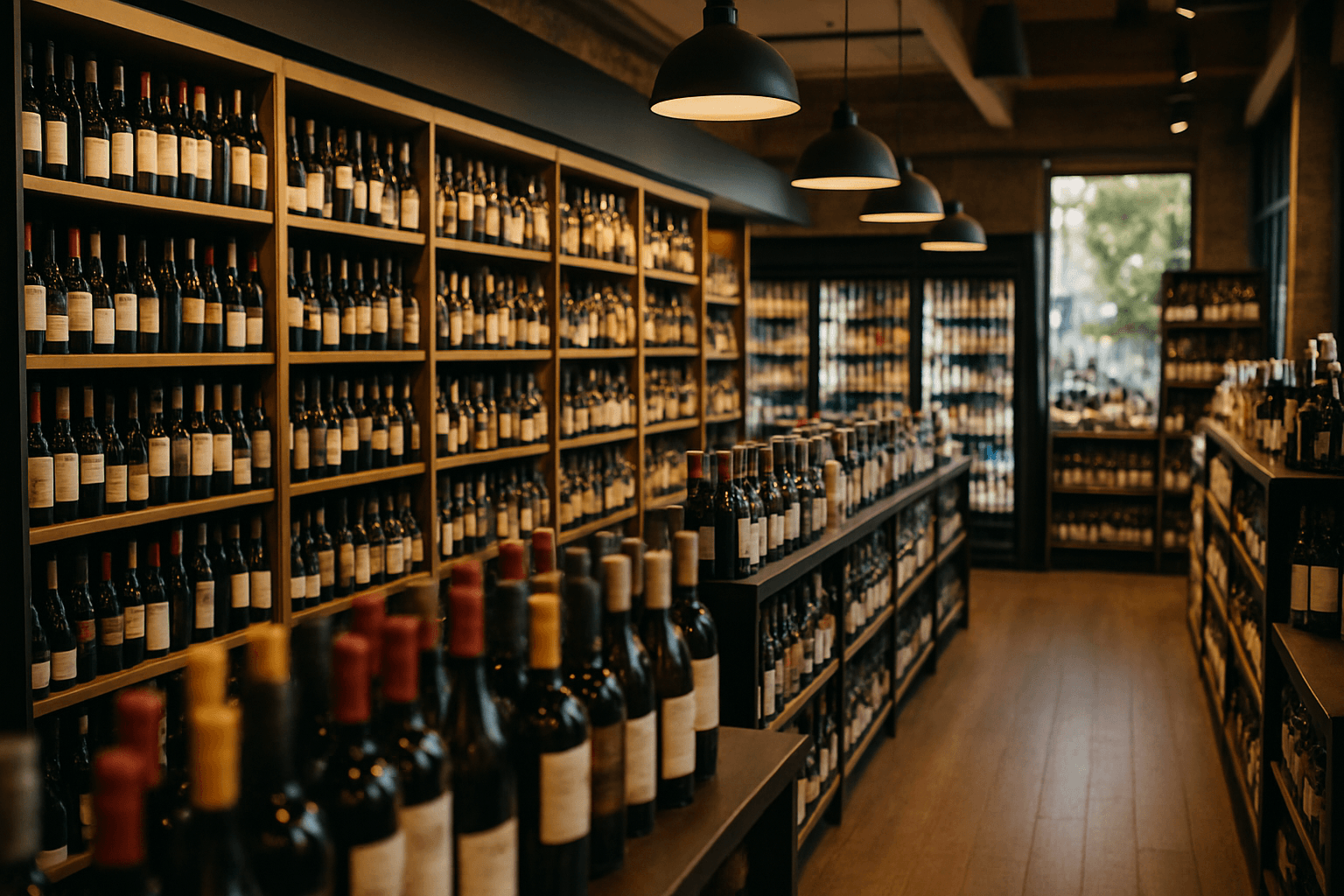
AI in beverage retail has reached its tipping point in 2026. Here's what the data means for independent liquor stores and how to stay competitive.
- The Numbers Don't Lie: AI in Beverage Retail Just Went Mainstream
- Your Supply Chain Already Runs on AI (Whether You Realize It or Not)
- Purpose-Built AI Tools Are Finally Here for Independent Liquor Stores
- The Compliance Curveball: AI Meets Beverage Regulation
- What AI Adoption Actually Looks Like Day-to-Day in a Liquor Store
If you've been behind the counter of an independent liquor store for any length of time, you've seen trends come and go. Craft beer explosions. Hard seltzer summers. The great canned cocktail invasion. But what's happening right now with AI in beverage retail isn't a trend, it's a structural shift in how this entire industry operates. And the 2026 data is making that impossible to ignore.
Here's the reality: while you've been debating whether AI is worth your time, your distributors have already adopted it. Your competitors are testing it. And the customers walking through your door are increasingly shaped by it, from what they search for online to what they expect when they shop with you. The gap between stores that leverage these tools and those that don't is no longer theoretical. It's showing up in sales numbers, customer retention, and operational efficiency right now.
This isn't a piece designed to scare you into buying software you don't need. It's a clear-eyed look at where the industry stands in 2026, what the data actually says, and, most importantly, what practical steps make sense for an independent retailer who doesn't have a tech department or a Fortune 500 budget. Let's walk through it.
The Numbers Don't Lie: AI in Beverage Retail Just Went Mainstream
Let's cut straight to it: the global AI in food and beverage market was valued at $10.8 billion in 2024. By 2030, it's projected to hit $50.6 billion, a compound annual growth rate of 29.6%. That's not gradual growth. That's a rocket ship. And 2026 is the year that curve bends sharply upward.
If you run an independent liquor store and you've been watching AI from the sidelines, thinking it's something for the big chains to worry about, the window for that mindset is closing fast.
From Billions in Investment to Real Revenue
That kind of money doesn't flow into a passing fad. It flows into infrastructure. Major brands, distributors, and retailers are pouring capital into AI-powered tools for everything from demand forecasting to personalized customer recommendations. CES 2026 made it official: AI and automation dominated the innovation categories for food and beverage retail. This isn't a niche corner of the tech world anymore, it's the main stage.
And the investment is translating into real revenue. Early 2026 industry reports indicate that retailers actively leveraging AI tools are outperforming those that aren't, with measurable gains in both sales volume and operational efficiency.
What 'Inflection Point' Actually Means for Your Store
Here's the plain-English version. Gartner projected that over 50% of retailers would adopt AI in some form by 2025. That means 2026 is the year this shift moves from prediction to reality. Majority adoption is here.
An inflection point isn't when the first movers jump in, it's when everyone else starts catching up. For independent liquor stores, this is that moment. AI-powered tools are no longer a "nice to have" for tech-savvy early adopters. They're becoming table stakes for staying competitive.
The message is clear: adapt now, or spend the next few years playing catch-up.
Your Supply Chain Already Runs on AI (Whether You Realize It or Not)
Here's something that might surprise you: even if you haven't touched a single AI tool in your store, artificial intelligence is already shaping how products land on your shelves.
Discover how POS personalization in beverage retail boosts basket sizes by 27%. Learn strategies for liquor store POS...
Southern Glazer's and the Distributor AI Effect
Southern Glazer's, one of the largest beverage distributors in the country, rolled out AI-powered features across its HR and IT operations as of January 2026. Think about that for a second. The company handling a massive chunk of America's beverage distribution is now using artificial intelligence to streamline how it operates internally. That inevitably changes how they interact with you, from ordering systems to sales rep recommendations to delivery logistics.
How Upstream AI Adoption Trickles Down to Your Shelves
And it's not just Southern Glazer's. The brands, wholesalers, and distributors you work with are increasingly AI-enhanced, which reshapes ordering workflows, communication, and even which products get pushed your way. Stores plugged into these modernized supply chains are seeing the benefits first.
Think of it like when your distributor switched from fax orders to email. You didn't have to adopt it, but life got a whole lot harder if you didn't. AI adoption for liquor stores is hitting that same tipping point right now. The question isn't whether artificial intelligence will affect your business. It already has.
Purpose-Built AI Tools Are Finally Here for Independent Liquor Stores
For years, "AI in beverage retail" meant whatever Walmart or Total Wine's engineering teams were cooking up behind closed doors. Independent stores? You got the same generic chatbot that a dentist's office uses. Not exactly helpful when a customer wants a smoky mezcal that pairs with mole.
That's finally changing.
City Hive, Liquorshop.ai, and Bottlecapps: The New Toolkit
A new wave of platforms, City Hive, Liquorshop.ai, and Bottlecapps, are building tools designed from the ground up for liquor retailers. The billions flowing into the AI food and beverage space are finally producing real, specialized products, not vaporware.
City Hive deserves a specific callout. They've launched an AI assistant that actually completes local alcohol purchases, not just recommends a bottle, but channels the customer through to buying it from an independent store. That's AI-powered customer discovery flowing directly to your register, not Amazon's.
Why 'Built for Liquor Retail' Matters More Than Generic AI
Here's the thing: liquor retail has specific complexities that generic tools fumble. Age verification compliance. State-by-state shipping regulations. Inventory that rotates by season, allocation, and distributor availability. Flavor-profile recommendations that actually make sense. Food pairing suggestions that go beyond "red wine with steak."
Purpose-built platforms handle all of this natively. And critically, they lower the barrier for independents, you don't need a tech team, you need the right partner.
The competitive angle is real. Big-box retailers have had AI budgets for years. These tools let independents punch above their weight, finally competing on personalization and convenience without the enterprise price tag.
Discover 10 agentic AI workflows that automate liquor store operations, from inventory to compliance, with practical ...
The Compliance Curveball: AI Meets Beverage Regulation
If you've been in the liquor business for more than five minutes, you already know the obvious follow-up question: What about compliance? Because this isn't an industry where you can just "move fast and break things."
Two Forces Reshaping Beverage Retail at Once
Here's the thing nobody in Silicon Valley fully appreciates: liquor retail isn't like selling sneakers online. It's one of the most heavily regulated retail categories in the country, with rules that shift by state, county, and sometimes even city block. Any AI tool worth your money has to wrestle with that reality in ways that tech in other retail sectors simply doesn't.
And yet, both forces, regulatory complexity and artificial intelligence, are reshaping how beverage companies operate at the same time. Independent stores sit right at the intersection.
How AI Can Actually Help You Navigate the Red Tape
The good news? The best AI tools emerging in 2026 are built for this complexity, handling age verification, shipping restrictions, and inventory reporting so you don't have to white-knuckle it through every audit.
Yes, adopting new technology while navigating shifting regulations feels like changing a tire while driving. But the tools catching on in independent retail right now come with those guardrails already installed. That compliance headache? It might just become your competitive edge.
What AI Adoption Actually Looks Like Day-to-Day in a Liquor Store
Let's cut through the hype. AI in beverage retail isn't about robots stocking your shelves (not yet, anyway). It breaks down into two practical buckets, and knowing which one matters more for your store is the whole game.
Customer-Facing AI: Recommendations, Search, and Discovery
This is the stuff your customers actually interact with. Think AI-powered product recommendations on your e-commerce site, the kind that says, "You liked that Islay Scotch? Try this mezcal", and actually nails it. Smarter search functionality that understands "something smoky under $40 for a gift" instead of requiring exact bottle names. Some stores are even rolling out virtual shopping assistants that can answer questions and complete purchases without a human in the loop.
Behind the Counter: Inventory, Pricing, and Demand Forecasting
This is where the quieter, and often bigger, wins happen. Demand forecasting tools that account for local events, weather, and seasonality. Automated reorder suggestions that keep your bestsellers in stock without you babysitting spreadsheets. Dynamic pricing insights. Inventory optimization that actually reduces dead stock gathering dust in your back room.
Here's what the 2026 data actually tells us: the independent stores posting strong sales aren't necessarily the most tech-forward. They're the ones who picked one or two high-impact tools that addressed their specific bottlenecks, and built from there.
That's the smartest approach right now. You don't need the whole toolkit. You need the right tool.
Discover 7 AI inventory strategy moves for beverage retail. Adjust your liquor store inventory when non-alcoholic sal...
The Real Risk Isn't Adopting AI Too Early, It's Waiting Too Long
Look, we get it. You're running a store, managing inventory, dealing with distributors, and trying to remember if you reordered that allocated bourbon your regulars keep asking about. "Implementing AI" probably ranks somewhere between "learn TikTok dances" and "reorganize the back room" on your priority list.
But the market data we've already covered tells a clear story: this wave is here, it's accelerating, and the majority of retailers are already on board. If you haven't started exploring, you're not being cautious. You're falling behind.
What Happens When Your Competitors Move First
When the shop down the street uses AI to optimize pricing, predict seasonal demand, and send personalized recommendations, their customers notice. Not because it feels techy, because it feels better. Faster answers, smarter suggestions, fewer out-of-stock disappointments. That's the kind of experience that quietly shifts loyalty.
The Independent Store Advantage You Might Be Overlooking
Here's the flip side nobody talks about: AI actually favors you. You're nimble. You know your customers by name. You don't need six months of corporate approvals to try something new.
A knowledgeable owner with a well-curated shop plus smart AI tools? That's a combination no algorithm-only big-box retailer can touch. AI doesn't replace what makes your store special, it amplifies it.
Where to Start: A Practical Checklist for Independent Retailers in 2026
Let's cut to it. The 2026 inflection point isn't about robots replacing your staff or algorithms deciding what goes on your shelves. It's about giving your independent store the same data-driven advantages that big chains have leveraged for years, on a budget and timeline that actually works for you.
Your 5-Step AI Readiness Plan
- Audit your biggest operational pain point. Inventory shrink? Customer discovery? Online sales? Compliance headaches? Find the AI tool that addresses that specific problem first, not the shiniest one.
- Explore purpose-built platforms like City Hive, Bottlecapps, or Liquorshop.ai before reaching for generic solutions. Tools built for what you actually do will always outperform one-size-fits-all options.
- Talk to your distributor. Ask what AI tools they're running and how that affects your ordering workflow. Alignment here saves real time.
- Set a 90-day trial window. Long enough to see meaningful results, short enough to pivot without regret.
- Join industry groups where other independent retailers share what's working. AI adoption is a team sport, learn from peers who've already made the mistakes.
Resources Worth Bookmarking
- Beverage Trade Network and ABL (American Beverage Licensees) for policy updates on AI and regulation in independent retail
- CES 2026 recaps, this year's show spotlighted AI and automation as the dominant innovation categories for food and beverage
- LiquorChat (hey, that's us), we'll keep tracking what's working and what's hype
Here's the honest truth: the best time to start exploring AI in beverage retail was last year. The second-best time is right now. The tools have never been more accessible, more affordable, or more tailored to the way independent stores actually operate. Pick one pain point, try one tool, give it 90 days. That's it. That's the whole starting line.
The Bottom Line
The 2026 data paints a picture that's hard to argue with: AI in beverage retail has crossed from early-adopter territory into the mainstream, and independent liquor stores have more to gain from this shift than almost anyone. You've got the relationships, the curation, the local knowledge, the things no algorithm can replicate. What AI gives you is the operational firepower to make all of that go further.
You don't need to overhaul your entire operation overnight. You don't need to become a tech company. You need to pick one problem, find the right tool, and give it an honest shot. The stores that thrive over the next few years won't be the ones with the biggest budgets, they'll be the ones that started now and iterated from there.
Ready to figure out which AI tools actually make sense for your store? Subscribe to the LiquorChat newsletter for no-hype breakdowns of what's working in independent beverage retail, delivered straight to your inbox. And if you've already started experimenting with AI in your shop, we want to hear about it. Drop us a line. The best insights in this industry have always come from behind the counter.