Conversational AI Adoption in Retail Hits 40 Percent: How the Liquor Industry Compares
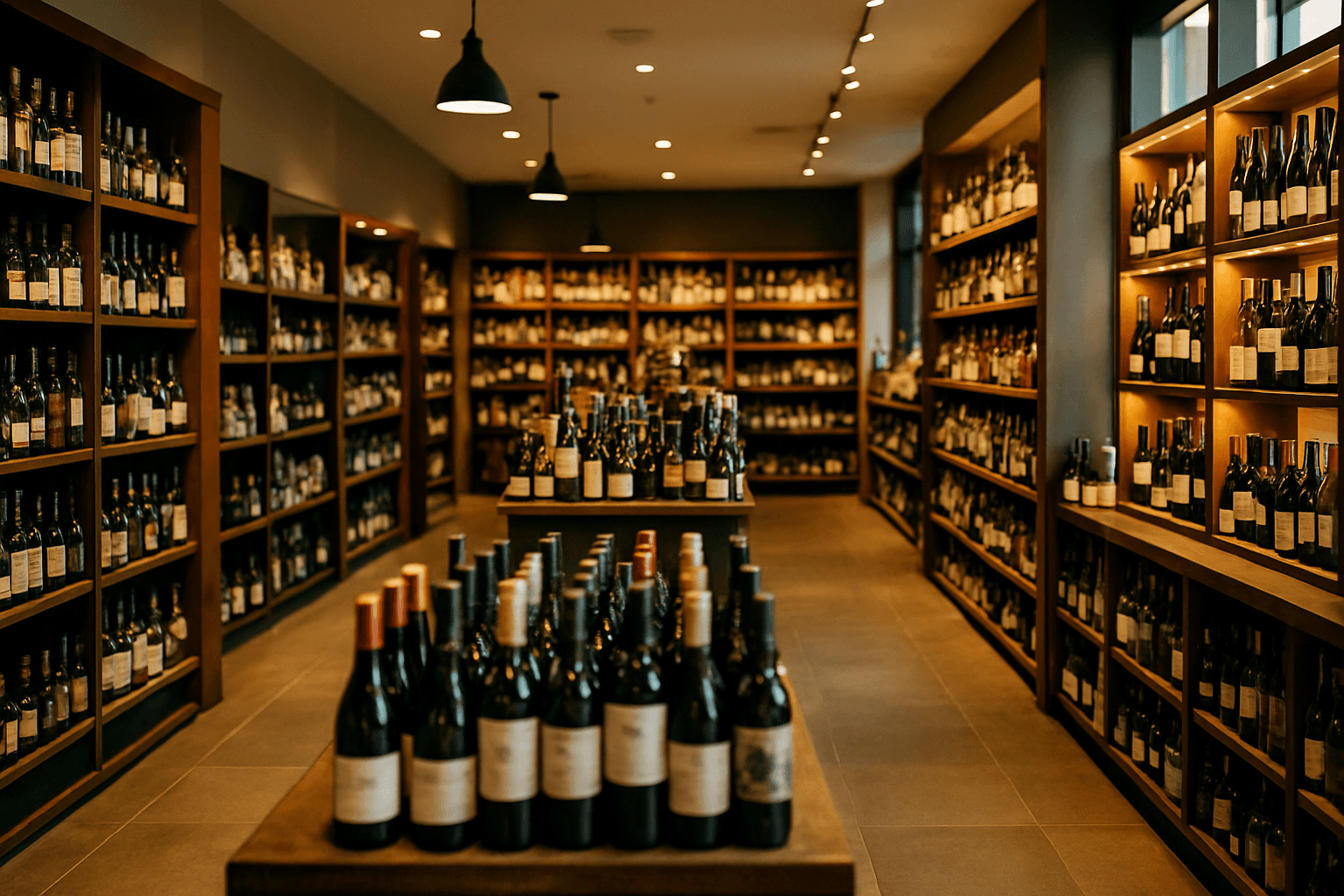
Conversational AI in retail has reached 40% adoption. Here's how the liquor industry compares, what's holding it back, and where it's headed next.
- Retail's AI Revolution Is Moving Fast, And Your Liquor Store Might Be Next
- How Conversational AI Is Reshaping the Broader Retail Landscape
- AI Adoption in the Liquor Industry: Promising but Still Early
- Meet Tipsy Bot: The Liquor Industry's First End-to-End AI Shopping Assistant
- Why Liquor Retail Has Been Slower to Adopt (Hint: It's Not Just Tech)
Picture this: you walk into your favorite liquor store, and the person behind the counter already knows you prefer peated Scotch over bourbon, remembers you hated that overly sweet Riesling last month, and has three bottles picked out based on what you're grilling this weekend. Now imagine that level of personalized service, available 24/7, on your phone, before you even leave the house. That's the promise of conversational AI in retail, and for most of the shopping world, it's not a promise anymore. It's Tuesday.
Across the broader retail landscape, roughly 40% of businesses have already deployed some form of conversational AI, chatbots, virtual assistants, voice-powered tools, or some combination of all three. Coffee chains are using it to take orders. Fashion retailers are using it to play personal stylist. Electronics stores are using it to troubleshoot your new TV before you even call customer support. But the liquor industry? It's a different story, one that's just now getting its opening chapter written.
That gap isn't necessarily a bad thing. In fact, it might be the most interesting part of this whole conversation. The unique challenges facing alcohol retail, think age verification, state-by-state shipping laws, and a regulatory framework that makes most tech companies break out in hives, mean the AI solutions being built for this space have to be genuinely smarter than what a clothing retailer slaps on their homepage. So let's break down where things actually stand, what's holding the industry back, and why the next couple of years could change everything about how you buy your next bottle.
Retail's AI Revolution Is Moving Fast, And Your Liquor Store Might Be Next
Here's a number worth pouring yourself a drink over: by 2025–2026, roughly 40% of retail businesses have deployed some form of conversational AI. That's not a projection from some breathless tech keynote. It's where we are right now.
The 40% Benchmark: What It Actually Means
That adoption figure spans the full spectrum, from the chat widget that helps you track a package to sophisticated voice AI handling complex customer interactions. SoundHound AI, for example, rolled out voice-powered Employee Assist across every single Peet's Coffee location nationwide. Not a pilot. Not a test market. The whole chain. Meanwhile, platforms like Coveo are unifying conversational search with product discovery, making it easier for any retailer to plug AI into the shopping experience. The infrastructure is maturing fast.
Why This Matters for Liquor Retail
So where does the liquor industry stand? Honestly, early. City Hive's Tipsy Bot is being positioned as the first AI assistant to handle the full local alcohol purchase journey conversationally. First. In 2026. And while NABCA has started publishing foundational materials on AI adoption in beverage alcohol, they're still covering the basics, the kind of content that signals an industry in learning mode, not deployment mode.
That gap between mainstream retail and beverage alcohol isn't a failure, it's an opportunity. AI chatbots for liquor stores are no longer a question of if but when.
We're not here to hype or scare you. Consider this your honest pour on where things actually stand, and what's headed your way.
How Conversational AI Is Reshaping the Broader Retail Landscape
To understand where liquor retail is headed, it helps to see what's already happening everywhere else. The technology has moved well beyond the clunky chatbots of a few years ago, you know, the ones that answered "I'm sorry, I didn't understand that" to basically everything. Today's tools span a full spectrum of customer interactions: product discovery, personalized recommendations, customer support, upselling, and increasingly, full conversational commerce, where a customer can go from "What's a good smoky mezcal?" to completing their purchase without ever leaving the chat.
From Product Discovery to Full Checkout, All in a Conversation
Coveo's recently launched Conversational Product Discovery platform is a good example of where this is heading. Instead of browsing filters and scrolling through pages, customers simply describe what they want, and the AI serves up relevant products, answers follow-up questions, and guides them to checkout. All in one conversation.
Now imagine that applied to a liquor store's online catalog. A customer types, "I need a bourbon under $50 that's good for Old Fashioneds." The AI doesn't just spit out a list, it asks whether they prefer higher rye content, suggests a specific bottle, and offers a complementary bitters set. That's the kind of experience liquor retailers could eventually leverage to compete with bigger players.
Discover how voice-first commerce is transforming liquor store customer experiences with AI-powered product discovery...
Voice AI Goes Full-Scale: The Peet's Coffee Precedent
Here's where it gets real. SoundHound AI's full-chain deployment at Peet's Coffee proves voice AI works at scale in food and beverage retail. Staff use voice-powered AI to handle orders, answer product questions, and streamline operations across the entire footprint.
This matters for our industry because it sets a precedent. If your neighborhood coffee shop is using AI to take orders and answer questions about oat milk options, how long before your local liquor store uses similar tools to recommend a bottle of bourbon or suggest a wine pairing for dinner?
The honest answer: it's already starting. But the gap between what's possible and what's happening in alcohol retail is exactly where the opportunity lives.
AI Adoption in the Liquor Industry: Promising but Still Early
So we've seen what the rest of retail is doing. Now let's talk about our world, and let's be real: while general retail is charging toward that 40% adoption benchmark, the liquor industry is still lacing up its shoes.
That's not a knock, it's just where things stand. Most implementations are in early or pilot stages. The beverage alcohol space faces unique regulatory complexity that general retail simply doesn't deal with. Three-tier distribution systems, state-by-state compliance variations, age verification requirements, these aren't small hurdles when you're trying to deploy technology at scale.
NABCA's recent publications on AI in the beverage alcohol marketplace signal serious institutional recognition, but the content is still foundational, "AI Basics" educational material that tells you the industry is warming up, not sprinting.
Meanwhile, PYMNTS has reported on conversational AI stirring up the spirits sector's digital transformation, highlighting emerging dual marketplace models that connect producers directly with non-traditional sellers, including social media influencers. It's innovative, but it's early-stage innovation.
The Back-End Is Ahead of the Front-End
Here's where the industry deserves more credit. AI in beverage alcohol is currently strongest where customers don't see it, supply chain optimization, demand forecasting, and inventory management. Distributors and larger retailers are using machine learning to predict seasonal demand shifts, reduce overstock on slow movers, and streamline ordering.
The customer-facing conversational tools reshaping other retail experiences? Those are coming. Platforms like Coveo's Conversational Product Discovery represent exactly the kind of technology liquor retailers could plug into. But for now, the back-end leads, and the front-end is still catching up.
Meet Tipsy Bot: The Liquor Industry's First End-to-End AI Shopping Assistant
All that early-stage progress we just talked about? This is where it starts to get concrete. City Hive's Tipsy Bot has emerged as the first AI assistant purpose-built to handle the entire local alcohol purchase journey through conversation, and it signals something important about where this industry is headed.
Voice search is changing how customers find alcohol products. Learn how liquor stores can leverage AI and voice comme...
What City Hive Built and Why It Matters
Most chatbots in liquor retail do one thing: answer questions. "What are your hours?" "Do you deliver?" Useful, sure. But that's like hiring a sommelier and only letting them point to the restroom.
Tipsy Bot is fundamentally different. City Hive built a solution that handles product discovery, personalized flavor profiling, real-time local inventory checks, and completed purchases, all within a single conversation. No app downloads. No browser tabs. No friction.
From Flavor Profiling to Completed Purchase, In One Conversation
Picture this: a customer texts, "I need a smoky mezcal under $40 for a party Saturday." Tipsy Bot doesn't just spit out a list. It asks smart follow-ups, narrows recommendations based on taste preferences, confirms the bottle is in stock at a nearby store, and completes the order, all without the customer ever opening a browser.
That's conversational commerce in action, moving from generic question-answering to genuine transactions. And for liquor retailers watching from the sidelines, it's a preview of where the entire industry is heading.
Why Liquor Retail Has Been Slower to Adopt (Hint: It's Not Just Tech)
By now you might be wondering: if tools like Tipsy Bot exist and the technology is clearly ready, why isn't every liquor store already on board? Fair question. The barriers to entry are genuinely higher than in most retail categories.
The Regulatory Maze: Age Verification, Shipping Laws, and the Three-Tier System
Here's the thing: when a clothing retailer adds a chatbot, the worst-case scenario is someone gets recommended the wrong pair of jeans. When a liquor store does it, the stakes involve federal and state law.
Conversational AI in retail for alcohol has to account for mandatory age verification at multiple touchpoints, not just at checkout, but potentially during the conversation itself. Then there are shipping laws that vary wildly state by state (legal in one zip code, a felony in the next). And underneath all of it sits the three-tier distribution system, the producer-distributor-retailer framework that adds layers of complexity no chatbot can simply skip past.
Fraud, Compliance, and the Stakes of Getting It Wrong
As AI handles more actual transactions, fraud prevention becomes critical. Riskified recently expanded its AI Agent Intelligence platform specifically to secure merchant AI shopping assistants, a clear signal that the industry recognizes the risk, especially for age-restricted products where compliance failures carry legal consequences.
But here's the reassuring part: these aren't excuses, they're engineering and legal challenges, and they're solvable. Solutions like Tipsy Bot prove the path forward exists. The industry is catching up. It just has more homework to do first.
What Liquor Store Owners and Enthusiasts Should Watch For
So the barriers are real but solvable, the technology is maturing, and the first purpose-built solutions are already live. What happens next? Here are the specific developments worth keeping on your radar.
Alcohol is one of the most heavily regulated consumer products in America. Here is how to build AI systems that respe...
Three Trends That Will Accelerate AI in Alcohol Retail
1. Voice AI will expand beyond coffee into other beverage categories. SoundHound's full-chain deployment at Peet's proved the model works. Expect voice-powered product recommendations and ordering to reach liquor retail in the near future. Imagine a customer asking, "What pairs with smoked brisket under $30?" and getting a solid answer instantly.
2. Conversational product discovery is becoming accessible to smaller retailers. Tools like Coveo's platform are making these capabilities available to mid-size and independent stores, not just major chains. That's a big deal for an industry dominated by independent operators.
3. Compliance-first AI built specifically for alcohol is emerging. Solutions like Tipsy Bot are solving age verification and state law complexity as a core feature, not a bolt-on. That's a game-changer for an industry where regulatory missteps carry real consequences.
How to Start Thinking About AI for Your Store (or Your Shopping Experience)
Store owners: You don't need to adopt everything tomorrow. Start by identifying your biggest customer friction points, slow product discovery, repeat questions, online ordering gaps. That's where AI delivers value first. Understanding these trends now helps you evaluate vendors wisely when you're ready.
Enthusiasts and home bartenders: These tools are being built for you. Think personalized recommendations that actually understand your palate, not generic "customers also bought" suggestions. Better shopping experiences are coming, and your feedback will shape them.
The Bottom Line: The Liquor Industry Isn't Behind, It's Just Getting Started
Let's reframe this. Yes, the liquor industry trails that 40% benchmark for conversational AI in retail. But here's what that number doesn't tell you: most of those deployments are generic chatbots handling "where's my order?" queries. Alcohol retail doesn't get that luxury. Between state-by-state compliance, age verification, shipping restrictions, and the sheer complexity of product knowledge (try teaching a bot the difference between mezcal and tequila, then multiply that by thousands of SKUs), the AI solutions emerging in this space have to be smarter by necessity.
And the gap is closing faster than you'd think. Tipsy Bot is pioneering the first end-to-end conversational purchase journey for local alcohol. NABCA is laying institutional groundwork. Platforms like Coveo are maturing the broader retail AI stack, infrastructure that liquor retailers can plug into. The pieces are assembling.
The AI bartender isn't replacing your favorite shop owner anytime soon. But it might help them remember that you love peated Scotch and hate sweet reds, and honestly, that sounds pretty great.
We want to hear from you: Have you used any AI-powered shopping tools, for liquor or anything else? What would you want a conversational AI assistant to do for your next bottle run? Drop your thoughts in the comments, we're genuinely curious what matters most to you.