The Last-Mile Gap: How AI Route Optimization Tools Help Regional Liquor Distributors Cut Delivery Costs by 15-20% Without Adding Trucks
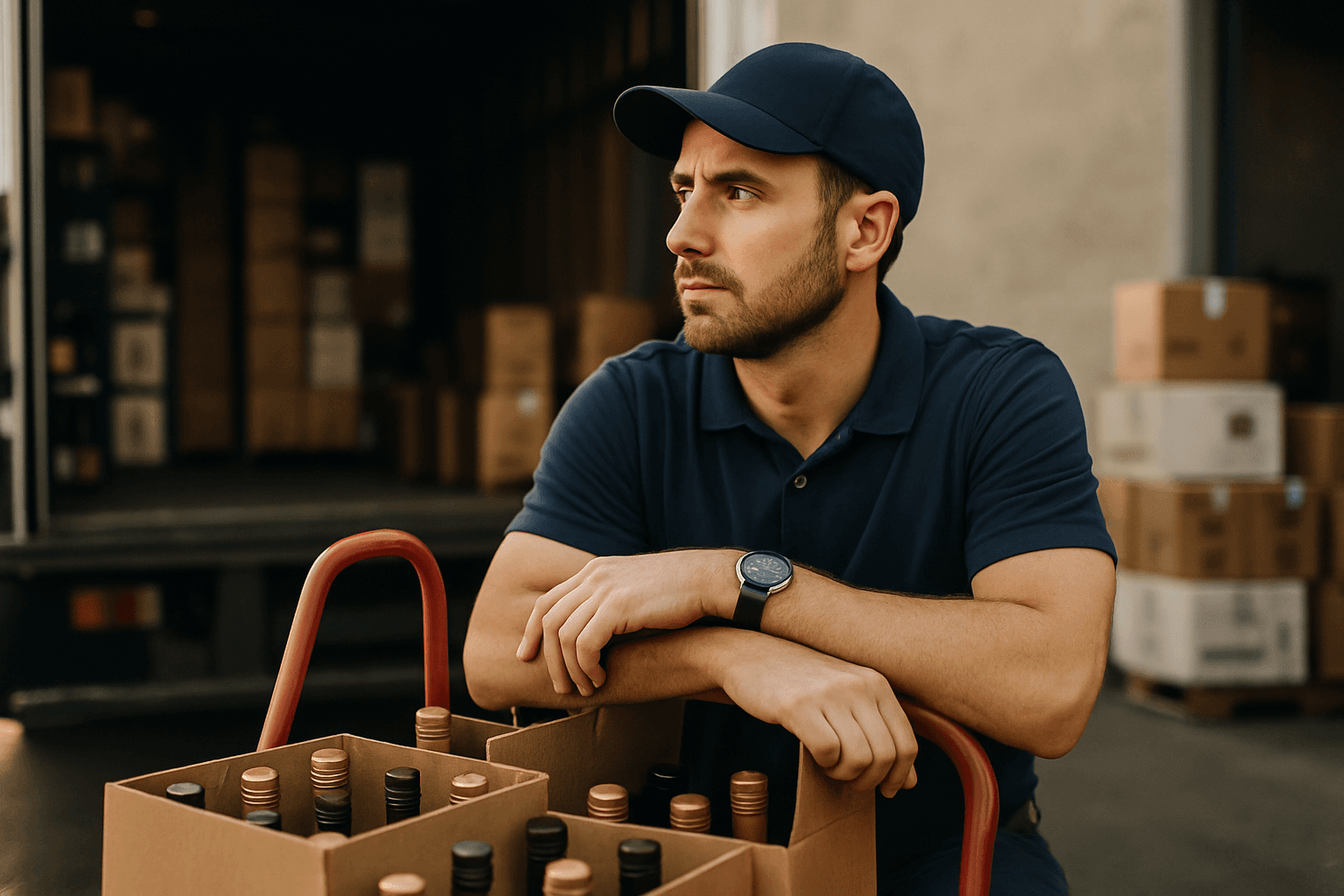
Discover how AI route optimization helps regional liquor distributors reduce delivery costs with real-time data and predictive analytics. Learn more.
- The Last-Mile Problem Nobody Talks About
- What Is AI Route Optimization (And Why Should You Care?)
- Three AI Innovations Transforming Beverage Delivery
- Real Benefits: What Regional Distributors Actually See
- Getting Started: A Practical Roadmap for Liquor Distributors
Picture this: It's 6 AM, and your dispatcher is already on the phone with a driver stuck in unexpected traffic, trying to reroute a delivery that was supposed to hit a high-volume restaurant before their morning prep shift. Meanwhile, a retail chain manager is checking their inventory system, wondering if today's order will show up in time for the weekend rush. Back at the warehouse, you're looking at fuel receipts that seem to climb every month, wondering if there's a better way to run routes without adding another truck to your already stretched fleet.
If this scenario feels familiar, you're not alone. Regional liquor distributors across the country are wrestling with a last-mile delivery challenge that traditional methods simply weren't built to solve. The good news? There's a new generation of technology designed exactly for this problem, one that learns, adapts, and gets smarter every single day.
That's what AI route optimization is bringing to liquor distribution logistics right now. And unlike the complex enterprise solutions of years past, this technology is finally within reach for regional operators who need real results without rebuilding their entire operation from scratch.
The Last-Mile Problem Nobody Talks About
Why Regional Liquor Distribution Is Uniquely Challenging
Regional liquor distributors operate in one of the most demanding delivery environments in the beverage industry. You're managing a perfect storm: tightening margins from rising fuel costs, an ongoing driver shortage that makes staffing unpredictable, and complex multi-stop delivery windows that vary wildly from one account to the other. One stop might need an early-morning drop at a busy restaurant, while the next requires a scheduled appointment at a retail chain warehouse.
Unlike large national distributors with dedicated logistics teams and fleet resources, regional operators often plan routes the same way they did decades ago, relying on driver experience, memory, or basic GPS apps that simply point A to B. These tools were never built for the layered complexity of liquor distribution logistics.
The Hidden Costs of Inefficient Routes
Here's what poor routing actually costs you: missed delivery windows that damage relationships with key accounts, drivers spending excess hours on the road burning fuel, and trucks making redundant trips across your territory. These aren't just operational headaches, they directly erode your profitability, strain driver retention in an already tight labor market, and erode the customer satisfaction that keeps accounts coming back.
Traditional methods simply can't adapt. When traffic shifts or an account needs a last-minute change, your drivers are left to figure it out alone. That's where AI route optimization changes the equation, using real-time data and predictive analytics to find efficiencies that static planning tools miss entirely.
What Is AI Route Optimization (And Why Should You Care?)
If you've ever wished you had a logistics genius working around the clock to figure out the fastest delivery routes for your fleet, AI route optimization is that, except it doesn't need coffee breaks, overtime pay, or sleep.
Breaking down the technology in simple terms
At its core, AI route optimization uses real-time data, predictive analytics, and machine learning to create the smartest possible delivery routes for your fleet. Modern solutions in this space help reduce costs and enhance delivery efficiency by processing enormous amounts of information that would overwhelm any human dispatcher. Many brands find that this technology becomes more valuable over time as it learns their specific operations.
Discover 8 AI route optimization tactics to cut last-mile costs, streamline delivery routes, and boost efficiency for...
Think of it like having a tireless logistics expert who never gets tired, always knows the fastest way, and gets better every single day. For liquor distribution logistics, this means your drivers spend less time stuck in traffic and more time delivering product where it needs to go.
AI has been playing a transformative role in load optimization in beverage delivery through predictive analytics, route optimization, and automated loading. The technology doesn't just plan routes once, it continuously refines them based on real-world conditions.
How AI learns from your fleet's performance
What makes AI route optimization truly powerful is its ability to learn and adapt. These systems adjust to live traffic data and learn from your fleet's past performance to find increasingly smarter routes over time.
So if a route that looked optimal on paper turns out to have construction delays every Tuesday morning, AI remembers. It factors in real-world conditions, not just theoretical distances, to help your team avoid bottlenecks before they even occur.
For regional distributors looking at last-mile delivery optimization, this adaptive capability means the system gets smarter with every delivery you run. Your routes improve, your fuel costs drop, and your drivers arrive on time, without adding a single truck to your fleet.
Three AI Innovations Transforming Beverage Delivery
Predictive analytics for smarter planning
Modern liquor distribution logistics demand more than gut instinct. AI route optimization uses real-time data, predictive analytics, and machine learning to reduce costs and enhance delivery efficiency through continuous optimization. By analyzing patterns from past deliveries, weather forecasts, and inventory levels, these tools help distributors anticipate demand spikes before they create bottlenecks. This proactive approach transforms what used to be reactive firefighting into strategic planning, giving store managers confidence that their orders will arrive when promised, without requiring distributors to overstock warehouses or add unnecessary vehicles.
Dynamic routing that responds to real-world conditions
The road doesn't always cooperate with the plan. AI route optimization adapts to live traffic data and learns from a fleet's past performance. When accidents, road closures, or unexpected delays occur, agentic AI shifts from static schedules to dynamic plans that respond instantly to changing conditions, rather than requiring manual updates from dispatchers. NVIDIA's cuOpt workflow ↗ demonstrates how to minimize vehicle routing inefficiencies by finding optimal routes even when variables shift mid-route. For regional liquor distributors, this means fewer missed delivery windows, lower fuel costs, and better utilization of existing assets, without expanding the fleet.
Last-mile delivery optimization becomes achievable when these systems handle the complexity of routing automatically, freeing operations teams to focus on building relationships with their retail accounts rather than babysitting spreadsheets. AI delivery tools for distributors have matured to the point where sophisticated optimization is now accessible to mid-sized operations that previously couldn't justify custom-built solutions.
Regional liquor distributors: leverage AI route optimization to cut costs and outmaneuver national players during ind...
Real Benefits: What Regional Distributors Actually See
Cost reduction through fewer miles and less fuel
For regional liquor distributors, the promise of AI route optimization goes beyond buzzwords, it's a practical way to trim costs without expanding your fleet. Route optimization tools use real-time data, predictive analytics, and machine learning to reduce costs and enhance delivery efficiency through continuous optimization.
This means fewer miles driven on each route, less fuel consumed, and reduced wear on your existing vehicles. You're not just saving on gas, you're extending the life of your trucks and reducing maintenance bills. For distributors watching every dollar, that's meaningful impact without spending a single extra dollar on new equipment. The optimization happens continuously, so every delivery day becomes an opportunity to operate more efficiently than the last.
Improved delivery windows and customer satisfaction
Predictability is currency in liquor distribution logistics. When your drivers consistently arrive within their promised windows, retail managers and on-premise account operators notice. Route optimization technology adapts to live traffic data and learns from your fleet's past performance, making each route smarter than the last.
This consistency builds trust. Store managers who know exactly when their inventory arrives can plan their floors better. Restaurant partners who rely on timely restocking become more than transactional accounts, they become loyal relationships. The best AI delivery tools for distributors don't just move cases faster; they help you become the vendor people can count on, day after day.
Getting Started: A Practical Roadmap for Liquor Distributors
What You Need Before Implementing AI Routing
Before adopting AI route optimization, take stock of your current operations. Route optimization systems learn from the quality of data you provide, clean, accurate delivery records, stop times, and order volumes form the foundation for meaningful results. Garbage in, garbage out applies here just as it does anywhere in technology.
Assess your existing tech infrastructure before evaluating solutions. Integration with existing dispatch and ERP systems varies significantly by provider. Some AI delivery tools for distributors connect seamlessly with popular platforms, while others require custom development. Understanding your current capabilities helps you narrow options and avoid implementation headaches down the road.
Quick Wins vs. Full Transformation
The smartest distributors start small. Launch a pilot program using a subset of your delivery routes to demonstrate ROI before committing to a company-wide rollout. This approach lets you validate performance claims, train your team on new workflows, and build internal buy-in without disrupting your entire operation.
Many route optimization solutions use real-time data, predictive analytics, and machine learning to reduce costs and enhance delivery efficiency, the most significant gains often appear first on your densest, most complex routes. These systems adapt to live traffic data and learn from your fleet's past performance, meaning pilot programs actually improve over time as the AI gathers more information about your specific operation.
Discover 7 route optimization triggers that liquor distributors should automate using AI to cut costs and boost deliv...
For liquor distribution logistics specifically, the beverage industry has seen AI playing a transformative role through predictive analytics and automated loading. This means even modest implementations can move the needle on last-mile delivery optimization.
Your roadmap: clean your data, audit your systems, and start with one region. Full transformation follows proof.
The Future of AI in Liquor Distribution Logistics
Where agentic AI is heading next
The next wave of AI route optimization is already taking shape. Industry observers note that AI agents capable of dynamically switching between route optimization strategies in real-time are emerging, responding to conditions as they unfold rather than relying on pre-planned routes. This represents a shift from static optimization toward truly intelligent, adaptive delivery networks.
Staying competitive as the industry evolves
Early adopters of AI delivery tools for distributors will lock in operational advantages that become increasingly difficult for latecomers to replicate. Route optimization technology adapts to live traffic data and learns from a fleet's past performance, meaning the longer a system operates, the smarter it becomes. NVIDIA's cuOpt workflow ↗ demonstrates how minimizing vehicle routing inefficiencies becomes an ongoing, self-improving process.
For liquor distribution logistics, waiting isn't a neutral choice, it means falling behind competitors who are already building their data advantage. The capabilities of AI in last-mile delivery optimization will only accelerate. Distributors who act now position themselves to scale efficiently, while those who delay will find the gap widening faster than expected.
Ready to Close the Last-Mile Gap?
The challenge is real, but so is the solution. AI route optimization gives regional liquor distributors something they've never had before: a system that learns, adapts, and continuously improves your delivery operations without requiring a single additional truck.
The path forward doesn't have to be overwhelming. Start with your messiest routes, validate the results, and let the data prove what this technology can do for your bottom line. The distributors who act today aren't just saving on fuel and cutting miles, they're building the operational foundation that will power their business for years to come.
Ready to see what AI route optimization could do for your fleet? Explore how technology partners can help you get started with a pilot program tailored to regional liquor distribution.