7 Things Every US Liquor Retailer, Distributor, and Brand Manager Should Know About the Bulleit 20-Year-Old Rye Launch
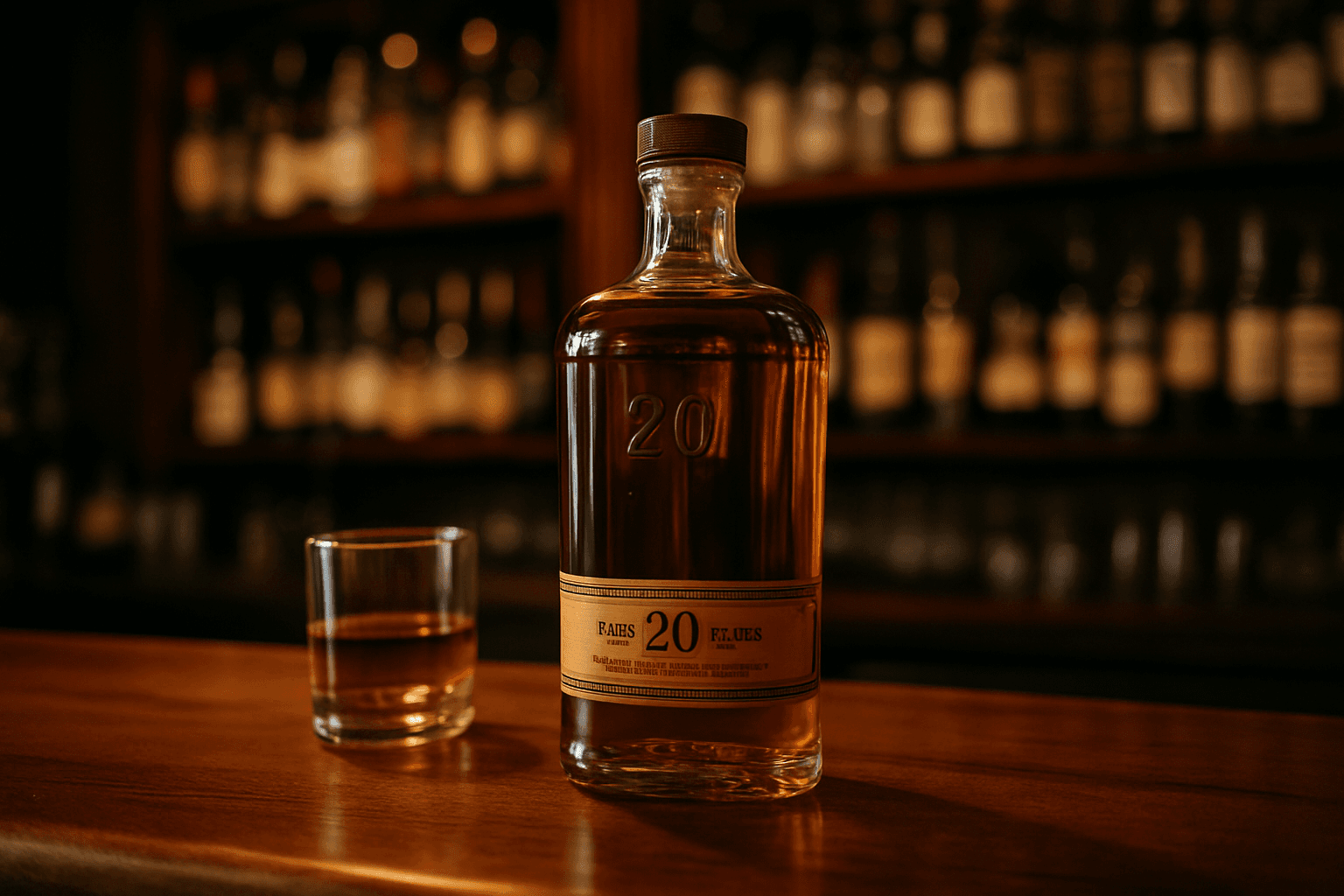
Explore 7 key insights on the Bulleit 20-Year-Old Rye launch and premium whiskey trends shaping 2026 for US retailers and distributors.
- TL;DR
- 1. The Bulleit 20-Year-Old Rye Lands in a $99.73 Billion Market, Here's Why That Matters
- 2. Age Statements Are Your Best Pricing Argument, and the Bulleit 20-Year Delivers
- 3. Premium Price Points Require Demonstrated Value, the Bulleit 20-Year Can Deliver It
- 4. The US Super-Premium Whiskey Market Is Growing at 7.4% Annually, Don't Leave Shelf Space on the Table
If you're stocking shelves, moving cases, or building whiskey programs, the Bulleit 20-Year-Old Rye launch is worth understanding, not just as a product, but as a signal of where premium whiskey is heading. Here's what the numbers and trends tell us about the opportunity.
TL;DR
- The global whiskey market is on track to grow from $99.73B in 2026 to $180.20B by 2034 (Fortune Business Insights) ↗, creating real shelf space opportunity for premium launches.
- In 2026, age statements like "20-Year" remain a key tool retailers can use to justify premium pricing and support bottles at higher price points.
- Consumer preferences increasingly favor authentic, high-quality products over prestige labels alone, making aged rye releases a strategic differentiator.
- The US super-premium whiskey market is projected to grow 7.4% annually through 2033 (LinkedIn Strategic Forecast) ↗, offering a clear growth runway for retailers and distributors who stock the right launches.
- Tasting experiences and staff knowledge have become important sales drivers for bottles in the ultra-premium tier.
1. The Bulleit 20-Year-Old Rye Lands in a $99.73 Billion Market, Here's Why That Matters
The global whiskey market is projected to grow from $99.73 billion in 2026 to $180.20 billion by 2034 (Fortune Business Insights) ↗, a near-doubling that signals sustained consumer appetite for premium whiskey. This growth trajectory means premium launches like the Bulleit 20-Year-Old Rye aren't niche plays, they're mainstream opportunities for retailers and distributors willing to stock strategically. Think of the whiskey market like a rising tide: as overall demand climbs, well-positioned premium SKUs capture disproportionate shelf space and margin.
2. Age Statements Are Your Best Pricing Argument, and the Bulleit 20-Year Delivers
A verified 20-year age statement gives liquor retailers a concrete, defensible talking point when customers question the price. With the US super-premium whiskey market projected to grow annually by 7.4% from 2026 to 2033 (LinkedIn Strategic Forecast) ↗, stores that can articulate aging depth to curious buyers have a genuine edge. For distributors, the age statement is marketing collateral that sells itself, pair the provenance story with the product and let it work on the shelf. Premium tier customers expect to taste the value, and a clear age statement is one of the most direct ways to prove it.
3. Premium Price Points Require Demonstrated Value, the Bulleit 20-Year Can Deliver It
Bottles in premium price tiers can move, but customers need to taste the value, this is one of the most actionable insights shaping premium whiskey sales today. For liquor retailers, this means investing in pour tastings, staff education, and shelf-side storytelling around the Bulleit 20-Year-Old Rye, the label alone won't justify the price tag. For distributors, equip your sales teams with talking points that connect the 20-year aging process directly to flavor and sip experience. In 2026, premium pricing must be justified by age statements and genuine craft, not just the bottle aesthetic (Forbes) ↗.
Let our team show you what's possible.
our team specializes in branding strategies that drive real results. Let us show you what's possible.
Schedule a Call4. The US Super-Premium Whiskey Market Is Growing at 7.4% Annually, Don't Leave Shelf Space on the Table
The US super-premium whiskey market is projected to grow annually by 7.4% from 2026 to 2033 (LinkedIn Strategic Forecast) ↗, making it one of the most reliable growth categories in spirits. The Bulleit 20-Year-Old Rye sits squarely in this super-premium tier, meaning retailers who allocate shelf space now are positioning for multi-year category momentum. As premium whiskey trends in 2026 continue to favor aged expressions with authentic provenance, early adopters tend to lock in supplier relationships and customer loyalty that compound over time. Think of it as planting a flag in fertile ground.
5. 2026 Marks a New Era for American Whiskey, Clarity, Maturity, and Focus Over Hyper-Expansion
American whiskey in 2026 is entering a new era defined by maturity and focus, not the hyper-expansion of previous boom cycles (Forbes) ↗. The Bulleit 20-Year-Old Rye embodies this shift: it's a measured, quality-driven release rather than a volume play, which aligns perfectly with where sophisticated consumers are heading. For brand managers and distributors, this signals a market ready to reward depth over breadth, one exceptional launch can outperform five mediocre ones. As Forbes notes, premium pricing must be justified by age statements, cask quality, or genuine scarcity.
6. The Ultra-Premium Segment Is Quietly Growing at 5.9% CAGR, and Rare Releases Fuel It
The ultra-premium whiskey segment is expected to grow at a CAGR of 5.9% from 2026 to 2033 (Grand View Research) ↗, driven by consumer demand for quality and authenticity. This tracks with broader premium whiskey trends in 2026, where aged, high-quality expressions command premium pricing. Limited-edition, aged expressions like the Bulleit 20-Year-Old Rye serve as flagship SKUs that draw attention to your entire ultra-premium section. For retailers, treat this launch as a traffic driver, customers who come in for a rare 20-year expression often browse and buy adjacent products, boosting basket size across the whiskey aisle. A single compelling SKU can elevate your entire category performance.
7. Your Action Plan: How to Stock, Sell, and Capitalize on the Bulleit 20-Year-Old Rye Launch
Retailers: Secure your allocation now and train staff on the 20-year story, the premium tier customer expects an experience, not just a shelf. Set up a tasting station because customers need to experience the value first.
Distributors: Prepare sell sheets that lead with age, authenticity, and scarcity, in 2026, premium pricing must be justified by transparency.
Brand managers: Arm your distribution network with point-of-sale materials that tell the Bulleit story simply for retail operators, not spirits critics. With the ultra-premium whiskey segment projected to grow at a 5.9% CAGR through 2033 (Grand View Research) ↗, the groundwork you lay today determines whether this launch becomes a reliable revenue driver or a missed opportunity.
The Bulleit 20-Year-Old Rye isn't just another bottle to stock, it's a litmus test for how your business approaches premium whiskey in 2026 and beyond. The data points toward growth, but execution wins the game. Retailers who invest in tasting experiences, distributors who arm their teams with real talking points, and brand managers who make the story simple and accessible will capture the upside. Those who treat it like any other SKU won't.
Start with your staff knowledge today. The rest follows.
Frequently Asked Questions
Why is the Bulleit 20-Year-Old Rye launch significant for US liquor retailers?
The launch lands at a time when the global whiskey market is projected to grow from $99.73 billion in 2026 to $180.20 billion by 2034 (Fortune Business Insights) ↗. For US retailers, a rare aged-rye launch represents a high-margin, trend-forward SKU that attracts serious whiskey buyers and drives cross-category foot traffic.
How should retailers price the Bulleit 20-Year-Old Rye?
Research indicates that premium pricing requires demonstration of value (Forbes) ↗. Retailers should position the 20-year age statement front and center in pricing signage and staff conversations to justify the premium tier without overreaching.
What does the 2026 market data say about super-premium whiskey growth?
The US super-premium whiskey market is projected to grow at 7.4% annually from 2026 to 2033 (LinkedIn Strategic Forecast) ↗. The Bulleit 20-Year-Old Rye sits within this segment, making it a timely, strategically aligned SKU for retailers looking to capture category growth.
How can distributors best position the Bulleit 20-Year-Old Rye to retail buyers?
Distributors should lead with verifiable data, the 20-year age statement, market growth figures, and consumer demand for ultra-premium authenticity. Sell sheets should translate the product's quality story into a business case for retail shelf allocation.
What should brand managers know about 2026 consumer preferences for premium whiskey?
In 2026, premium pricing must be justified by age statements, cask quality, transparency, or genuine scarcity, not brand prestige alone (Forbes) ↗. Consumers are increasingly informed and value-driven, meaning the Bulleit 20-Year-Old Rye's honest aging story is a genuine competitive advantage.
How does the Bulleit 20-Year-Old Rye fit into the broader aged whiskey demand trend?
The ultra-premium whiskey segment is growing at a CAGR of 5.9% through 2033 (Grand View Research) ↗, driven by demand for high-quality, authentic products. The Bulleit 20-Year-Old Rye is a natural fit, a verifiable age statement backed by a trusted brand that speaks directly to what today's whiskey buyer wants.
What is the single most important action for a liquor store owner ahead of this launch?
Prepare your team. Industry insights suggest that premium tier customers expect to experience the value. A brief staff tasting, a few key talking points about the 20-year aging process, and a visible product placement are the simplest, highest-impact moves a retailer can make before launch day.