The Last-Mile Problem: How AI Route Optimization Is Cutting Delivery Costs for Mid-Size Beverage Distributors
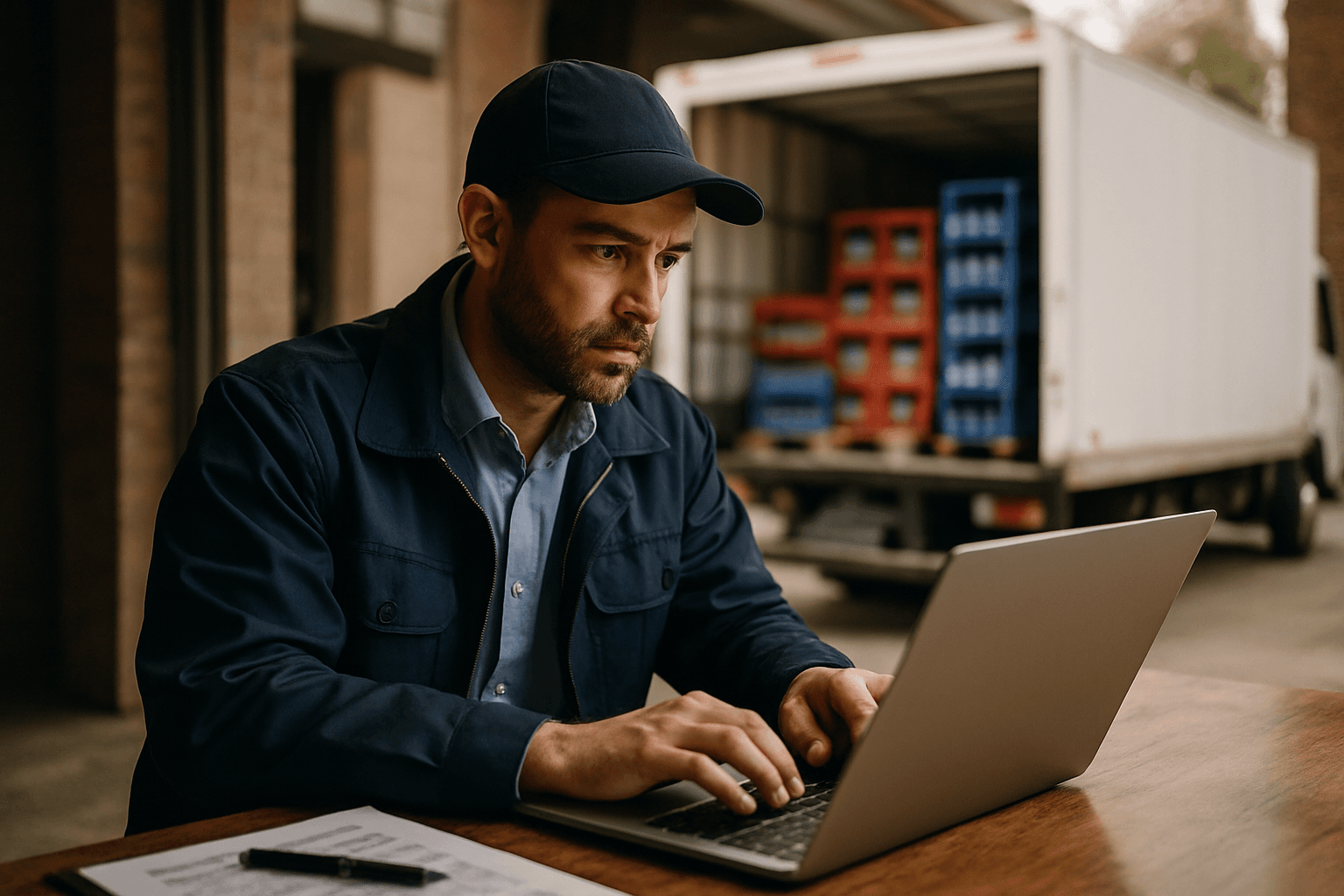
Discover how AI route optimization is transforming last-mile delivery for mid-size beverage distributors, cutting costs and improving efficiency.
- Why Last-Mile Delivery Is the Bottleneck for Beverage Distributors
- What AI Route Optimization Actually Does for Beverage Distributors
- The Numbers Don't Lie: Real Impact on Delivery Costs
- From Reactive to Proactive: The Shift to AI-Powered Operations
- Is the Market Ready? Technology Adoption in Beverage Distribution
Picture this: it's 4 AM and your warehouse team is already loading the first delivery trucks of the day. You've got stops planned across a 50-mile radius, restaurants, bars, and retail stores with increasingly narrow delivery windows. Your dispatchers are juggling spreadsheets, driver knowledge, and gut instinct to piece together routes that keep everyone happy. One traffic jam, one last-minute order change, or one misloaded truck can cascade into a day of missed windows and expensive delays. That's the daily reality for mid-size beverage distributors navigating the last mile.
The last leg of the supply chain, moving product from warehouse to final destination, is where complexity multiplies and profits shrink. It's not just about finding the fastest path anymore; it's about synchronizing inventory, meeting retailer expectations, and keeping operational costs from spiraling. AI route optimization for beverage distributors is emerging as the solution that transforms this daily scramble into a strategic advantage.
This isn't a theoretical future, it's happening now across the industry. Let's explore why the last-mile bottleneck has become the industry's biggest challenge and how artificial intelligence is finally cracking the code.
Why Last-Mile Delivery Is the Bottleneck for Beverage Distributors
The Unique Challenges of Beverage Distribution Logistics
Getting products from warehouse to shelf is where the real headaches begin. Route planning in the beverage distribution industry is complex and requires specialized solutions to enhance efficiency, reduce costs, and ensure timely deliveries. Unlike many other retail sectors, distributors juggle seasonal demand swings, weight-heavy loads, and clients ranging from busy bars to quiet rural liquor stores.
Mid-size distributors feel this squeeze most acutely. They're caught between a rock and a hard place: they don't have the fleet resources of national chains, yet their operations are far more intricate than a single-store owner handling their own deliveries. Every inefficient route eats into margins that are already thinner than they'd like.
Why Traditional Route Planning Falls Short
Old-school route planning, paper maps, driver intuition, or basic GPS, isn't built for the realities of modern beverage distribution logistics. Static routes can't adapt to traffic jams, last-minute order changes, or the optimal loading sequence for delivery stops.
This is where AI route optimization for beverage distributors changes the game. AI has been playing a transformative role in load optimization in three key areas: predictive analytics, route optimization, and automated loading. These technologies work together to tackle the last-mile delivery optimization challenge head-on.
Last-mile delivery represents the most expensive portion of the supply chain, and the most ripe for AI delivery cost reduction. By leveraging AI to optimize route planning and inventory management, distributors can significantly improve efficiency without overhauling their entire operation. The bottleneck doesn't have to stay a bottleneck.
Understanding why this matters is one thing. Seeing what AI actually does with that complexity is where the picture comes into focus.
What AI Route Optimization Actually Does for Beverage Distributors
Modern beverage distribution logistics demands more than following the fastest route from point A to point B. Today's distributors juggle tight delivery windows, fluctuating inventory levels, and a growing list of customer expectations, all while trying to keep fuel costs and driver hours in check. AI route optimization for beverage distributors represents a fundamental shift in how these challenges get solved.
Beyond Simple GPS: How AI Thinks Like a Logistics Manager
Traditional GPS gives you a route. AI gives you a strategy.
Where standard navigation apps offer one-size-fits-all directions, AI systems consider multiple variables simultaneously, delivery time windows, vehicle capacity constraints, real-time traffic patterns, and order priorities. Route planning in the beverage distribution industry is complex and requires specialized solutions to enhance efficiency, reduce costs, and ensure timely deliveries, according to Descartes.
Discover 8 AI route optimization tactics to cut last-mile costs, streamline delivery routes, and boost efficiency for...
This means instead of planning each delivery as an isolated stop, AI evaluates your entire delivery day as one interconnected puzzle. It understands that an early morning delivery to a high-volume restaurant affects which vehicle should handle the afternoon route to a smaller retailer across town.
Current optimization approaches in last-mile delivery span from traditional Linear Programming methods to sophisticated AI-driven decision-making. But the real power lies in how AI processes these variables in parallel, something linear systems struggle to accomplish when variables interact.
The Three Pillars of AI in Beverage Logistics
AI has been playing a transformative role in load optimization in three key areas: predictive analytics, route optimization and automated loading, reports the Beverage Industry.
For mid-size distributors, these three capabilities work together. Predictive analytics anticipates demand before orders arrive. Route optimization determines the most efficient paths for your fleet. Automated loading ensures vehicles are packed strategically, placing high-priority items where they're easiest to access first.
The result? Leveraging AI to optimize route planning and inventory management can reduce delivery times by up to 25% and cut operational costs by 30%, according to Cubework.
For distributors still relying on spreadsheets and driver intuition, this technology represents a competitive advantage that's hard to ignore.
All this capability means nothing if it doesn't move the needle where it counts, your bottom line. Let's talk real numbers.
The Numbers Don't Lie: Real Impact on Delivery Costs
Quantifying the ROI of AI Route Optimization
When mid-size beverage distributors invest in AI route optimization for beverage distributors, the numbers tell a compelling story. According to Cubework, leveraging AI to optimize route planning and inventory management can reduce delivery times by up to 25% and cut operational costs by 30%. For a distributor running 15-20 daily routes, that improvement compounds quickly.
The transformation goes beyond single route efficiency. AI systems handle the complex route planning that beverage distribution logistics demand, considering factors like delivery windows, vehicle capacity, and traffic patterns simultaneously, something impossible for manual planners to accomplish at scale. This is where last-mile delivery optimization delivers its strongest returns.
What This Means for Your Bottom Line
Reduced operational costs don't stay theoretical for long. When AI handles route optimization, immediate financial benefits appear across three key areas:
- Fuel costs drop as shorter, smarter routes mean fewer miles driven.
- Overtime expenses shrink because predictable routes let drivers complete shifts on schedule rather than scrambling through inefficient paths.
- Vehicle maintenance costs decrease from reduced wear on engines, brakes, and tires.
These savings stack across every route, every day. A 30% reduction in operational costs doesn't just mean keeping more of what you earn, it means freeing up capital to reinvest in inventory, marketing, or expansion. For mid-size distributors operating on thin margins, AI delivery cost reduction isn't just convenient, it's competitive survival.
AI route optimization beverage distribution can slash last-mile costs that eat up 53% of supply chain spend. A practi...
The financial gains from optimized routing are compelling, but they're just part of a larger transformation happening across the industry, from reactive firefighting to proactive, predictive operations.
From Reactive to Proactive: The Shift to AI-Powered Operations
For years, many beverage distributors operated on a firefighting model, responding to problems after they happened. Today, a growing number are shifting to proactive operations powered by AI, and the results are changing how they run their businesses.
Predictive Ordering: Anticipating Demand Before It Happens
Modern AI systems do more than react to orders, they anticipate them. By analyzing seasonal patterns, local events, and years of historical data, AI can predict demand fluctuations before they impact your warehouse. According to the NBWA, this represents a fundamental shift from reactive ordering to predictive ordering that empowers distributors to stock smarter, not harder.
This proactive capability transforms your entire supply chain. Instead of scrambling to restock after a big weekend event, your system already knows the surge is coming.
Real-Time Adaptation: AI That Responds to Change
Traditional route planning breaks down the moment something unexpected happens. A traffic delay, a road closure, a last-minute order change, these obstacles derail manual systems.
AI-powered last-mile delivery optimization continuously monitors conditions and automatically adjusts routes when unexpected obstacles occur. Per Cubework, leveraging AI to optimize route planning can reduce delivery times by up to 25% and cut operational costs by 30%, benefits that only compound when the system handles rerouting automatically.
Route planning in the beverage distribution industry is complex and requires specialized solutions to enhance efficiency, reduce costs, and ensure timely deliveries. AI delivers that specialization through continuous learning, adapting to your specific delivery patterns and getting smarter with every route completed.
The distributors winning today aren't waiting for problems to arrive. They're using AI route optimization for beverage distributors to stay ahead of demand, adapt to change instantly, and build operations that anticipate rather than react.
The technology is proven. The market is maturing. The question is no longer whether AI can help, it's whether you're ready to implement it.
Is the Market Ready? Technology Adoption in Beverage Distribution
Industry Consolidation Signals Growing Maturity
The technology landscape for beverage distribution logistics is maturing rapidly. The Access Group's recent acquisition of MaxOptro, a route optimization platform serving more than 450 customers, signals ongoing consolidation that benefits mid-size distributors seeking stable, long-term solutions. When larger players invest in these platforms, mid-size operators gain access to more robust technology ecosystems that can scale alongside their businesses.
This consolidation reflects broader market confidence in last-mile delivery optimization. According to Descartes, "route planning in the beverage distribution industry is complex and requires specialized solutions to enhance efficiency, reduce costs, and ensure timely deliveries." As the market consolidates around proven platforms, distributors can expect continued improvements in functionality and support.
Discover 7 route optimization triggers that liquor distributors should automate using AI to cut costs and boost deliv...
Building AI Literacy Across Your Organization
Technology adoption extends beyond software implementation. VIP, a beverage industry technology provider, has introduced new AI platform branding and invested in company-wide AI literacy training for their team. This approach recognizes that effective AI route optimization for beverage distributors requires both powerful tools and people who understand how to use them.
AI has been playing a transformative role in load optimization in three key areas: predictive analytics, route optimization, and automated loading, according to Beverage Industry research. However, technology can only deliver results when teams are equipped to leverage its capabilities fully. Companies prioritizing training alongside implementation will see better returns on their technology investments.
The tools exist. The market is mature. Now comes the practical question: how do you actually get started?
Getting Started: What Mid-Size Distributors Should Look For
Key Features in Distributor Route Planning Software
When evaluating AI route optimization for beverage distributors, prioritize solutions built specifically for beverage distribution logistics rather than generic logistics tools. Route planning in the beverage distribution industry is complex and requires specialized solutions to enhance efficiency, reduce costs, and ensure timely deliveries, according to Descartes.
Look for software that handles the unique challenges you face daily:
- Multi-stop optimization to sequence deliveries efficiently
- Vehicle capacity constraints that account for weight and volume limits of your fleet
- Delivery window management to meet retailer requirements
- Inventory integration so drivers arrive with the right stock
Effective last-mile delivery optimization combines advanced technologies like data analytics and IoT-supported real-time tracking to keep operations running smoothly. These capabilities work together to address the real complexities of beverage distribution.
Questions to Ask Before You Buy
Before committing, consider total cost of ownership, not just software fees, but implementation, training, and ongoing support costs. Ask potential vendors for case studies from similar-sized distributors to validate their performance claims. Request a pilot program with your actual routes to see real results before full commitment.
The Bottom Line: Your Routes, Optimized
The last-mile bottleneck doesn't have to define your operation. AI route optimization for beverage distributors has moved from experimental technology to proven, market-ready solution, and the distributors already using it are seeing real results.
From reducing delivery times by up to 25% to cutting operational costs by 30%, the numbers speak for themselves. But beyond the metrics, AI is reshaping how mid-size distributors operate: from reactive to proactive, from guesswork to data-driven decisions, from firefighting to forward planning.
The technology is here. The market is mature. The only question is when you're ready to make the shift.
Ready to see what AI route optimization could do for your routes? Start by evaluating solutions that understand beverage distribution specifically, not just generic logistics software. Request demos, run pilot programs with your actual delivery patterns, and talk to other mid-size distributors who've made the transition.
Your competitors are likely exploring the same decision right now. The distributors who move first will be the ones setting the pace for everyone else.